

Having spent significant time exploring the full game over the past week, I was already convinced that developer One More Level (the Polish studio behind Ghostrunner) and publisher Lyrical Games had something special on their hands. Now, ahead of its launch on October 13, 2026, Valor Mortis stands out as one of the most well-crafted and engaging Soulslites in recent memory.
Translating core Soulslike combat into a fluid, first-person Soulslite takes real ambition. Valor Mortis bridges that gap with incredible precision—combining heavy melee swordplay, high-velocity gunplay reminiscent of Dishonored, dark magic, Metroidvania-style exploration reminiscent of classic Dark Souls, and Ghostrunner platforming, and compelling narrative depth.
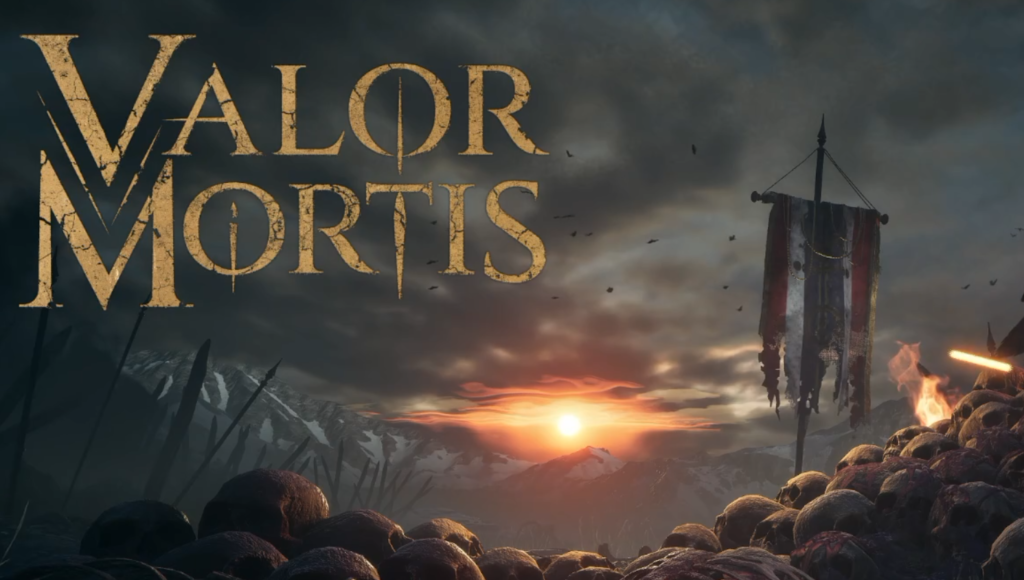
Story & Setting: Grim European History Meets Eldritch Corruption
Set in an alternate 19th-century Europe, Valor Mortis drops players into a continent torn apart by the Napoleonic Wars and a horrific plague known as Nephtoglobin. You step into the boots of William, a fallen British soldier resurrected from a mass battlefield grave. Reanimated by the infected magic pumping through your veins, you are thrust into a dark, supernatural conspiracy spanning war-torn battlefields and ruined settlements.
What makes the story work so well is its emotional grounding amid the grim atmosphere. Alongside major encounters with historical figures like Napoleon Bonaparte (voiced brilliantly by César Award-winning actor Vincent Cassel), the game takes time for quiet, poignant moments.
The side quests are exceptionally written and voiced. After just five hours in, you genuinely care about listening to every NPC you meet. Their personal stories paint a bleak, realistic picture of how dark and brutal humanity can become under pressure.

Soulslite vs. Soulslike Mechanics
It’s important to clarify that Valor Mortis leans firmly into Soulslite territory rather than being a traditional, rigid Soulslike. While it keeps core Souls staples—like lantern checkpoints (“bonfires”), stamina-focused combat, directional parries, and interconnected shortcuts—it replaces heavy RPG stat-grinding (such as allocating points into Strength, Dexterity, or Magic) with accessible skill trees and equippable passive artifacts called Ambers. Combined with high-mobility platforming and situational gunplay, it prioritizes fast-paced action over punishing RPG spec builds.
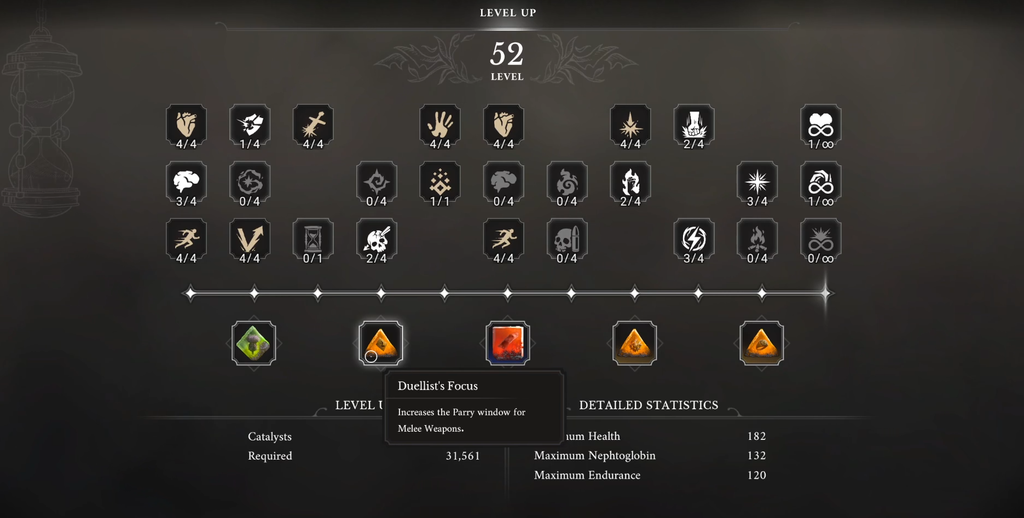
Build Depth & Ambers:Rather than forcing you into rigid RPG stat allocation like traditional Soulslikes—where you have to carefully balance Strength, Dexterity, or Magic—Valor Mortis keeps its progression streamlined and accessible, reinforcing its identity as a Soulslite. You upgrade William through straightforward skill trees that boost melee posture damage, firearm efficiency, or Nephtoglobin siphon abilities.
To fine-tune your playstyle, you equip passive artifacts called Ambers. These don’t change your fundamental character stats, but they grant valuable situational perks—such as widening your parry window, restoring health upon executing a finisher, or providing resistance against fire and status afflictions. It gives you room to experiment without the punishing grind of full RPG re-spec builds.
Gameplay & Combat: A Devastating Hybrid of Steel and Gunpowder
If you’ve played Ghostrunner, you already know One More Level excels at responsive first-person controls. Valor Mortis channels that expertise into a combat loop that feels like a cross between Dishonored’s versatile combat, Dark Souls’ punishing level design and backtracking, and Ghostrunner’s high-mobility platforming.
- The Posture & Parry System
Combat revolves around stamina management, positioning, and split-second reactions:
Precision Parries: Success relies on mastering directional parries, blocks, and timed dodges to break an enemy’s posture meter.
Execution Finishers: Guard-breaking an opponent triggers brutal, camera-locked execution animations. They feel immensely satisfying to execute in the middle of a chaotic arena and never get repetitive or boring. - Dual-Wield Arsenal
Your loadout encourages constant experimentation between cold steel and gunpowder:
Melee Options: Choose from heavy claymores, versatile sabres, and precision rapiers designed to strike enemy weak points. Each primary weapon offers a distinct playstyle, providing enough variety to encourage multiple playthroughs and allowing you to tailor your approach to different enemy types. Note that New Game Plus (NG+) is planned as post-launch content.
Off-Hand Ranged Weapons: Flintlock pistols, short-barreled shotguns, blunderbusses, and rifles act as crucial situational combat tools rather than standalone build choices. For example, distant snipers require you to swap to a rifle mid-fight, making weapon upgrades a crucial part of your character’s progression. - Nephtoglobin Magic
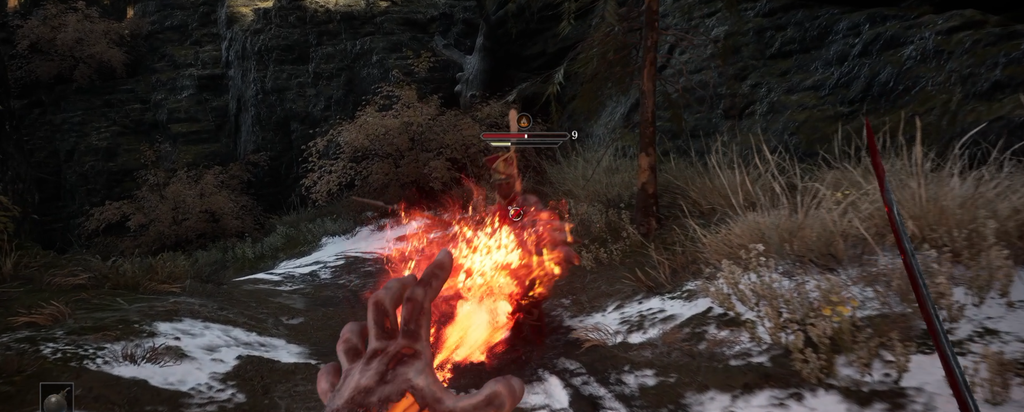
Your infected blood grants active combat skills that add tactical flexibility. You can unleash offensive fire blasts to ignite foes, conjure barrier shields around your body, or apply stasis to control room crowds. - Bosses & Mini-Bosses
The mini-bosses provide a solid, tight challenge—acting as true one-on-one tests for your parry timing and dodging.
The main campaign bosses deliver a fair, if slightly mixed, level of difficulty:
First Boss: Perfectly designed to teach and test the core parry mechanics.
Second Boss: Slower and less aggressive; easily defeated on the first attempt without much hassle.
Third Boss: A standout fight with great pacing and slick mechanics.
Fourth Boss: Unexpected and surprisingly accessible, but still enjoyable.
Overall, the boss encounters offer a balanced spectrum—some demand absolute focus, while others let you flex your power.
World Design, Traversal & Progression
The world design leans heavily into Metroidvania-style interconnected exploration. Maps are packed with secret routes, lock-and-key environmental puzzles, and vertical shortcuts that make navigation feel consistently rewarding.
The exploration hits that ideal balance of guidance and freedom. Instead of cluttering the world with obnoxious yellow and white paint markers, Valor Mortis uses thoughtful visual environmental cues—similar to games like Control Resonant—that keep exploration natural and immersive.
During my playthrough, I hit blocked paths and searched for 30 minutes, only to realize I needed a specific ability unlocked later in the campaign. Returning to those areas with new powers felt deeply satisfying, uncovering key items, hidden loot, and new quest branches. Keeping quick notes on my phone helped track these hidden locations, and every side quest rewarded me with valuable upgrade materials that kept me eager to explore further. Plus, once you complete the main story, the game opens up into full free-roam mode—allowing you to freely explore the world, track down hidden secrets, and finish any side quests you missed along the way.
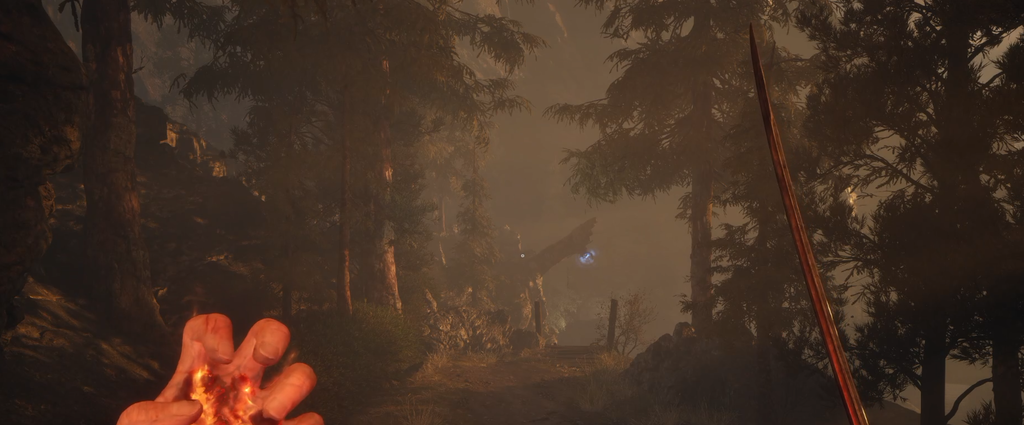
Fluid Movement: Traversal retains subtle nods to Ghostrunner’s athleticism, letting you sprint, vault, and swing through complex environments with speed.
Lantern Checkpoints: Glowing lanterns serve as traditional resting points (“bonfires”), resetting enemies while restoring health flasks and resources.
Presentation & Audio
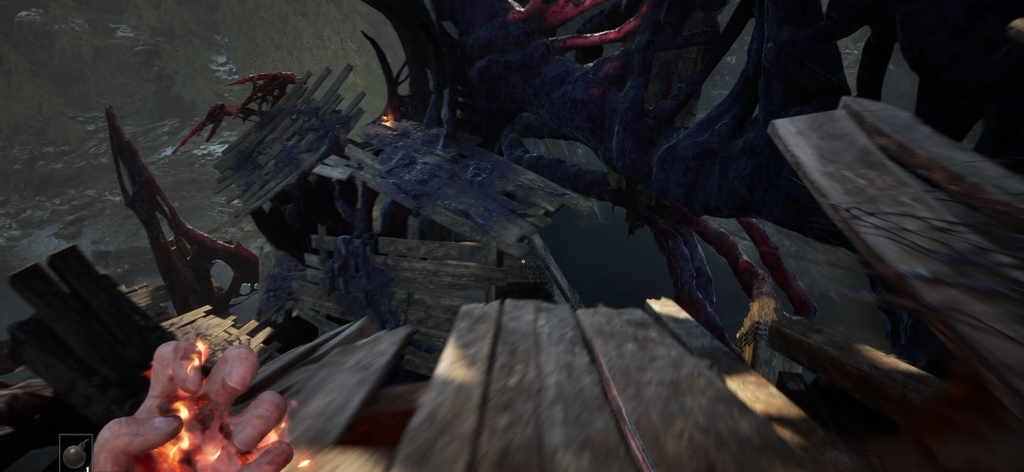
Visually, the game paints a dark, theatrical picture of 19th-century Europe, combining dusty battlefields and plague-ravaged architecture with striking spell effects. It’s worth stopping just to take in the artistic detail—the skyboxes, lighting, and moonlight effects across different environments are stunning.
The presentation is elevated by a haunting score co-composed by Arkadiusz Reikowski (Silent Hill 2 Remake, The Medium), delivering subtle tension during exploration and high adrenaline during major fights.
PC Performance
My PC is equipped with an AMD Ryzen 7 9700X, an RTX 5070 12GB, 32GB of DDR5 6000MHz RAM, a WD Black SN7100 1TB NVMe SSD, and a B650 motherboard.
I experienced no stuttering throughout my playthrough. However, I did encounter four crashes in specific areas, all of which occurred before the Day One patch. After updating my graphics card driver and completing the game, I played for another five hours without encountering a single issue.
The Day One patch specifically addresses performance and stability across all platforms, including improvements to game stuttering and crash-related issues. Based on my experience after updating, the game ran flawlessly.
Launch Editions & Pricing
Release Date: October 13, 2026.
Platforms: PC (Steam), PlayStation 5, Xbox Series X/S.
Standard Edition ($39.99): Includes the full base game.
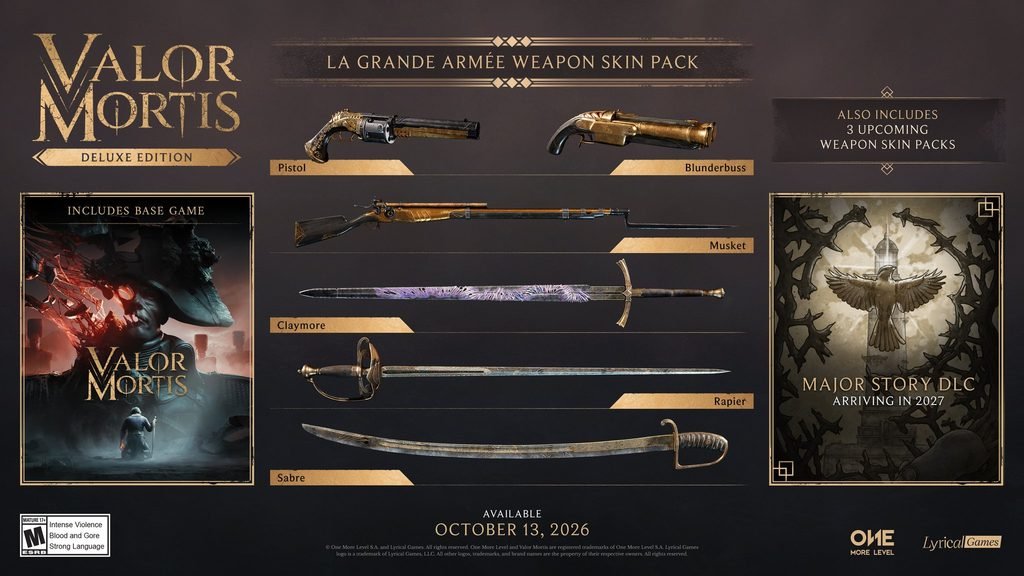
Deluxe Edition & Expansion Pass ($59.99): Includes the base game, the La Grande Armée Weapon Skin Pack, three post-launch weapon skin bundles, and access to the Major 2027 Story DLC.
Final Verdict
Valor Mortis proves that blending first-person action with Soulslite mechanics can yield an absolute winner. At $39.99, it strikes a fantastic sweet spot between price, content, and quality.
While it skips the complex RPG stat-grinding of traditional Soulslikes, its addictive combat loop, rich alternate-history setting, and rewarding exploration make it consistently fun from start to finish. It’s the exact kind of game that occupies your mind even when you’re away from your desk—thinking about heading back into its dark world to hunt down hidden secrets and conquer the next challenge. One More Level has delivered a standout title, though the base game finishes on a major cliffhanger right after the final boss—leaving the story feeling unfinished and making the 2027 DLC an absolute necessity rather than just an optional extra.
GP recommends it
- 29 hours in
- PC
- Life is a Game Magazine was provided a review copy for the purpose of this review
Leave a Reply