
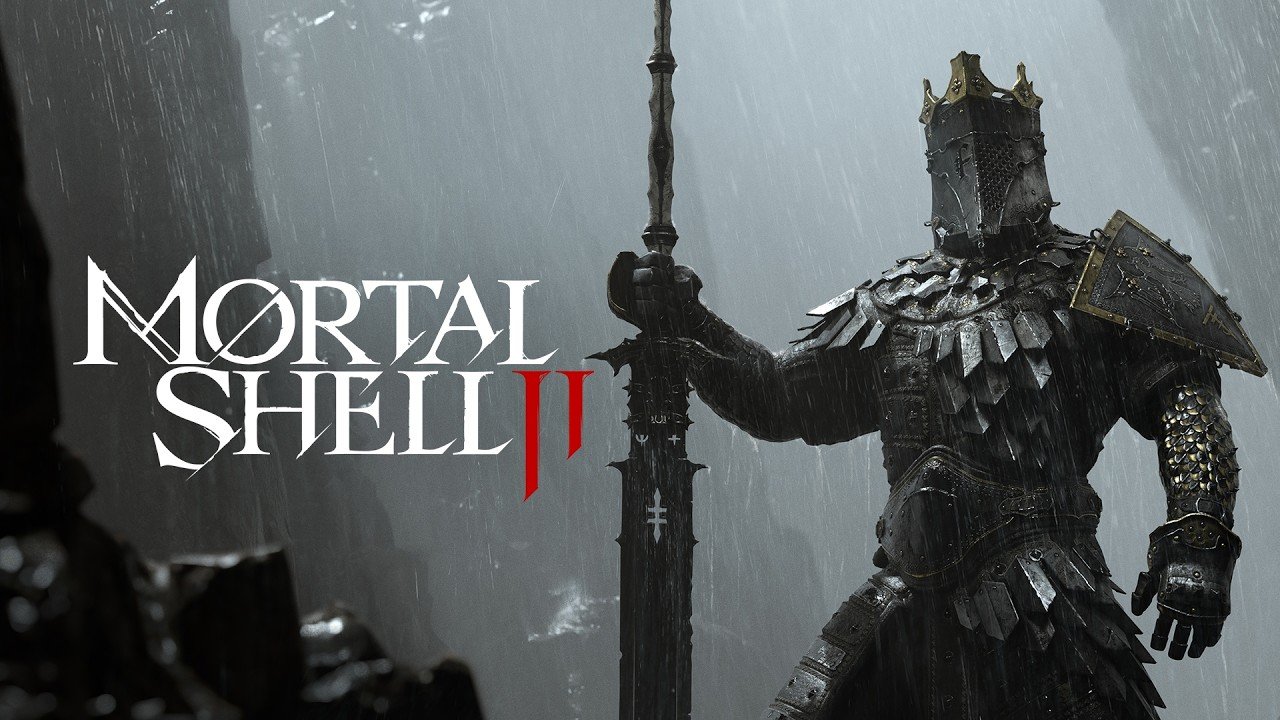

One hour. That is how long the first Mortal Shell lasted with me before I shut it off in frustration.
Then I gave it a second chance and got the exact same result. Same hour, same frustration. No fun factor, no polish, no reason to keep going. I wrote the entire franchise off.
And then this year, a demo dropped for Mortal Shell II and I rushed to check it out. Not sure why. Maybe I’m just a glutton for punishment.
Much to my surprise, I’ve found this game to be absolutely amazing. To the point where I’ve already deemed it one of the greatest sequels of all time. Only in video games can
you redeem yourself as a developer by bringing top notch quality to a sequel after a lackluster first game, and drive the level of excitement to that sequel with a demo that
blows everyone’s minds.
I went from barely surviving an hour of the first game to putting over seventy hours into Mortal Shell II, and I have already started a New Game Plus because I’m just having so
much fun with it.
I cannot tell you enough how amazing this game is, so I hope showing you in this video will give you a taste of what to expect, and why this game is such a strong must buy.
Also in full disclosure, I did receive a key for this game on launch, so thank you to Life Is A Game Magazine for the hook up.
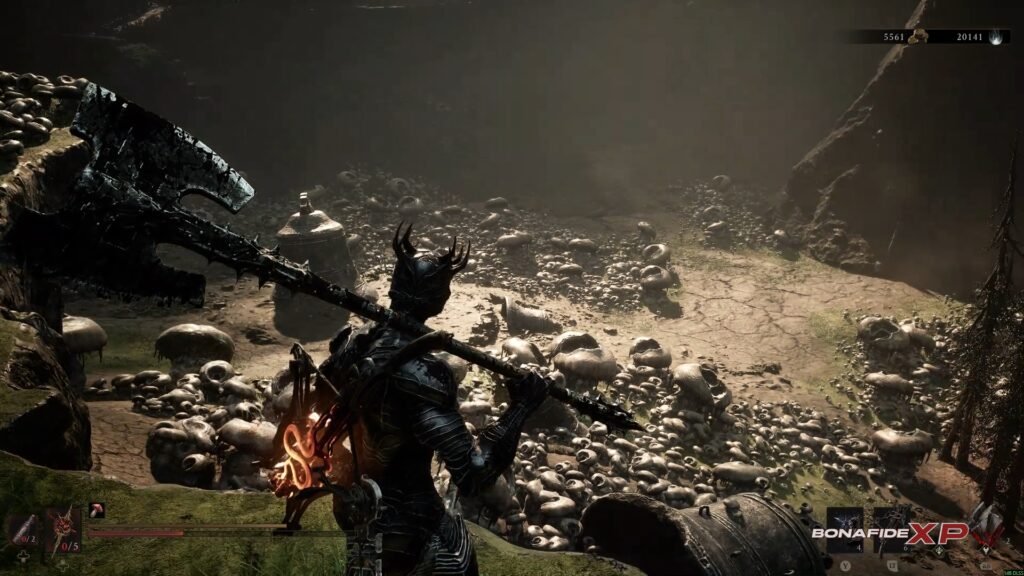
IS MORTAL SHELL 2 WORTH $50
Is Mortal Shell II worth the fifty dollar price tag? Absolutely, yes.
And I want to say that upfront before getting into the weeds, because honestly, I don’t want to waste your time on a purchasing decision. So this is me trying something new
with these videos.
It’s fifty dollars. Sixty if you want the Deluxe edition, and seventy if you want the Collector’s Edition. And to keep it 100, I would pay any of these prices for this game. It’s THAT
good.
But that’s the easy part of this, and price is not why I am recommending it. I am recommending it because of what it did to my calendar. This game won the argument every
night about whether I was going to bed or staying up late to put time into this game.
If you take away anything from this video, know that the fun factor here is off the charts. And even though there are some glaring faults we’ll discuss in this video, I am still
willing to move mountains to keep playing it.
WHAT IS THE UNDERMETHER AND WHY ARE YOU THE HARBINGER
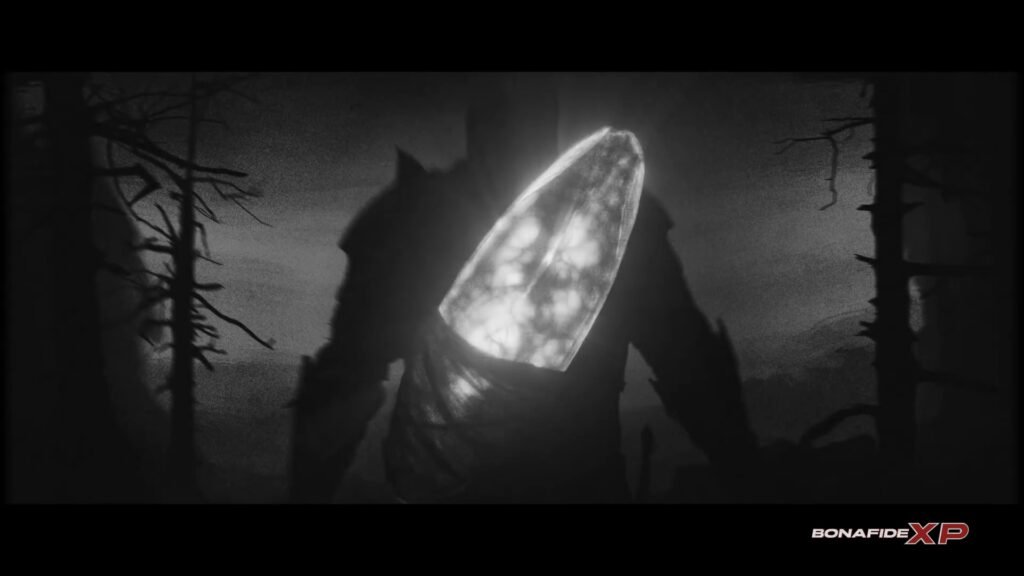
To set the tone, an alien life form called the Undermether crashes onto the planet.
The people who inhabit the land stripped her of everything including her ova, and used her bones to build temples and such.
And then, we come to find out that something called the Foul Passenger has been infesting and corrupting the remnants of the Undermether, therefore corrupting all of the land
into what you are traversing here now.
You are the Harbinger, one of the Undermether’s ovum, and your job is to go retrieve her missing ova and destroy the Foul Passenger. You do this arming yourself with various
shells.
Once the stage is set, you are given very little information other than strewn about letters and riddles that hint at variouslore about the world. Most of the story bits you get
come from the shells you acquire via memories. As you collect glimpses throughout the world, you can give them to the Shellkeeper, this massive woman here, and she will
unlock the memories of the shell before its life was taken, providing some context. It’s a really cool way to grow attachment to the different shells.
WHY DOES THIS WORLD LOOK THIS GOOD
The world and overall art direction here is absolutely phenomenal. It feels lived in, worn, and twisted. But I think what sells the overall look of this game more than the art
direction is the lighting.
Go stand in one of the caves, spend some time in any of the worn castles, courtyards, or even sewers, and watch how light hits every aspect of the environment. It is raking
across surfaces at every angle, and every piece of geometry in the room is getting sculpted by it. You can see the pitting, the depth, the wear. Some armor looks slick and sheen,
while others have wear and tear on it like it has been outside for a long time.
The art direction on top of that is amazing. This is a dark, decrepit, rotting world and it has a coherent visual grammar. Everything is organic, and original. Nothing feels like it was
pulled off an asset shelf.
And the sound is right there with it. Sword swipes have weight. Chunking an enemy into nothing has a sickening bottom end to it. The ambient design keeps this constant
foreboding sense that something is out there, just past where you can see, waiting.
My one complaint in this entire section is that there is not enough variety in the ambient tracks. You hear the same music beds a lot over a single playthrough. More range there
would have gone a long way. But the SFX carry the sound design so well here, amplifying much of what you’re doing in this game.
HOW DOES THE OPEN WORLD COMPARE TO ELDEN RING
This is an open world sandbox that compares to Elden Ring on many counts, but isn’t nearly as expansive.
Still, I got 70 hours out of my first playthrough.
Now, some of that is me. I am a completionist and I do not leave corners unchecked.
Paths branch off constantly, leaving you confused if you’re not paying attention. There are platforms that give out under you when you least expect it. And if I run into another
unexpected bear trap, man, those bear traps. There are enemies scattered across the map in configurations that are clearly asking you to learn a pattern, or die trying.
And the dungeons. I found a little over forty of them. Marketing says sixty plus, so I found a good portion of them if that’sthe case. Each one has its own layout, its own design,
and loot tied specifically to it. There’s enough variation in these dungeons that it never felt redundant.
The world itself has no dead space, so the team did a great job of keeping interest while exploring. You are never crossing four minutes stretches of nothing before reaching a
new point of interest like a dungeon or enemy type.
Although, I will say beacons were a bit scarce in certain areas of the game. These are basically your rest points, but the most recent patch update added a ton of new beacons to
rectify that. Around almost every turn is either a fight, a secret, a piece of lore, or just something strange.
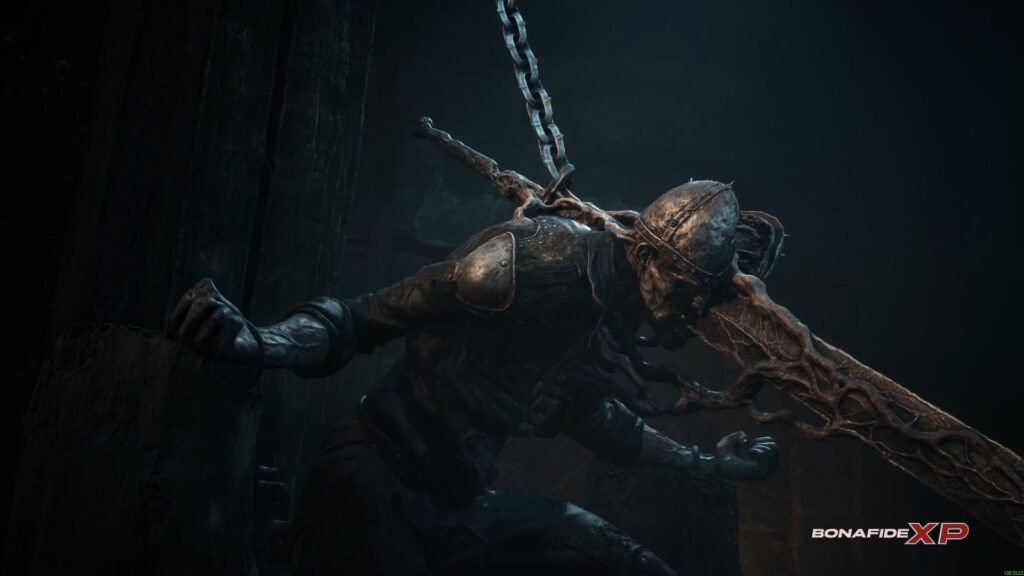
WHAT DO EIGHT SHELLS ACTUALLY CHANGE ABOUT HOW YOU PLAY
This game has eight shells. You can think of them as eight different classes.
Tiel is your rogue. Evasive, fast, built around poison damage with immunity, or even healing from poison if you want. I ran Tiel for most of the early game mainly because he has
elite evasion tactics in the game mixed with the various ways to parry and block.
Proxima is probably the most used shell in the game, and for obvious reasons. She has a very effective lightning grappling hook that gives her a ton of maneuverability. She can
pull an enemy to her and detonate shockwaves of lightning upon impact. She also has lightning immunity and damage mitigation. Proxima is who I used to finish my first
playthrough, and is an easy recommend to anyone just getting into this game.
Eredrim is an executioner with a shoulder ram ability that stuns most enemies in the game, leaving them open for a critical. He can gain full immunity to ice, and also passively
build up slaughter stacks through riposting enemies, that allow him to finish enemies at higher health thresholds.
Lazlo infuses himself with flame, which he can do continuously until he fills his gauge to max, for a serious damage spike at the cost of defense. Fire and burn immunity come
along with it.
And then there is Smert, who is a monk, and who stops time. While time is frozen, he uses his fists and beats on whatever is in front of him, and when time resumes every one of
those hits lands at once. Even on bosses, the damage can be ridiculous. He also mitigates poison, fire, and ice.
I spent a long stretch in the middle of this game just cycling through all eight to see how each shell played, and I never hit one that felt boring. Each shell felt unique and viable to
run the entire game through if you wanted.
DO TARSTONES MAKE BUILDS OR JUST MAKE NUMBERS BIGGER
You’ve got eight weapons, eight sidearms, each with real differences in moveset, attack speed, and reach. I think all of the options are very cool and give a good amount of
variation. My favorites were the Axatana, which is dual blade katanas that can turn into an Axe. I also really loved the Forgotten Crossbow, which gave me the long range combat
I needed.
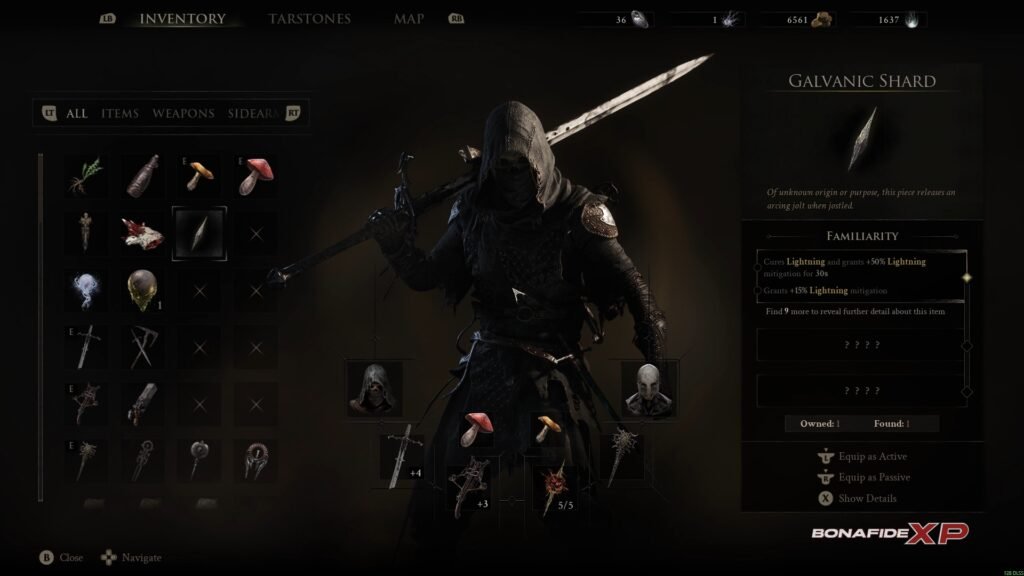
You’ve also got Tarstones. Tarstones are relics that you can slot with your weapons and sidearms for different passive, active and support bonuses in combat. This is where I
really had the most fun. You get critical damage boosts, sure. But you also get leech effects that pull health back on kills, elemental infusions across fire, ice, poison, lightning,
and stasis, and in some cases entire weapon-specific abilities that only become available for certain weapons when you slot them.
The loop that got me was swapping Tarstones to match whatever weapon I was using, then building some synergy between my weapon, sidearm, and up to 8 different
Tarstones.
On the defensive end, you’ve got seals that act as your way to block, parry, and counter all of the attacks in the game. The Untarnished Seal is your basic seal, allowing you to
guard and perform basic parries that will build up your enemy’s stagger meter when timed right.
Vatra’s Seal is the staple defensive seal for Mortal Shell that performs Harden, which turns you to stone, completely negating an attack at the cost of a short cooldown. The
Infinite Seal is parry focused with a much more limiting window. It has about a 2 to 3 frame difference from the Untarnished Seal, but when you time it right, it does a ton of
damage to the enemy’s stagger gauge.
Lastly, you’ve got the Slayer Seal, which many players have deemed easy mode, because it gives you access to some strong moves like the Slayer Punch that just destroys
enemies, at the cost of earning achievements for that entire playthrough. So choose wisely.
It’s incredible what kind of builds you can create just with different Tarstone combinations. Upgrade your weapons and your Tarstones over time and you start to see some
incredible evolutions and crazy damage happen.
There is also a set of permanent pickups that function as your usable and passive item loadout. Think Estus, but modular. Limited charges that refresh when you rest, and they
upgrade the more of them you find out in the world. Heal over time, cure poison, cure burn, add resistance.
WHY DOES THE DAMAGE SCALING FEEL SO RANDOMIZED
Now, I can keep glazing this game over and over, but there are some strong disappointments.
The first half of this game felt amazing, and much of the latter half felt really good too. But the damage scaling of the enemies felt so randomized.
Some regular enemies can completely one shot you, knocking you right out of your shell. Some even one shotting you altogether. Some regular enemies do more damage than
some bosses. The game just feels like it was completely randomized as far as damage, and it made the game feel more precision focused. If you don’t nail these parries, manage
your distance toward enemies, you’re just asking to see the game over screen constantly.
The game should really feel like a dance, or an exchange of hits that constantly test what you’ve learned, and in this latter half of the game, that dance was gone, and the whole
idea of the shell providing you a second chance at combat felt less and less of a reward and more of a broken gimmick.
It is completely playable. I finished it. But I finished it by grinding through game over screens until I could execute a near-perfect run, and perfection should be a thing you reach
for, not the cost of admission.
HOW BAD WERE THE CRASHES AND DID THE PATCH FIX THEM
Effectively all seventy of my hours were on the launch build. The first major update did not reach me until the very end, right before the final boss. I clocked some of the changes
in passing, but I have not put them through a real run. So take what I am about to describe as a snapshot of this game at launch, not the game you would install today.
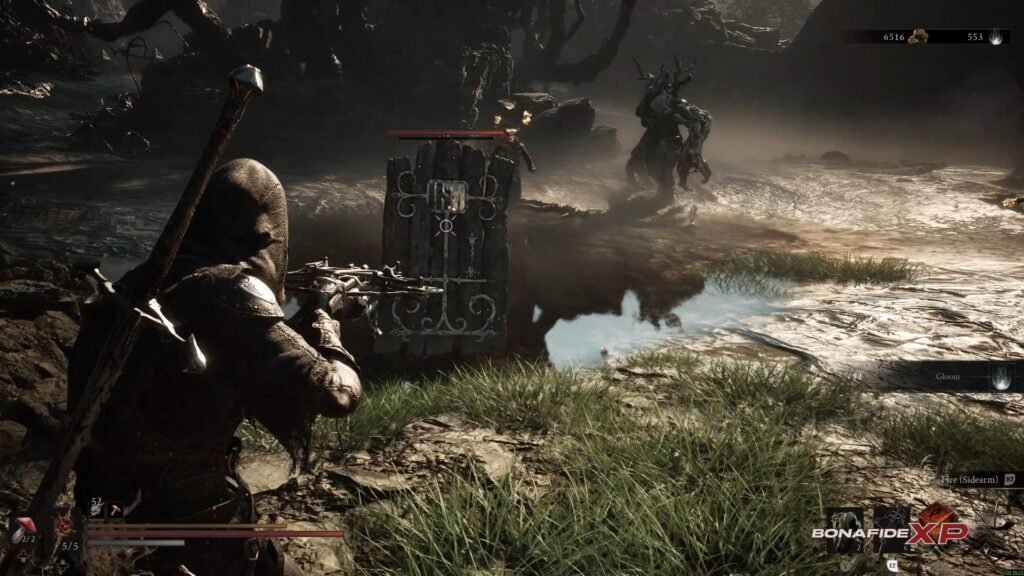
At launch, it crashed constantly. To the point that every loading screen felt like a mini game of Russian roulette. I either got more game or a frozen load screen that kicked me
back to Steam. I really had to fine tune my settings with this game to find a sweet spot that would work. But a lot of times it just didn’t seem to matter.
Beyond the crashes. I had issues getting stuck in geometry, attacks that would launch me straight into the sky, tons of pop in. Sometimes, I would walk into a dungeon that gave
me a complete black screen while enemies were beating the crap out of me. And the damage scaling didn’t help any of this.
I’m a pretty patient man, and this game kicked me out more times than I can remember any game ever doing. The latter half of my experience with the game did do a lot better
with crashes and bugs after the most recent update, and they have already added a ton of great quality of life features that would definitely make the experience much better.
IS THERE A REASON TO START NEW GAME PLUS
Now, Mortal Shell II does have a New Game Plus option for beating the game, and there is a slight narrative reason to go at it again, at least on the surface.
And then there is Night Mode.
Night Mode is basically adding more difficulty to your run by turning the day to a constant night. There’s more challenge, more items to find, extra dungeons that are not
available during the day. You can technically access this in any playthrough, it’s not restricted to New Game Plus, but I thought it was a good spot to mention this feature if
you’re looking for more of a challenge.
I am currently running in Night Mode of my New Game Plus and I am already finding new items and enemy types. So, I’m really looking forward to this second playthrough.
I may do a video just on a complete Night Mode experience with all the most recent updates and patches if you are interested.
WHY IT LANDED IN MY TOP 10 SOULSLIKES OF ALL TIME
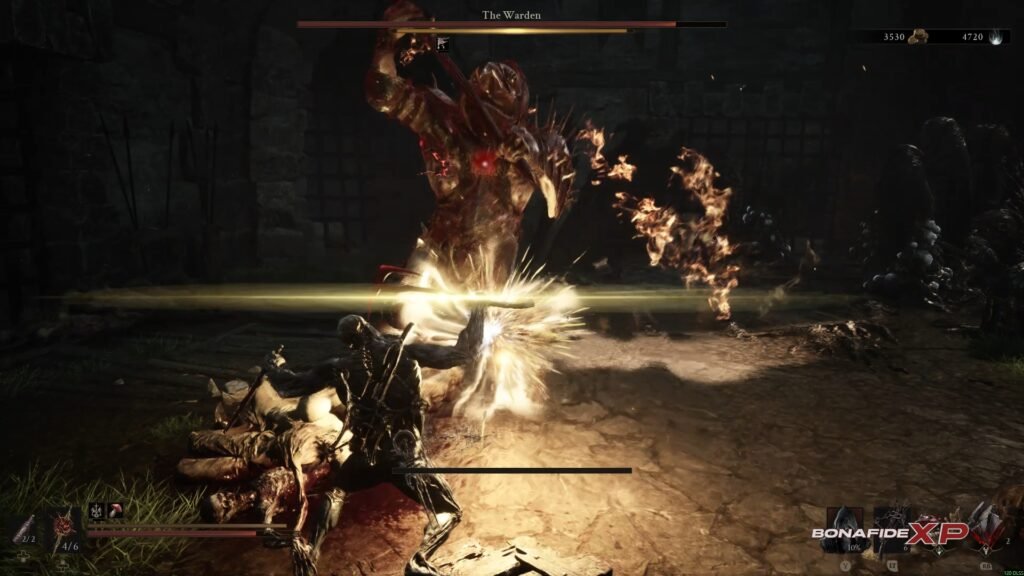
Mortal Shell 2 got seventy hours out of me despite all the crashes, the glitches and crazy pop in and weirdness. And still it did more to keep me playing than even its first game.
A game that survives that much friction and still keeps you coming back is a very, very good sign of something incredible. The core of this thing is so good that it washed all of my
frustrations away and always kept me engaged. The best part is that the team is steadily fixing many of the issues I had with the game.
That is why it is top ten for me. That regardless of all the issues, the game’s greatness doesn’t get hung up by all of its issues.
This is one of the best sequels I have ever played. If you love Soulslikes, this is a must buy. Straight up.
I can’t recommend this game enough. I think Mortal Shell II will continue to be supported with updates and land as one of the great Soulslikes of all time.
Bonafide XP says Must Play
- 70 hours in
- PC
- Life is a Game Magazine was provided a review copy for the purpose of this review
Leave a Reply