
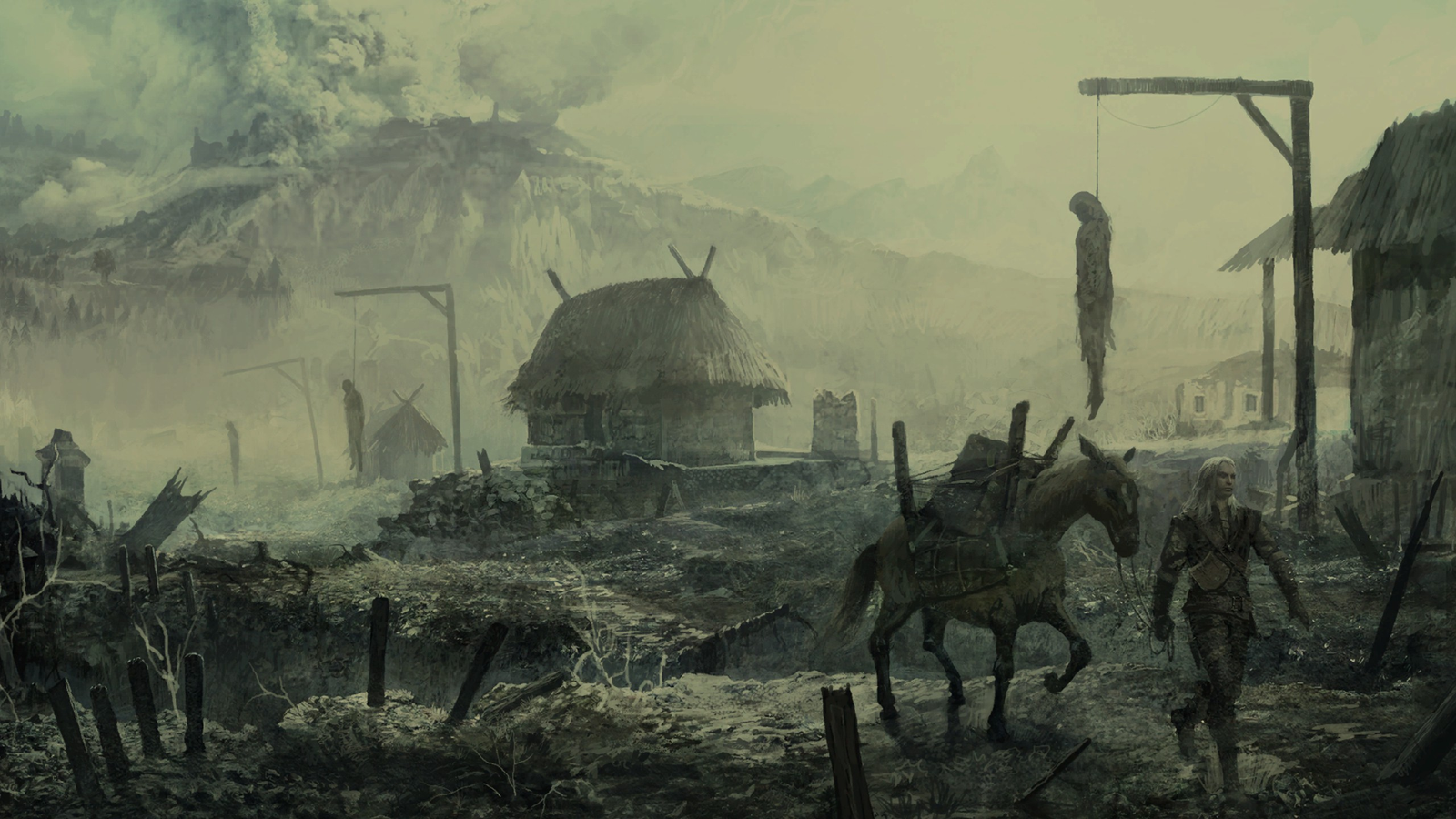

Going back to the original games didn’t simply cure my fake-fan syndrome. It gave me ideas on what exactly CD Projekt Red needs to do to make The Witcher 4 a masterpiece.
I’ll admit it, you guys have always known me as a huge Witcher 3 fan, but I always had a dark secret that hurt my soul: I had never played any of the past Witcher games.
It wasn’t for a lack of trying though. Years ago, before The Wild Hunt existed, I tried to play The Witcher 1. Sadly my younger self just wasn’t capable of understanding the controls, and I simply couldn’t wrap my head around the combat, so I quickly bounced off it.
A few years later I jumped on The Witcher 2. Beautiful, beautiful game, it was shocking, but unfortunately my computer was just not powerful enough for such graphics, and I remember halting my playthrough right when the dragon appeared in the prologue, as I was experiencing the flames from the creature coming out of my PC fans.
Then, my beloved Witcher 3 came out, and it became a fundamental piece of my personality and love of videogames. It consumed me completely. To this day it remains my absolute favorite game of all time, largely thanks to the rich universe, lore and characters. And this opinion has aged like the finest wine as time has passed, because barely any RPG I try has that magic that CDPR inserted in this title.
Eventually though, the guilt caught up with me. I decided it was time to actually walk the path. I cleared my backlog and played Thronebreaker, The Witcher 1, and The Witcher 2 back to back, while also starting my journey with the books.
I went in treating it like a sort of ‘historical homework’ (if you play videogames, you know what I mean), a necessary chore to pass the time while we wait for Project Polaris. I expected to suffer through the old mechanics just to appreciate how far CD Projekt Red had evolved. Instead I was completely blindsided.
Playing these games shattered my expectations of The Witcher 4, and my understanding of what makes this universe so special. I kept finding mechanics, ideas, narrative risks and character treatments in these older games that rivaled even the most modern AAA games of our time. More importantly, it meant that my ideal vision of The Witcher 4 already existed in a way, it was simply scattered across the dark hallways of Vizima, the branching forests of Flotsam, and the war-rooms of Lyria.
Thronebreaker: The Burden of the Crown
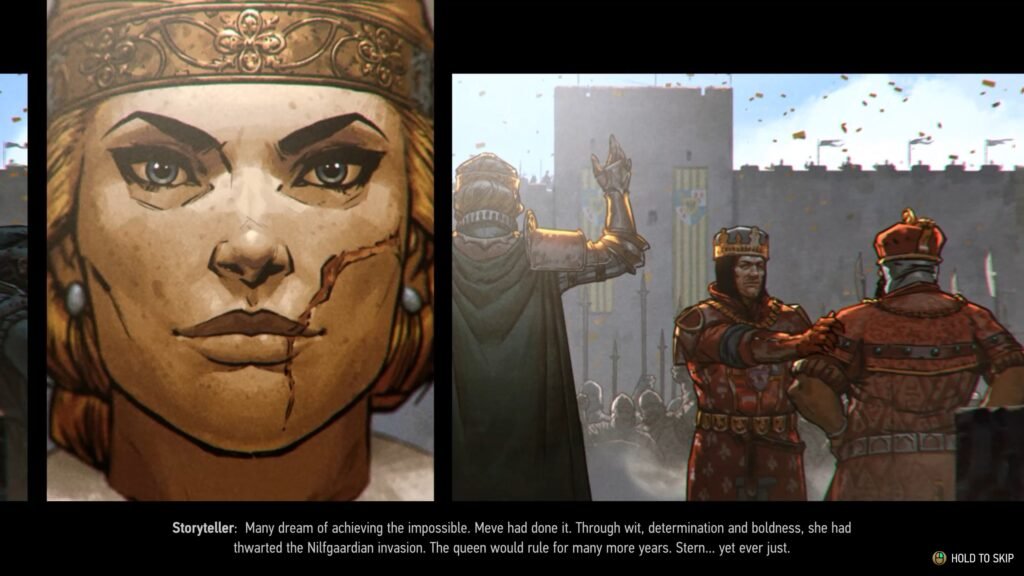
Since I was already a huge fan of the standalone multiplayer Gwent title, I was very excited to finally boot up this game that had sat in my library for way too long. While the deckbuilding and mechanics here are more restricted than the competitive multiplayer scene, it was still extremely entertaining. The custom puzzle battles in particular were fantastic brainteasers that kept the loop feeling fresh.
The story of Queen Meve is, without exaggeration, some of the best writing we have ever gotten from CD Projekt Red.
Playing as a monarch leading a desperate guerilla army is something completely different from our usual ‘neutral’ Witcher gameplay, but the crushing weight of leadership, the tone of the plot, and the choices all felt similar to what we all love and cherish, and were as harsh and grey as you’d expect.
There are no safe dialogue options at all; tough military calls bring quick permanent consequences to not only your story, but also your deck of cards, as you can find important heavy characters pack their bags and leave, resign their posts or straight up die because of a decision you rapidly made.
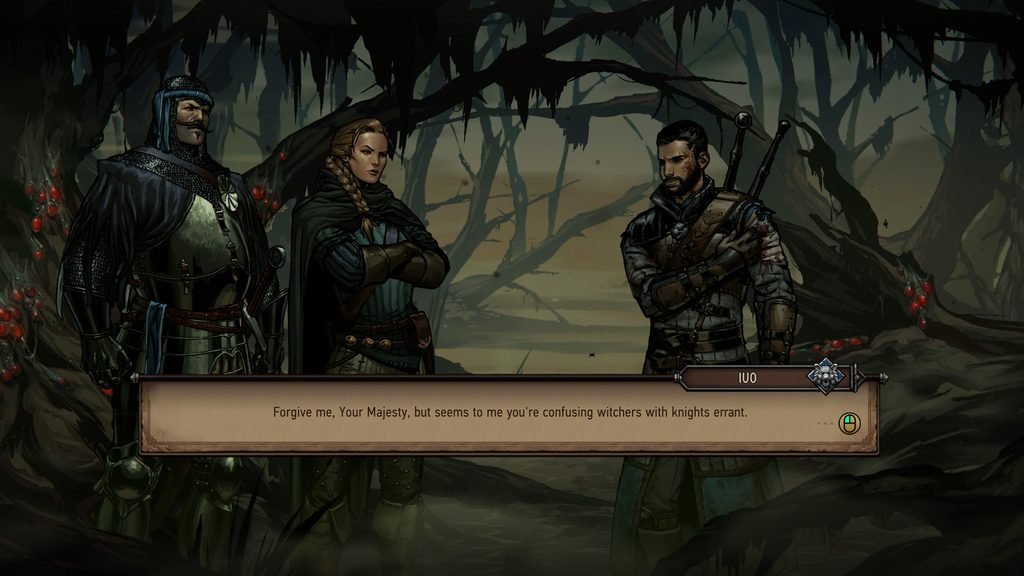
Looking ahead to The Witcher 4, the next mainline game desperately needs this level of crushing morality and immediate consequence. Modern AAA RPGs have become terrified of making the player feel bad or locking them out of content to appeal to a sort of middle ground between an action game and an RPG. The Witcher 4 needs to abandon “safe” choices.
I really want to sweat over every dialogue prompt. I want decisions where nobody truly wins, and where making a controversial call means losing a beloved companion permanently. Thronebreaker proved that CDPR’s writers are at their absolute best when they drag you through the mud and force you to live with the ugly, permanent consequences of your actions. The Witcher 4 needs to let us make mistakes that actually hurt, not only in the story, but also in gameplay.
The Witcher 1: The Blue-Collar Monster Hunter
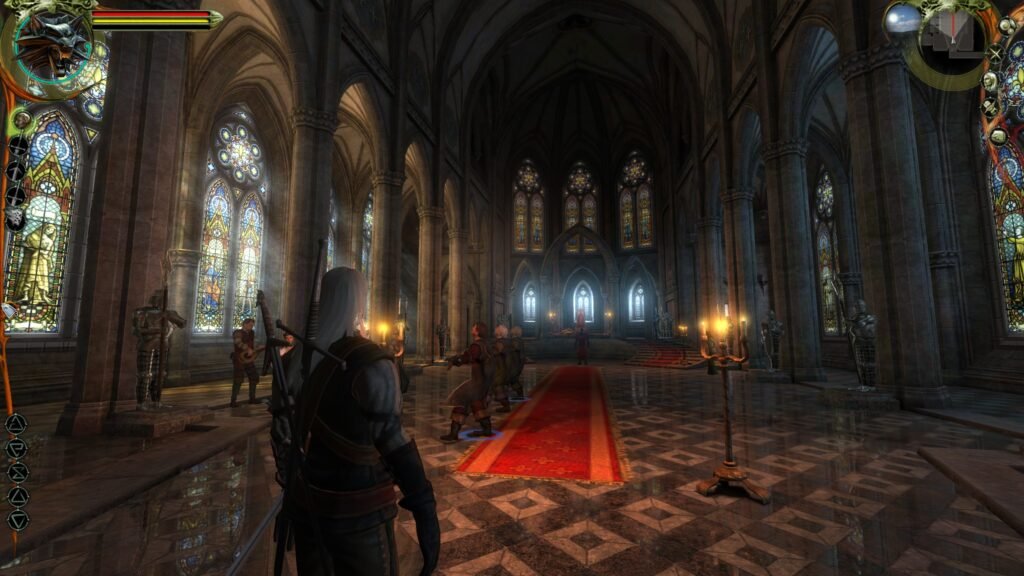
Throughout the years I had the impression this game would be my demise, that I’d never be able to slog through what I kept reading as “horrible combat” and “clunky controls”, but thankfully the game proved me wrong.
I will admit though, the rhythm based combat threw me off at first, and I nearly dropped the game in the first chapter just out of pure confusion on how to progress. But worry not, as it all clicked eventually, and wandering through the muddy, rain soaked Outskirts of Vizima became very special in a heartbeat.
The oppressive atmosphere is completely carried by the music, which is genuinely phenomenal. I would go as far as to say it has almost the best soundtrack in the entire trilogy, perfectly capturing the dark, gothic fantasy of the Wiedźmin. But what really kept me glued to the screen was the story. I was on the edge of my seat the entire time, constantly getting genuinely shocked by massive plot twists at the end of every single chapter. By the time I finished Chapter 3 I barely knew who I could trust and who I could come for help.
But the true genius of the game is how it forces you to actually roleplay as Geralt. The game relies heavily on preparation before a fight. You can’t just run into a cave and spam the attack button while chugging health potions from a quick-menu. Potions are highly toxic and limited by the ingredients you carefully harvest. You have to sit by a campfire, brew them manually, and wait for the right time of day.
Even better is the ‘reading mechanic’. In this game, reading books, tomes, and recipes is actually mandatory. If you haven’t read the specific bestiary entry for a monster, you literally cannot harvest its organs because Geralt doesn’t know how. You have to talk to locals, read up on lore, and research your prey before you strike.
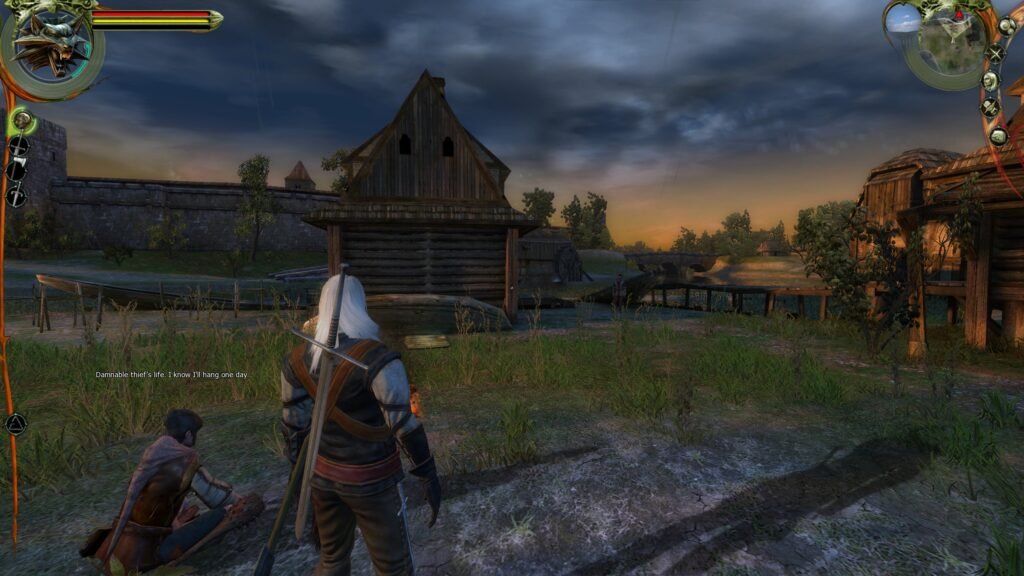
If there’s one lesson CD Projekt Red needs to take from this era for The Witcher 4, it should be that the atmosphere is the most important key for a fantasy RPG. But mechanically, it desperately needs to bring back this immersive “tedium.”
I want The Witcher 4 to slow down and make preparing for a fight a major focal point again. Bring the campfire meditation back, and the tedious, slow potion brewing that actually enhances immersion. Make potions highly toxic again so you have to strategically choose what to drink before drawing your sword, rather than relying on them as instant healing items. The next game needs to lean into the grounded, blue-collar reality of this universe: hunting monsters shouldn’t just be an action-game combat encounter, it should be a dangerous, studied profession that requires absolute preparation.
The Witcher 2: Kings, Spies, and Phantom Liberty DNA
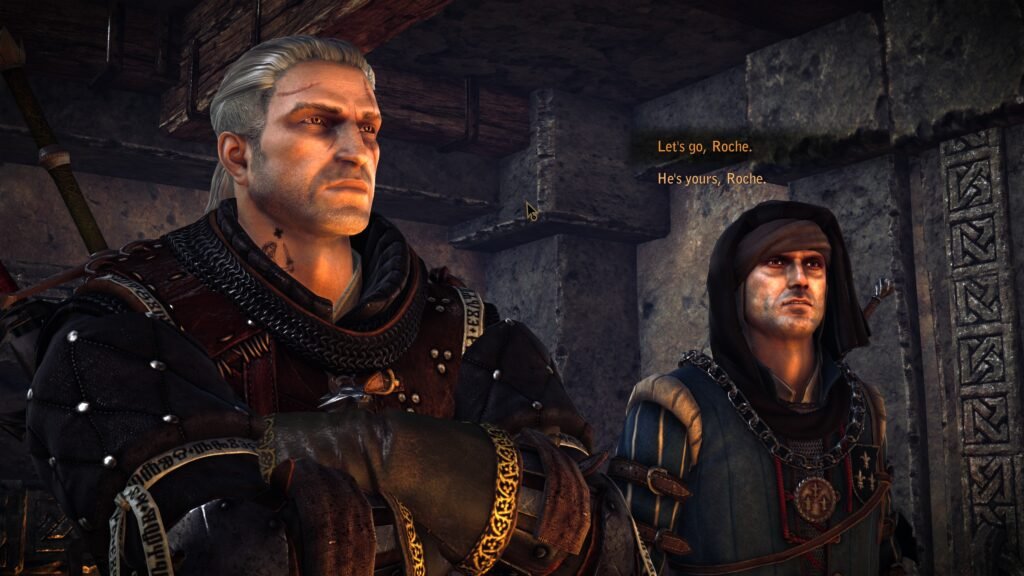
The Witcher 2 takes the gritty foundation of the first game and violently throws Geralt onto a massive geopolitical stage. The plot trades local village curses for grand schemes, kingslayers, and deep espionage. What really makes this game shine is the sheer variety of its cast. It isn’t about dealing with groups of peasants anymore; you are managing relations with varied races and professions, shady spies, desperate elven rebels, dwarven warriors, cunning sorceresses and arrogant kings.
The choices here are incredibly harsh, highlighted by the legendary Chapter 2 split that literally locks you into entirely different maps and storylines based on your political alliances. But The Witcher 2 also heavily embraced the cinematic flair of 2011.
The massive set pieces and boss fights, like battling the Kayran or fighting the golden dragon, are definitely a product of their time, but they remain incredibly entertaining. Playing it now, it reminded me of the unexpected QTEs and set-pieces in Cyberpunk 2077: Phantom Liberty. It proves that CD Projekt Red understands you sometimes need that high-octane simplified action, and that done moderately it doesn’t take away from the core gameplay loop.
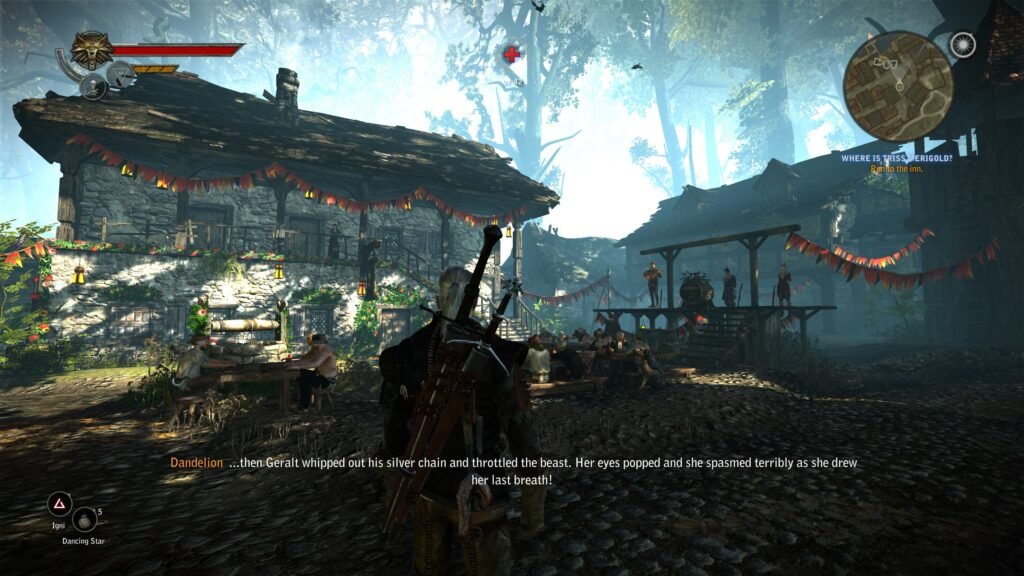
The Witcher 4 needs to remember that this universe is at its best when monster hunting violently collides with high politics. While the harsh journey on The Path is essential, it needs to be wrapped in a grander plot of schemes, racial tensions, and espionage.
I want a wildly varied cast of characters representing every faction of the Continent, forcing us to navigate different cultural and political agendas. More importantly, I’d love it if the next game embraces the cinematic ambition of The Witcher 2. Bring back the memorable set pieces and bespoke boss fights, and combine them with those harsh, world-altering political themes. Make the factions matter so much that picking a side fundamentally changes the story we get to experience.
The Witcher 3 and Trusting the Path Forward
Now you might be expecting me to do another breakdown for The Witcher 3, but the truth is I find it really hard to analyze it for this specific purpose. To me it is already such a fantastic all-around open world RPG that fails at nothing. Picking just one mechanic, idea or detail is simply impossible because the entire package is the gold standard, which makes it my favorite game of all time.
Ultimately, these takeaways are just ramblings from a fan. I have blind trust in CD Projekt Red, and I know without a doubt The Witcher 4 is going to be my next favorite title ever. These points are nothing more than highlights, serving both as reviews and as ideas that I’d love to see implemented in future Witcher games.
But what really cements my trust in this studio isn’t just their track record, it’s the developers themselves. You guys know I love documenting my playthroughs, posting clips and screenshots, takes and criticisms of pretty much everything I play, and I was surprised to see so many Witcher 4 developers interact with my posts, appreciating the early games, and mentioning how important they were to them (especially The Witcher 1).
People need to remember that the team making the next game are massive fans of their own classic work. They haven’t forgotten their roots. If the developers building the next Witcher still deeply appreciate the older titles, there is no reason to fear the future. We are in the safest hands possible.
My hype to finally play as Ciri in the next title is so immeasurable that I actually built a brand new PC for it alone. I’m hoping to finally start reading the books soon to fully prepare myself for whatever comes next, and whenever The Witcher 4 finally drops, it will more than likely be the first Collector’s Edition I ever buy in my life.
The Path is calling again, now in the boots of Ciri, and for the first time, I’ve never been more ready to walk it.
Leave a Reply