
I always try to start out my reviews with a short anecdote about why I chose to review a game. When it comes to Fatal Claw, however, I can’t do much better than “it looked badass enough to try”.
Although the trailer appealed to me, the price tag didn’t. $35 CDN (roughly $25 USD) is at the top end of the scale for Metroidvanias, and from experience, the price to quality ratio starts to wobble anywhere above $30.
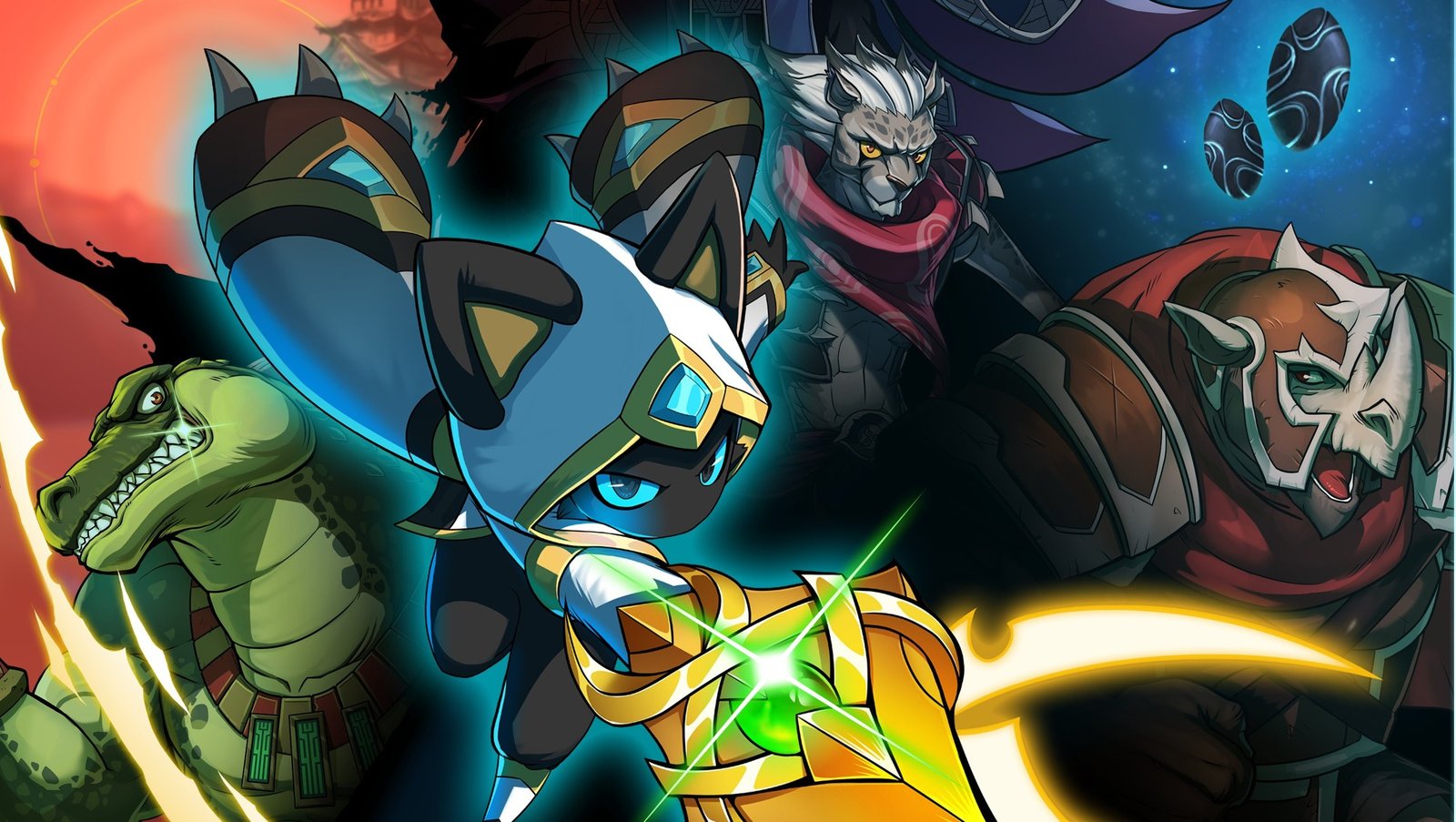
But Fatal Claw is hard to ignore. It has a clean, appealing art style with plenty of enemy and level variety. Videos show the cool ninja-cat character dashing between enemies and performing all sorts of acrobatic moves.
It wasn’t until I played it for a few hours that I realized that just how much inspiration it draws from Hollow Knight. So much so, that it was impossible for me not to compare the two at every turn.
Like it or not, Team Cherry set a new standard for what players can expect from an indie Metroidvania game, and Fatal Claw just doesn’t measure up well enough to charge almost double the price at launch.
Too Much Like Hollow Knight
I should probably start by qualifying that statement, because on the surface, the two games look nothing alike. Hollow Knight’s grey scale color palette contrasts heavily against Fatal Claw’s bright landscapes. Kashi, Fatal Claw’s feline protagonist, doesn’t look anything like the Vessel either.
But the similarities are obvious practically from the start.
Kashi wakes up to a world being consumed by an infection. Check! She makes her way to the hub town of Aurora, where she meets an assortment of NPCs that offer up quests and sell her stuff to help her on her mission. Check! Along the way, she discovers that she’s the chosen decendent of an ancient king, and that she was preserved to correct past mistakes. Check! Her ultimate goal is to unseal a door by collecting three seals protected by the corrupted forms of the king’s former associates. Right?!
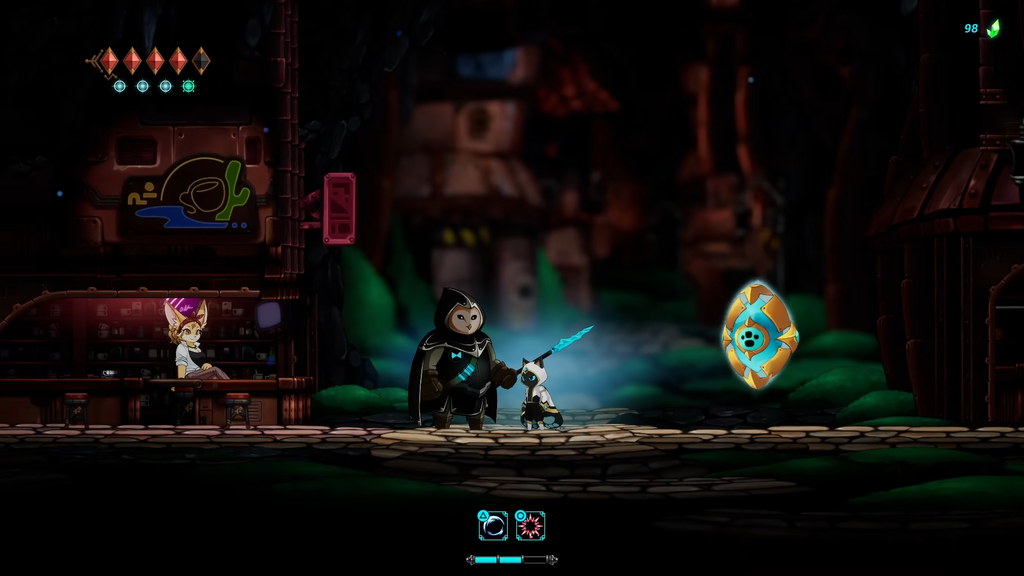
Already, I can draw lines to Dirtmouth, the Black Egg, the White King, his relationship with the Vessel and his reason for creating it.
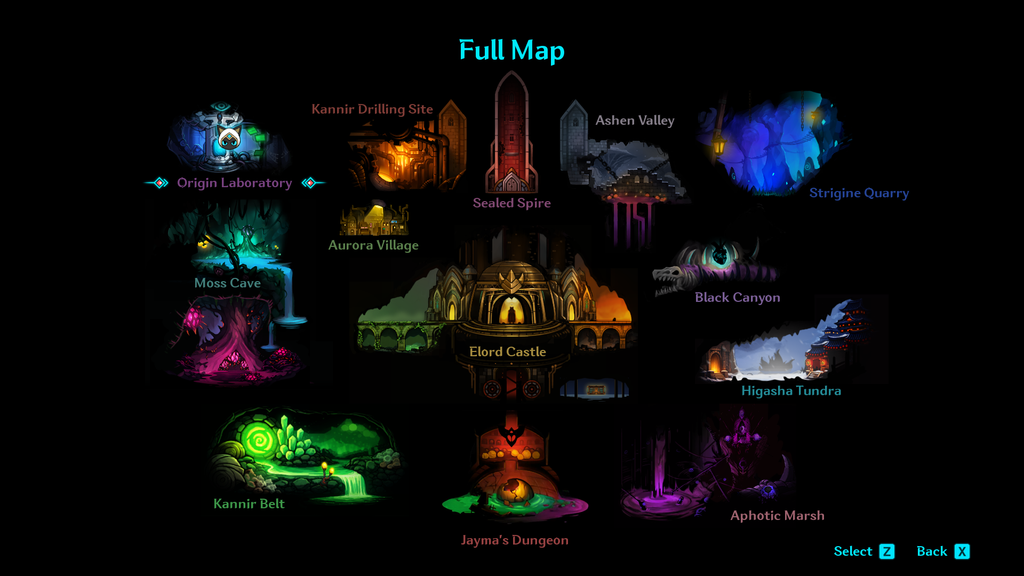
Maybe those are tenuous lines to draw, but then, consider how alike Kashi’s world is to Hallownest. All of its areas are laid out around the devastated kingdom’s abandoned Royal Palace. Below that palace is Fatal Claw’s equivalent of the Abyss, which in this case is the twisted source of the infection.
Fatal Claw even fields its own version of Hollow Knight’s charm system with something called the Cabitz — a sort of data pad that can hold chips granting a variety of buffs and ability modifiers.
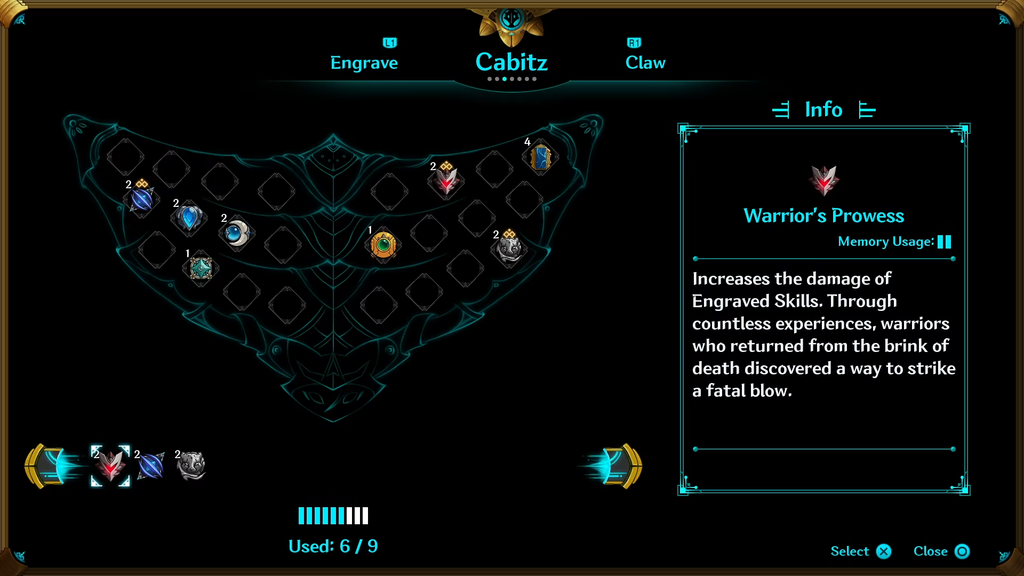
But the most damning evidence is that Fatal Claw copies all of Hollow Knight’s traversal mechanics. Even the most iconic ones, like the Vessel’s Crystal Dash and pogo-ing, are in Kashi’s repertoire.
There’s nothing wrong with an indie studio drawing from another game for ideas. It happens all the time. But there is a certain point where that turns into imitation — and Fatal Claw crosses it in my opinion.
That Doesn’t Mean It’s Boring
That didn’t stop me from enjoying Fatal Claw.
I really dug its futuristic riff on the whole “save the world from infection” shtick. One of the story’s many branches tells about how it was a modern corporation that discovered the ancient civilization of cats that Kashi is a decendent of. They survived a distant apocalypse by preserving their souls in magic crystals. The remnants of their failed experiments are all over the place, and eventually, their connection to the infection is revealed.
That interplay between technology, eastern culture, and magic was fun to unpack through the many collectibles offering glimpses of the past. It was also reflected in the world design, which tied together a derelict lab, an ancient temple, a power plant, and a sacred jungle.
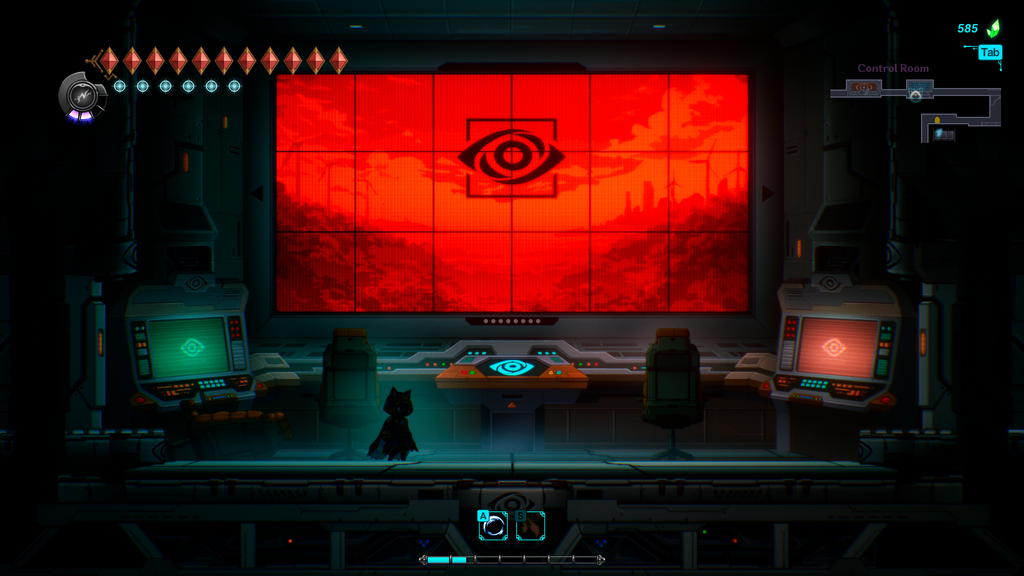
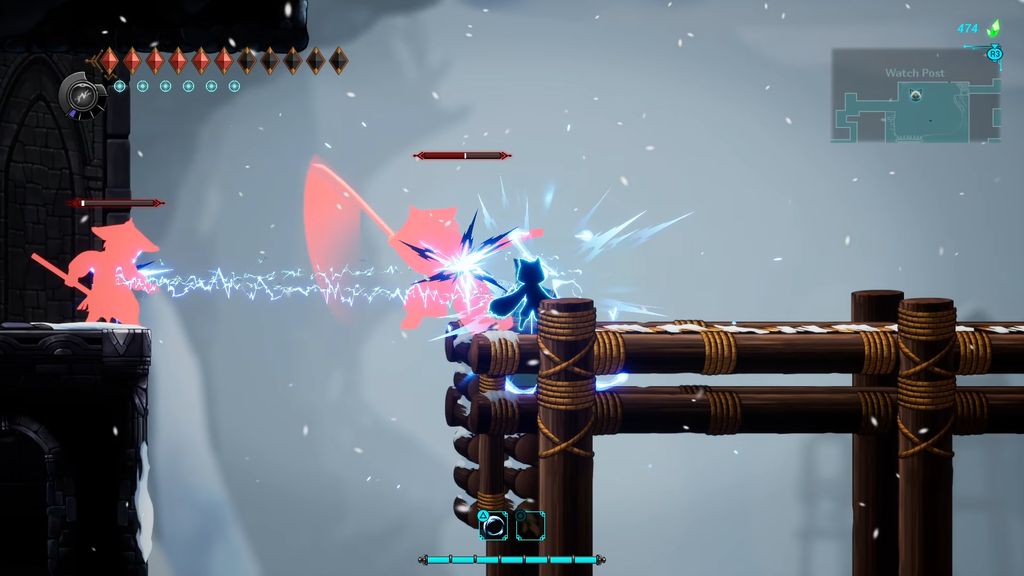
Meanwhile, Kashi’s blink ability adds that little bit of flair to make Fatal Claw’s combat stand on its own. Blinking makes her dash behind an enemy, marking them in the process. Once a target is marked, Kashi can unleash a lightning blast that causes a small amount of damage over time.
She can mark up to 4 enemies in row, which causes the lighting blast to chain between them and do a lot more damage. I don’t think I have to tell how good it feels to actually pull off a chain of three or more targets.
Kashi can also use castable abilities called Engraves that mostly mimic those in Hollow Knight. However, you eventually find an item called the Combinator that lets you fuse her regular engraves into some pretty terrifying super powers. The catch is knowing what base powers to combine, so you have to scour the world for the recipes.
All that to say that I wouldn’t write off Fatal Claw as simply Hollow Knight with a cat. It will feel very familiar if you logged a lot of time on Team Cherry’s maiden game, but Fatal Claw has enough substance to earn it its own identity.
Come For the Claws, Stay For the End Game
In fact, one of the most defining features comes after you beat the game.
It officially ends when you unseal the gate and let everyone out to the surface. The version of the ending you get depends on a variety of factors, including who makes it out alive and whether or not you dealt with the infection.
Now, alternate endings aren’t anything new for Metroidvanias — Hollow Knight included. Actually, most of them have more than one, and finding them all usually requires a tedious number of playthroughs.
Not so in Fatal Claw… as long as you have enough memory shards to feed the Stone of Narrative, it will show you exactly what events you need to complete to achieve a certain variation.
What’s a memory shard? Glad you asked!
After the credits roll, you can jump back into that save file and discover a handy new device in the Hall of Ancestors called the Wheel of Fate. Activating it brings you back to the beginning with all your collectibles, activated fast travel points, and completed quests.
Every rewards you found during the previous cycle are replaced with a large crystal that releases a single memory shard when broken.
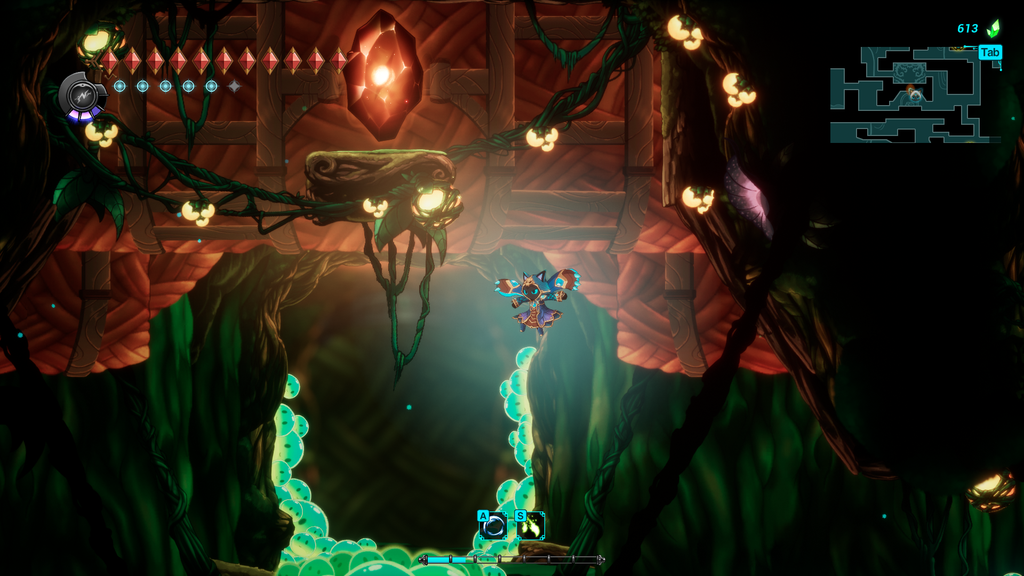
You can come and go as you please this time, so there’s nothing stopping you from skipping right to end with a healthy supply of memory shards to reveal the conditions for different endings.
I loved this format because it respected my time. It was great to skip over content that I would otherwise breeze through. Navigation was a bitch though, since there were no more NPCs to point me in the right direction anymore, but that was a small price to pay to save on hours of repeating the same stuff all over again.
More Approachable Than Hollow Knight
You should also expect to pulverize everything in your way except the last two or three bosses on your next playthroughs. Fatal Claw is much easier than Hollow Knight, and it doesn’t have any difficulty settings.
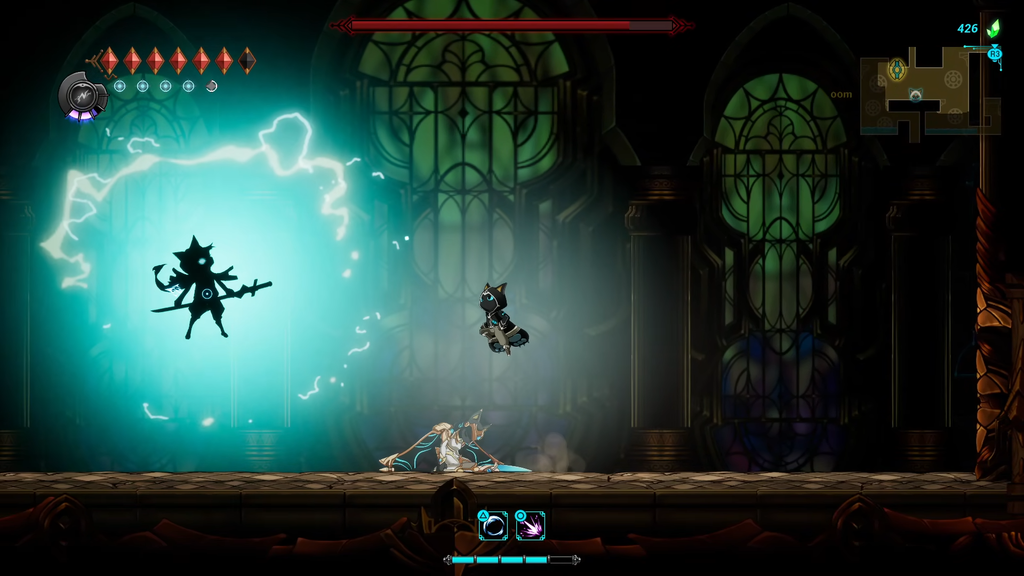
Most enemies, even bosses, had predictable attack patterns. Most regular enemies only had one attack to begin with, and those with more usually telegraphed what they were going to do. I rarely had to fend off two or more foes at the same time, and even then, Kashi’ blink ability made it easy to get out of trouble.
The environments weren’t much of a factor, either. There were pits and spikes sprinkled around, but other than a few tougher parkour sections, traversal was an afterthought. If you’ve made it through the Path of Pain in Hollow Knight, you can be certain that Fatal Claw will be like a stroll in the park.
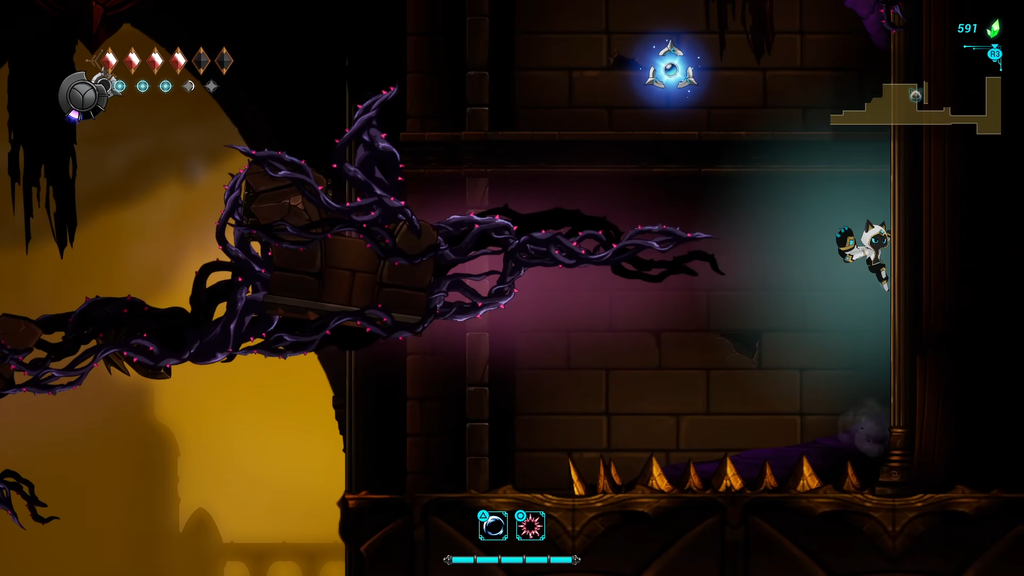
Even when the game managed to offer a challenge, the frequent save points killed it. At no point did I ever feel like I was at risk of dying at the hands of regular enemies because I was so certain the game would rescue me before things got nasty. And it always did.
Is the game’s lack of difficulty really a problem? That depends on the type of player you are.
Personally, I don’t always want to stay 110% focused just to avoid dying. Sometimes, I like to enjoy a good story and explore a new world. The latter is what Fatal Claw has to offer, and that makes it friendlier to much wider range of players than Hollow Knight.
Verdict
Based purely on merit, I would absolutely recommend this game because its a fun, casual Metroidvania with a cool story, sharp controls, and fun gameplay. Who cares if it’s too much like Hollow Knight? That’s an award winning game right there, so how bad could Fatal Claw really be?
What I won’t do is recommend paying $10-$15 more than what Hollow Knight costs. Fatal Claw doesn’t do enough to make it substantially better or different enough to warrant the higher price tag.
Keep in mind that it only came out last month. The way indies go, it should be on sale by October anyways.
Woody SAYS Wait for a sale
- 19 hours in
- PC
- Bought it
Leave a Reply