

There’s few series in the modern gaming landscape more underrated than the Plague Tale games.
These two games (Innocence and Requiem) focused on a 15-year old girl Amicia and her sickly younger brother Hugo. They were two siblings whom never developed a close relationship due to being on opposite spectrums of their parents’ love. Amicia closer with her father and Hugo, their mother.
However, they are forced to flee their home together when powerful invaders ambush their home and kill their parents. These forces are armed, militarized and have a clear want: to kill or kidnap Hugo.
Amicia is initially trepidatious to the task. She was always jealous of Hugo; his sheltered existence and his very close connection to their mother. This rift heals with time spent together and distance shared during their adventure. As the story progresses, Amicia’s love for her brother deepens– and she grows to understand the sickness within Hugo (the Macula) has devastating implications for France.
A Plague Tale took obvious inspirations from story based games like The Last of Us and Brothers: A Tale of Two Sons. Asobo clearly wanted to prove their capability in telling an emotional story in the shape of an epic adventure game, something they had never accomplished.
From AA Underdog to Genre Standout
Up until this release, Asobo’s biggest games were simulators and move-tie ins like The Crew, Zoo Tycoon and various Disney adaptations (such as the surprisingly enjoyable Toy Story 3). Some of these games were enjoyable, but a lot of people doubted the capability of such a team handling a more traditional, ambitious single player campaign. This was partly why the series had an uphill battle to gain the mainstream attention from gamers.
That’s not to say the Plague Tale games failed financially or critically. Asobo streamlined the gameplay style of Innocence in order to keep the budget on the relatively low side (for a game of this scope). It still had bombastic set pieces, beautiful vistas and more– but it’s main gameplay loop was constrained to a smaller scale stealth system. Technically, it could be described as a AA title with a budget somewhere in the area of $10-$20 million instead of AAA. Other major games in this time period could easily exceed two or three times that amount (Uncharted 4 had an estimated budget of $100 million).
But even still, despite it’s modest successes it’s hard to tell if Innocence broke into the mainstream. The combat was very limited, the main character were children despite the mature setting and the time period was obscure. Year over year, more people (like myself) gave it a chance and discovered that indeed Asobo created something very special. Not only did it meet AAA standards, but these games had very unique gameplay mechanics to stand apart from the rest.
What was the golden ticket for A Plague Tale? Well, it’s answer was in the name. The rats.
Hundreds of thousands of rats were a constant threat to our main characters. They moved and breathed like one giant monstrous organism; get too close and Amicia would get ripped apart. They were terrifying to watch bleed across the environment, devouring everything and everyone in their path. Their sound design was shrill and intimidating. However… you could also use them to your advantage. You could use the rats to kill enemies, to solve puzzles, to remove obstacles. What could have been a gimmick was instead vital to the personality of this series.
It was EXTREMELY impressive for a game of this scale.
Requiem Raises the Stakes
Next came the release of Requiem: bigger in scale (and at least twice the budget) to the original, it felt like the series was finally receiving more of the attention and reception it deserved.
The gameplay was improved, with more emphasis on combat and more flexibility in approaching enemy encounters. This was doubly true for the story. Asobo clearly had a start, middle and end to this story– and Requiem delivered a finale that is emotionally devastating, touching and satisfying.
So with Amicia and Hugo’s story complete, many were eager to see what Asobo would pursue next. They had proven themselves capable of rivaling the best in the industry with a portion of the budget. Stories with layered characters, high stakes and the mature thematic elements. Asobo did not hold back. There was even a quick, Marvel-style post credit tease hinting at the Macula in a modern setting.
A Prequel That Looked Nothing Like Its Predecessors
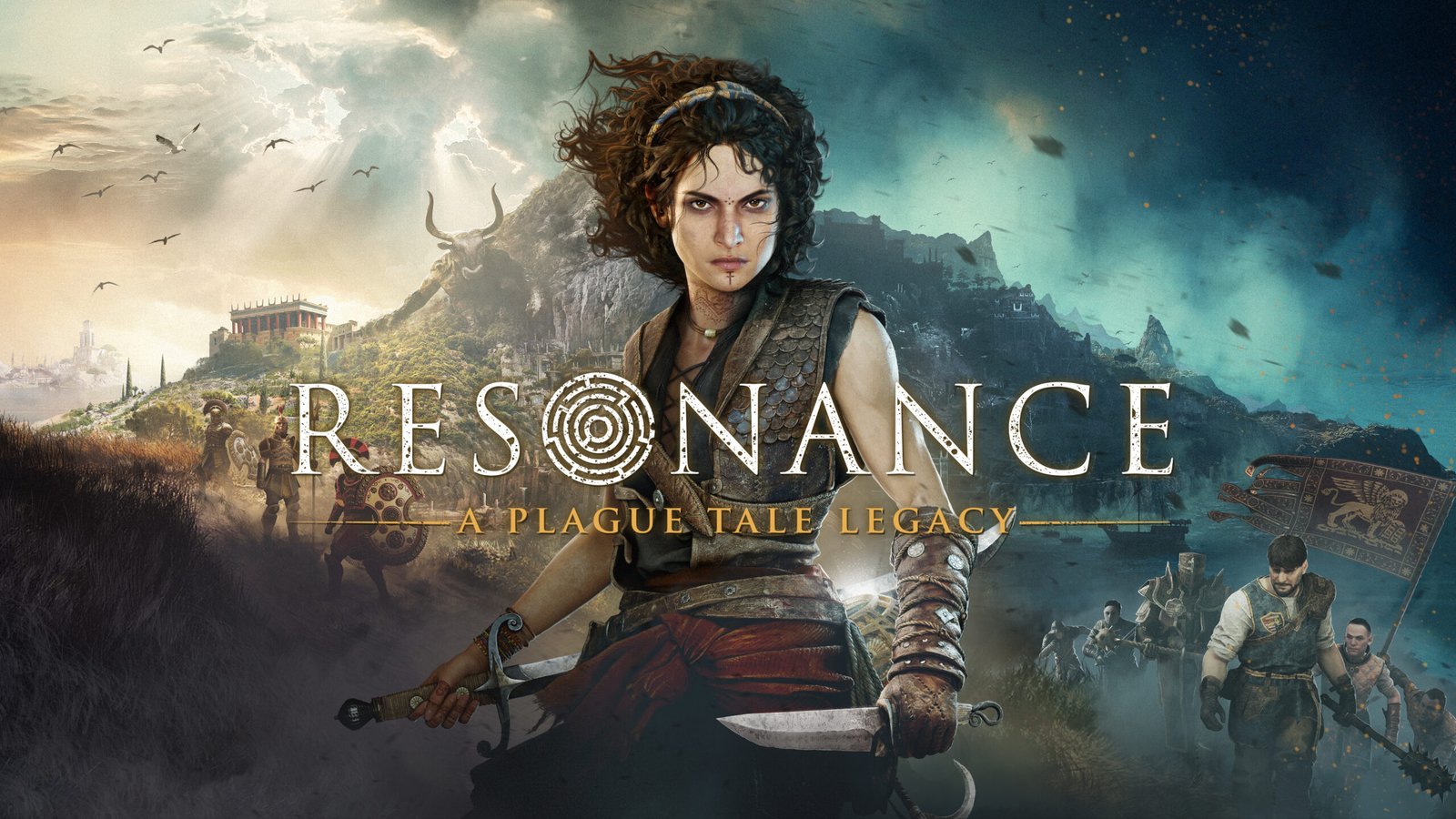
In June in 2025 we got our answer. A prequel focused on one of Requiem’s side characters: Resonance: A Plague Tale Legacy. And it looked VERY different from the previous two games.
Initially I will admit, I felt more trepidation than excitement. By this point Asobo had earned my trust, but I was disappointed to see Resonance was so completely contrary to the series’ established norms.
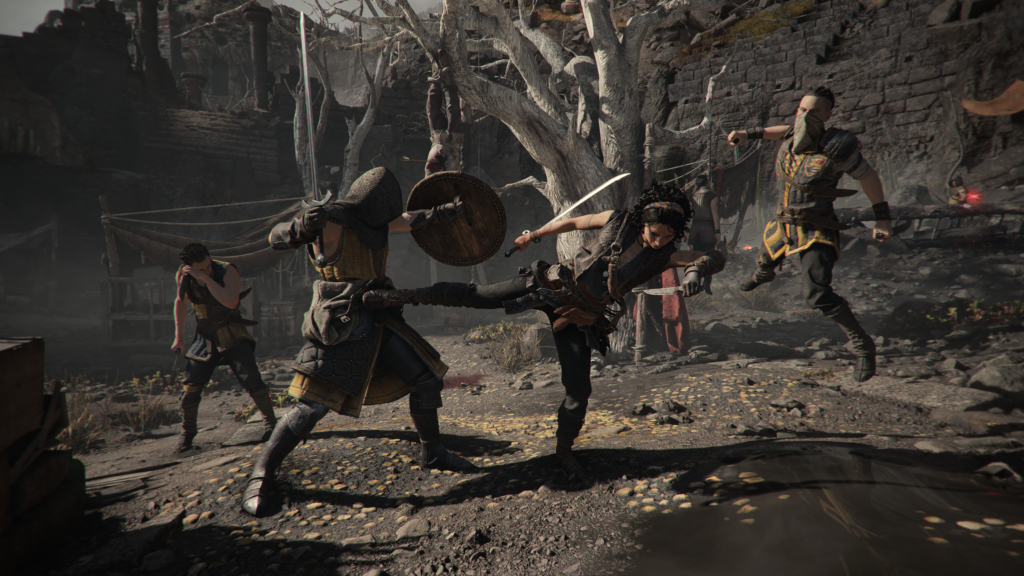
The stealth mechanics were gone, replaced instead with hand-to-hand combat that appeared clunky. Our protagonist was an experienced pirate, contrary to the innocent and feeble teenager of Amicia. Even more concerning: the lack of rats. Almost all of the elements that made the previous Plague Tale games so special and different were apparently excluded with this sequel.
Regardless of these worries, I decided to trust Asobo. To be honest: I was also skeptical to originally give A Plague Tale Innocence a try– when I did, it became one of my favorites. And just like Innocence, I am very glad I gave Resonance a shot.
Right from the beginning Resonance is a brave departure from Innocence and Requiem. Asobo made no secret of that, but instead relished in an opportunity to implement new gameplay mechanics, a different setting and a much different protagonist.
Combat, Reimagined: Trading Stealth for Steel
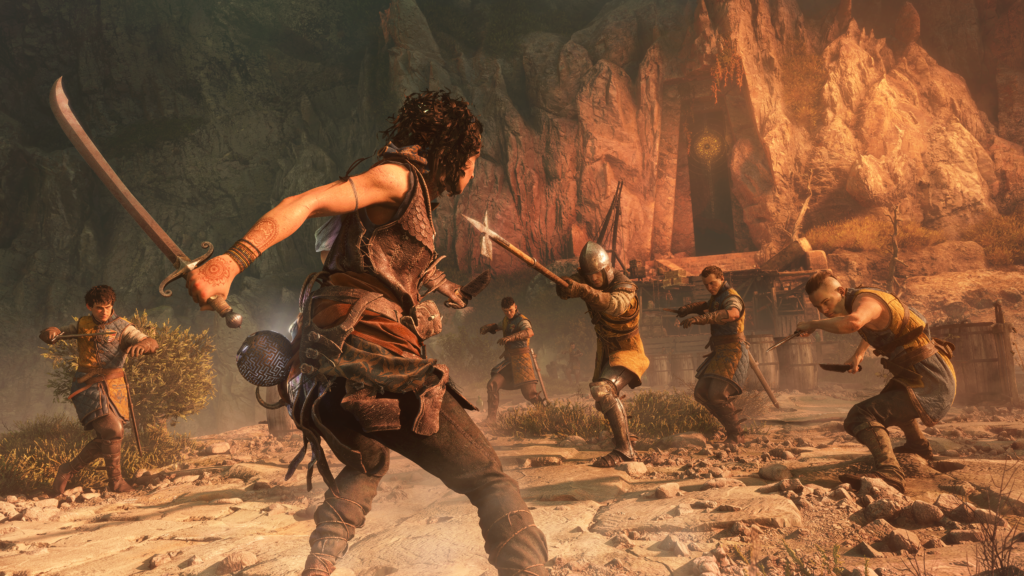
Let’s start with the gameplay. I am of the opinion most people can get a decent feel of a game based on reading reviews, previews and watching gameplay footage– but the combat of Resonance is deceptively satisfying (despite gameplay previews looking clunky). I would describe it as a sort of combination of games like Black Flag, Ghost of Tsushima or the Arkham games. It’s not an especially deep system but it does feel great to play in a way you tangibly need to feel to understand.
Throughout the adventure you have your run-of-the-mill skill-tree to upgrade but it’s fairly flexible and allows you to choose from a variety of different combat styles. On my next playthrough, I can definitely see myself taking a different approach to skirmishes based on an alternate skill-tree pathing.
Puzzles and the Serpent: A New Kind of Threat
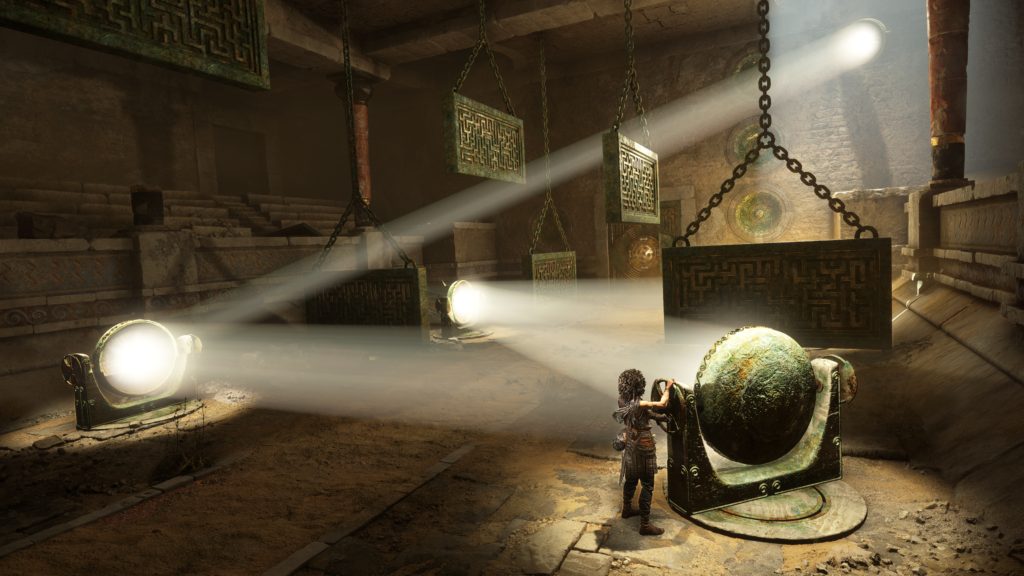
Secondary to the combat are the puzzles. Puzzles were a huge component of the previous games, but their mechanisms and solutions are also remixed from the established norms. Most of the puzzles rely on aligning reflective beams of light– very similar to something you’d see in Uncharted. What’s most surprising (gameplay wise) is these puzzles are what partly helps Resonance stand on its firm footing– in a way the original games used the swarming rat mechanics.
These beams of light become an essential tool in Sophia’s arsenal. Not just to progress in puzzles, but to combat this game’s solution to the rat swarms: The Serpent.
Without risk of revealing too much, I will say The Serpent is a horrifying monster that initially appears to operate mechanically opposite of the rats. Instead of fluid-like waves of thousands of little disease-demons, it’s a singular snake-like monstrosity. It’s massive and disturbingly detailed.
Despite these threats being completely contradictory in nature, many of the mechanics used to combat them are the same. And yes, they are both a direct consequence of the big bad in this series: the Macula.
A Technical and Musical Showcase
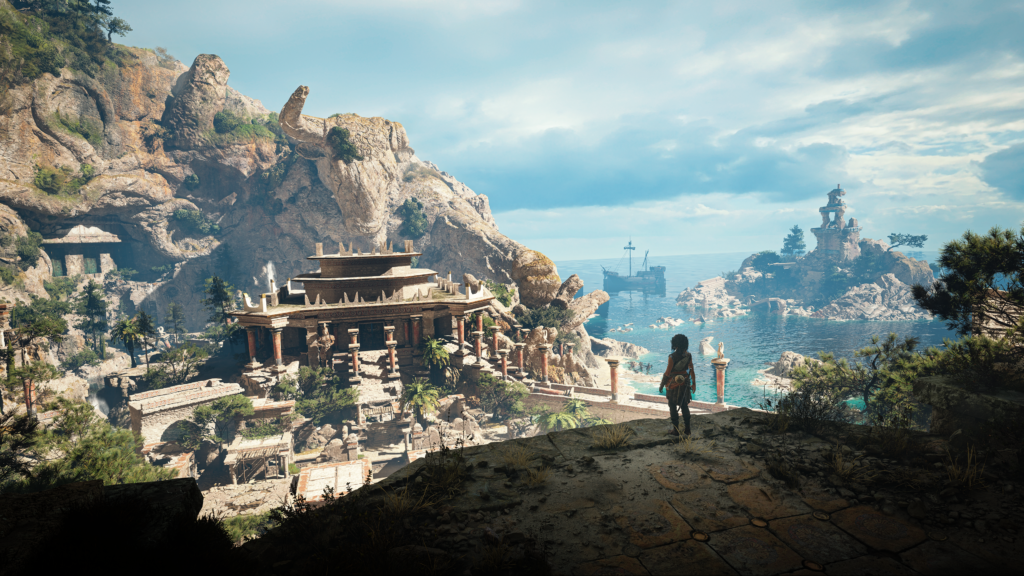
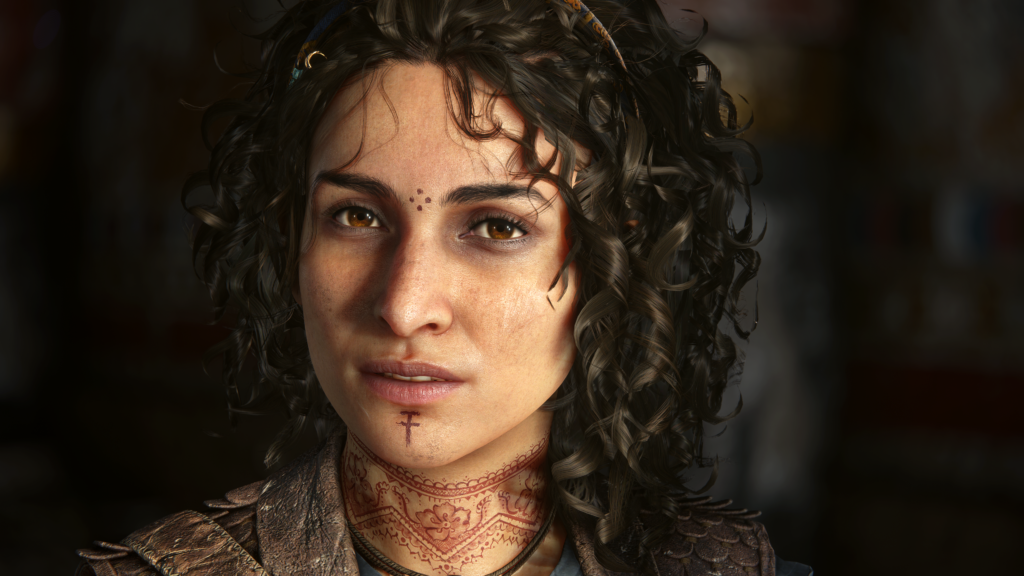
Let’s next discuss the technical accomplishments of this title. There’s no two ways around it: this game is objectively beautiful. I played in quality mode on my PS5 Pro: the environments, character designs and effects are all top of their class. Faces are emotive and capture the performances of these actors (especially Anna Demetriou playing Sophia). Aesthetics of each area are intricately detailed,
The music (just like with all of these games) is reliably fantastic. Olivier Derivière created the music for each entry in this series– and you can tell he had a lot of fun with the more Mediterranean (and Greek) stylings of Resonance. Sound design is also top notch, my favorite example being the heavy and haunting breaths of the Serpent. It will constantly have you clutching your controller during the game’s suspenseful moments.
The Story’s Real Ambition: What “Resonance” Really Means
And this is where I will segue to Resonance’s biggest accomplishment: the story. On the surface it appeared to be much more generic from the previous two games. Sure, Sophia was in A Plague Tale: Requiem. But she could not be more different from Amicia and Hugo. She has different goals, different methods of meeting them and is much more confident in her capability.
Even still, this is where (I believe) the title of the game reveals its ambitions. Resonance is described online as a physical phenomenon that happens when an external force or vibration matches an object’s natural frequency. This can cause a dramatic increase in the amplitude of the object’s vibration, or even the opposite.
I believe Asobo is trying to show us that perceived differences in our character and journeys are not always as unique as they appear. Polar opposites that appear completely divisive from one another may have more in common– these elements can cooperate and accomplish things together they wouldn’t be able to individually.
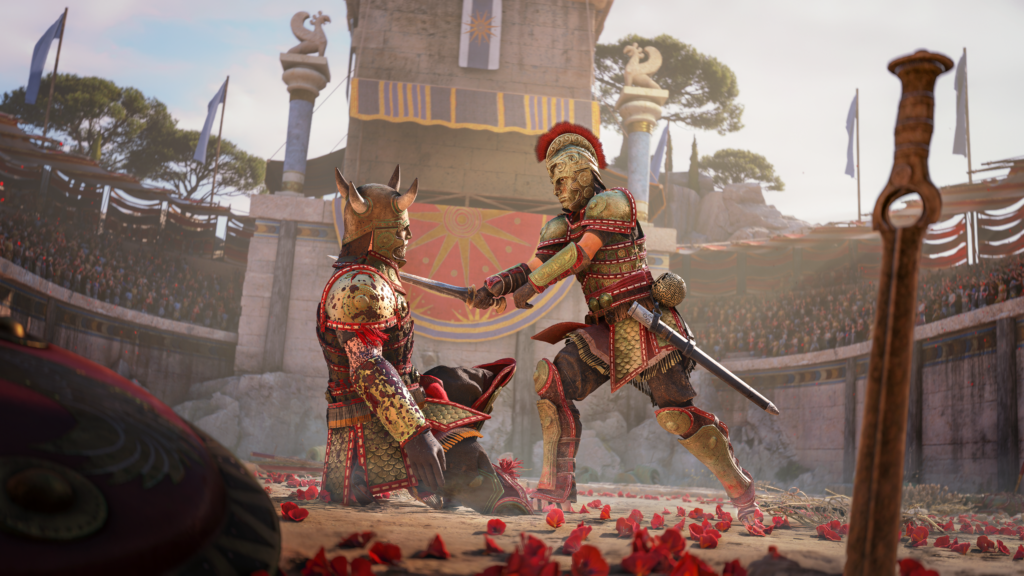
In this game, the obvious resonance is clearly distinguished between Sophia and Theseus (a Greek warrior from a different time period). Throughout the journey you will see these amazing locations in their prime during Theseus’ view– then again in Sophia’s, years later after nature has eaten away at them. It’s an especially clever mechanic I hope we see utilized more in future games, something like Tomb Raider or Uncharted would greatly benefit from this mechanic. Its a smart way to re-utilize the same temples while keeping them fresh.
But beyond Sophia and Theseus, I think it goes deeper than that. Maybe even to the root of this series. Sophia vs Amicia for example. Instead of Amicia running away from evil and avoiding the truth, Sophia is running towards it and looking for answers. Instead of Amicia hiding in shadows, Sophia is directly tackling her enemies head on.
They appear to be completely different frequencies. But as the story develops, it becomes clearer to Sophia that Theseus is expanding her perspective of the world around her.
While Sophia starts the story as her own person, over the course of the journey she grows more and more alike Theseus. Despite their difference in time and place the two characters develop a connection– by the end of the game you realize that this adventure is very similar to Amicia’s experience in the previous game. It’s a tough subject to tackle but I think it’s something worth exploring: despite all of our differences, there is resonance between all different walks of people in life. They are built to oppose, but with hard work and dedication can instead compliment each other.
It’s a risky approach to take with a sequel but Asobo hit their mark. It’s a big swing and hit, in a way that a lesser team would not be able to accomplish. It’s a great topic during a time of much political division in the world. The game is entrenched in it’s time periods while feeling increasingly relevant. Sophia is a likable and empathetic character, as are the rest of the cast.
Where Resonance Falls Short
That’s not to say the game is without its minor flaws.
One missed opportunity was the lack of death animations when it comes to death by The Serpent. You will see the same animation over and over again which is disappointing considering the variety within the rest of the experience. It’s a nitpick, but I felt it justified. These death animations can be used as an opportunity to give the violence some character, as we’ve seen in other games like Tomb Raider and Dead Space.
Next, the puzzles. I personally really enjoyed them, I felt they were challenging enough without ever having to search for solutions online. However, I have seen others online who find them too straightforward. Truthfully, I am very bad at puzzles– so it’s possible that you will not find them as rewarding to solve as I did.
In terms of the storytelling, one of the characters was portrayed in a “villainous” way felt more generic than this story deserved. The latter half of this game added some much needed dimension to this portrayal, but I still found their performance and dialogue a bit stilted compared to the rest of the presentation.
I also was not especially pleased with the final boss battle. It looks epic and utilizes some of the mechanics built up throughout the game… but even still, it didn’t quite hit the mark for me. It felt a bit out of place compared to the rest of the game (think the final warthog escape in Halo).
My final complaint is less to do with this game, but more to do with my expectations from finishing Requiem. That post credit stinger may have just been a fun poke at the idea, but a Plague Tale game in a modern setting sounds outlandish and crazy. And I would love to play it.
Final Verdict
Regardless of these small complaints, this is an amazing game. It’s a AAA-tier experience made by a passionate and talented team. Asobo has proven themselves to be one of the leading voices in modern single player game design. They are able to make epic experiences on tighter budgets and stricter deadlines– and each one is infused with a real sense of expertise and personality. This is something the gaming industry desperately needs right now, as it’s having trouble adapting to the grand expectations (and inflated budgets) of the modern full priced game.
I will be there for whatever adventure game is next from this team. If you enjoy story driven single player games like I do, it’s essential playing in 2026.
Resonance: A Plague Tale Legacy is $60 on Playstation 5, Xbox Series and Windows PC platforms. It is rated Mature for Blood, Strong Language, and Violence.
Brokowski recommends it
- 20 hours in
- PS5 Pro
- Bought it
Leave a Reply