
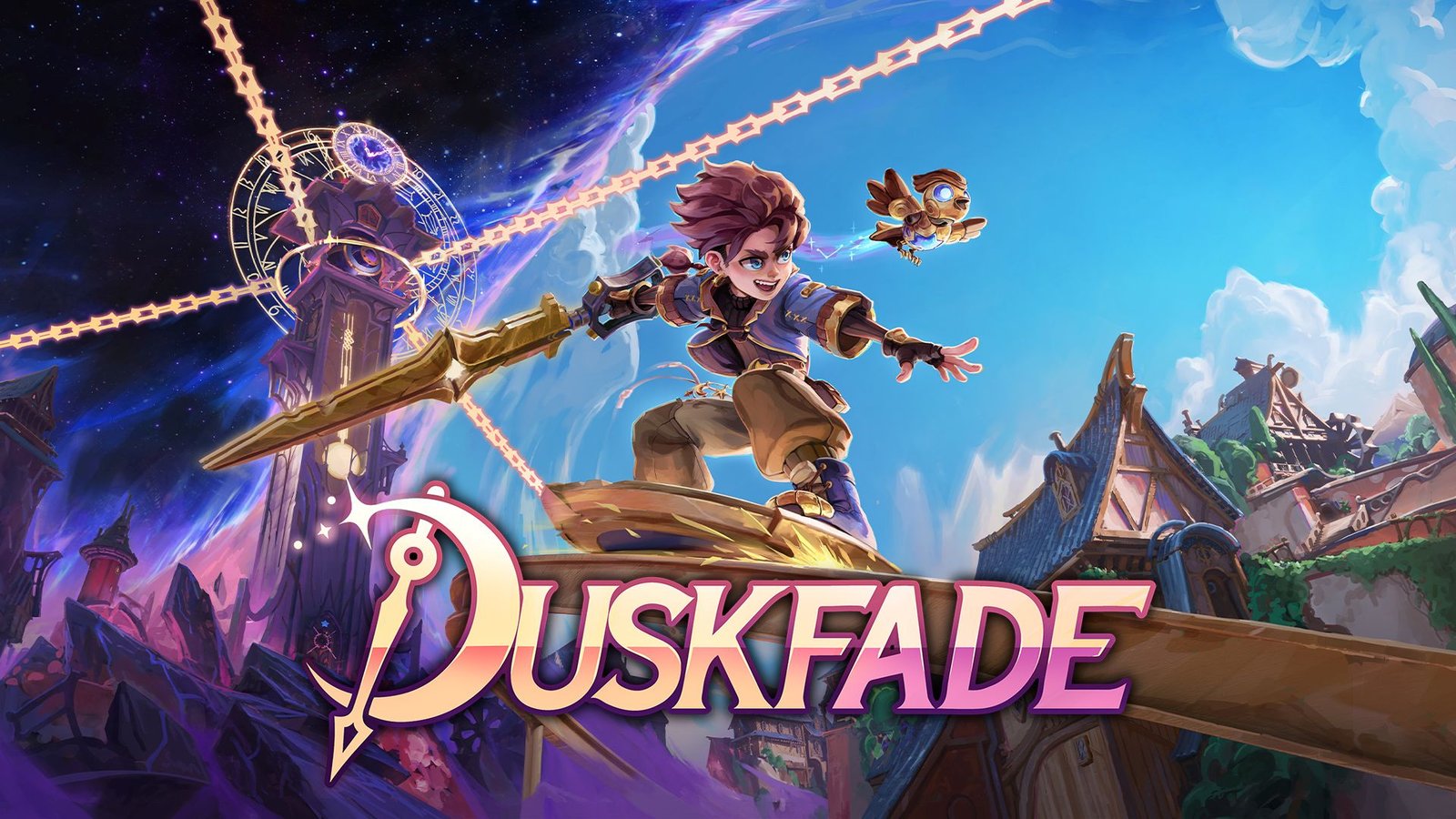

Have you ever played a game that felt like it was missing something? Like you should be enjoying it more than you are? That was Duskfade for me.
It’s an impression that started while I was playing the demo. When I wrote that piece a month ago, I described Duskfade as “a little generic.” I reasoned that I wasn’t seeing enough of the game’s content, and that’s why it played like a bare-bones Kingdom Hearts clone.
But that feeling persisted until midway through the full game’s third area. That’s when I finally figured out why I was only lukewarm on Duskfade after all this time. It does certain things incredibly well, but it also falls behind on some other equally important ones in ways that hold the game back.
Premium World Building
One of my favorite things about Duskfade was discovering its world of Tearfeld. I haven’t seen a case of a small studio investing this much time and effort into curating its levels since Sandfall Intreactive did it with Expedition 33.
The game is divided into four main areas, each containing an anchor you need to destroy to unlock a clocktower in your hometown’s main square. That might not seem like many, but getting through each of them is quite the journey that involves crossing through at least eight different maps per area.
For example, your first destination is the top of an erupting volcano. You set out from Ticktown, your hub, into a small hamlet on the outskirts. A few maps later, you cross into a part of the town that was set ablaze by the eruption. At the other end of the village, you find an ancient temple that leads to a mine, then some deep caverns, an abandoned workshop, some lava chambers, and a smelter before finally reaching the core where you fight the boss.
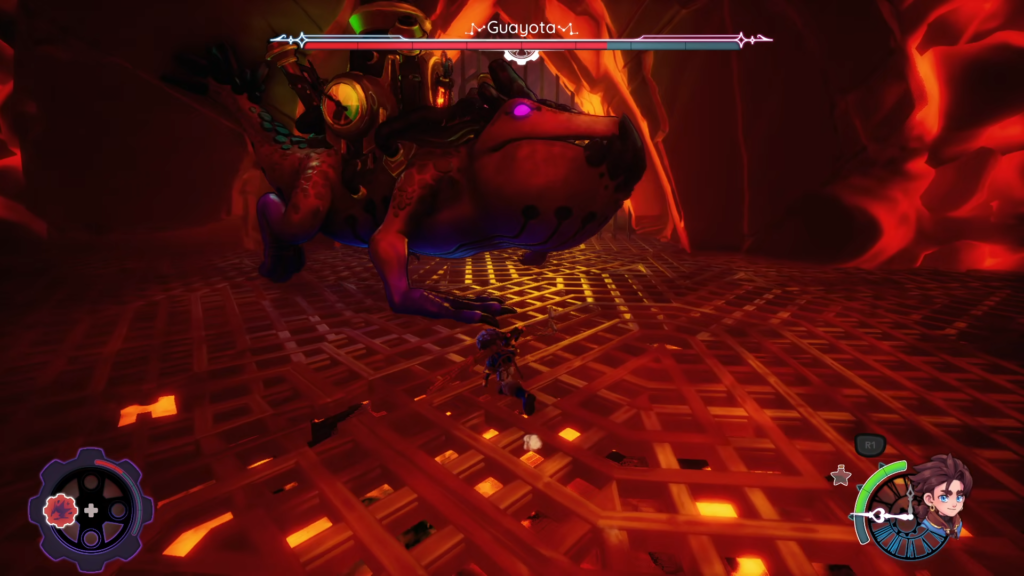
Weird Beluga, the game’s developer, made full use of Unreal Engine 5’s Nanite module to give its levels an incredible sense of scale. Certain moments where you take in large sections of a map look amazing, and drive home the kind of immersion Duskfade is going for. My only complaint about the game’s visuals is the heavy use of volumetric fog that often makes this gorgeous scenery look blurry.
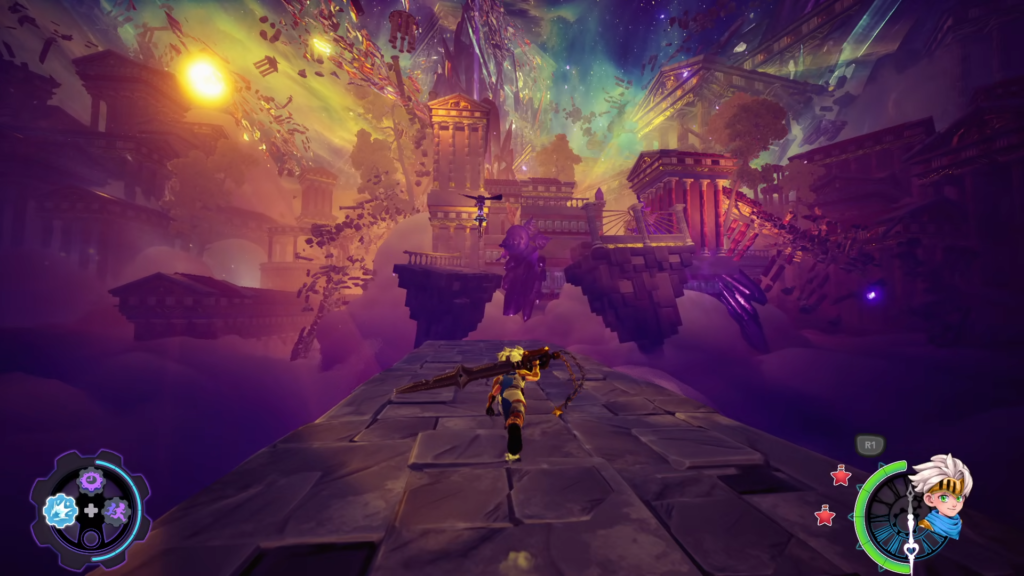
I was concerned that the clockwork theme might just be a gimmick, but I was wrong. As you cross through the world, you see the remnants of the failed experiment that wiped out humanity. You also learn about an ancient order of Clockmakers who brought it about, and find echoes of conversations that expose their hubris. The lore is deep enough to give Duskfade its own identity.
Clearly, a lot of care went into building Tearfeld, and I would say it paid off.
Platforming Carries the Experience
I’m approaching Duskfade after playing Moss: The Forgotten Relic, Fading Echo, and CrossCode — three games where platforming is a core part of the experience.
You know what? Duskfade is better than all of them, and I think it’s in large part thanks to its well-implemented camera.
I loved how freely I could move it around to spot my next jump. The default speed was fast enough to keep up with some of the tricky sections, and the camera always seemed to be at the right distance to give me the best look possible. I hardly noticed any cases of it getting snagged in tight spaces, which is an accomplishment in itself.
The platforming was easy throughout the first level, but it got quite technical as I collected more traversal tools. By the end, I was chaining rail grinds into triple jumps, using my grappling hook to propel myself across a gap to land on another rail. Those long sections were made harder by the usual floor traps, barriers, beams, exploding plants, rotating platforms and the like. Unfortunately, these got recycled throughout the game, but it didn’t take away from the fun.
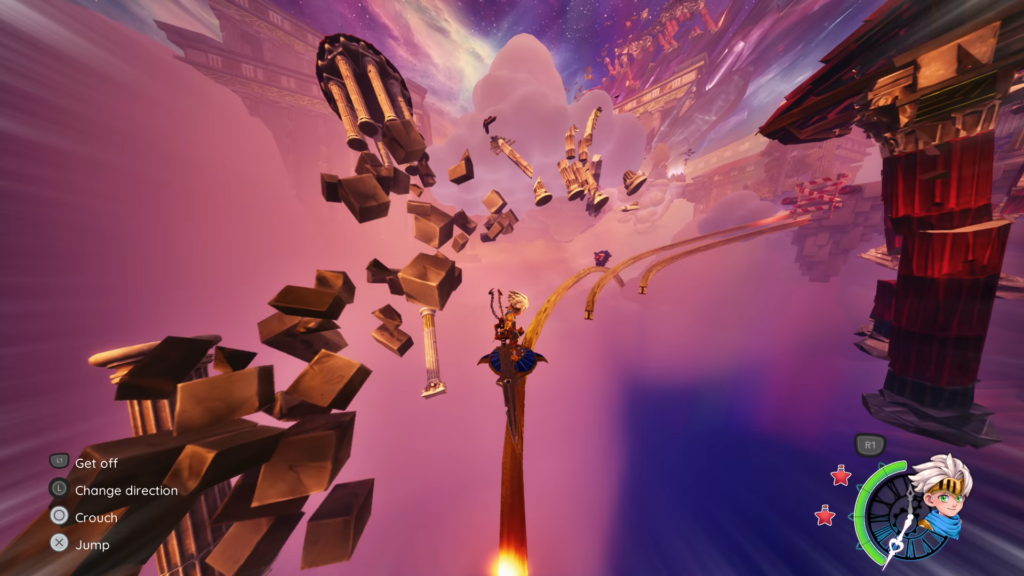
As hard as the platforming got, it never seemed unfair thanks to the tight controls. The game was also very forgiving both in how little health I lost when I fell into the void, and where I respawned afterwards.
Honestly, if Duskfade were only about looks and platforming, it would be an amazing game.
Combat Doesn’t Keep Up
Unfortunately, it isn’t. Every now and then, the platforming gives way to a large open area where you predictably have to fight against waves of ink monsters.
There was actually a surprising amount of enemy variety. I had to fight all sorts of variations trying to take me out with melee attacks, projectiles, mortars, energy beams, and wave attacks. Enemies were recycled between areas, but each one introduced a few new foes, and the combinations kept on getting harder as I went.
I had a decent array of moves and skills to fight them off too, and figuring out how to deal with different enemy formations was fun at first.
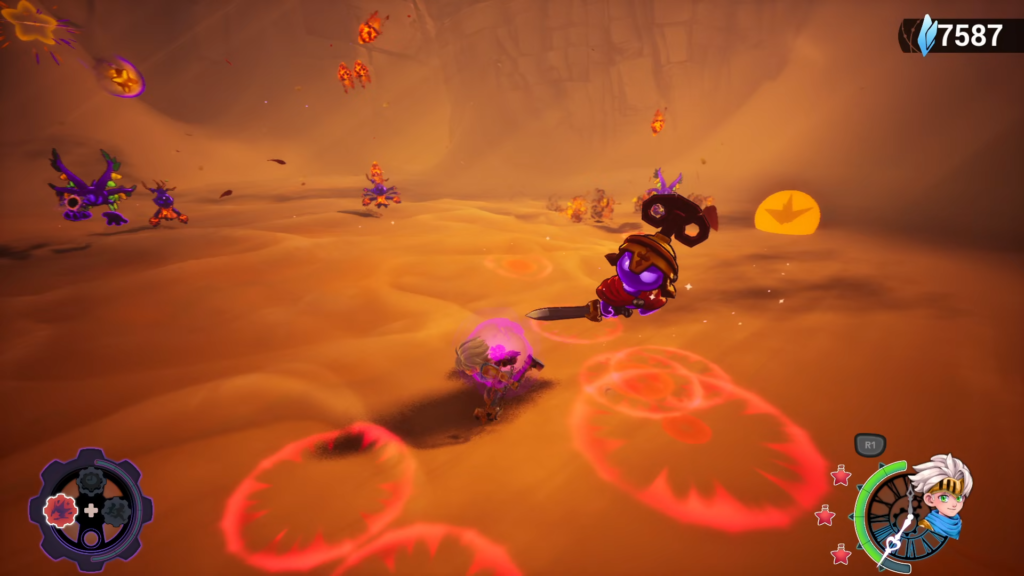
The problem is that Duskfade eventually started throwing too many of them at me. Late encounters could easily have a dozen enemies attacking at the same time, and all those ranged attacks made combat feel more like a bullet hell than a fantasy action game.
My only ranged option was to pull myself towards an enemy with my grappling hook. My cuckoo bird companion would occasionally shoot at enemies, but otherwise, my main tactic was to run around in circles while hammering the dodge button until I had an opening.
The lock-on system wasn’t much help either. It worked fine against smaller groups, but it was a straight-up disaster with anything more than four targets.
I should mention that boss fights were an entirely different ball game because they were all “mano a mano”, so to speak. Combat was great when things slowed down and I only had one set of attacks to deal with. Boss encounters also featured some challenging platforming sections I had to complete to avoid damage over time.
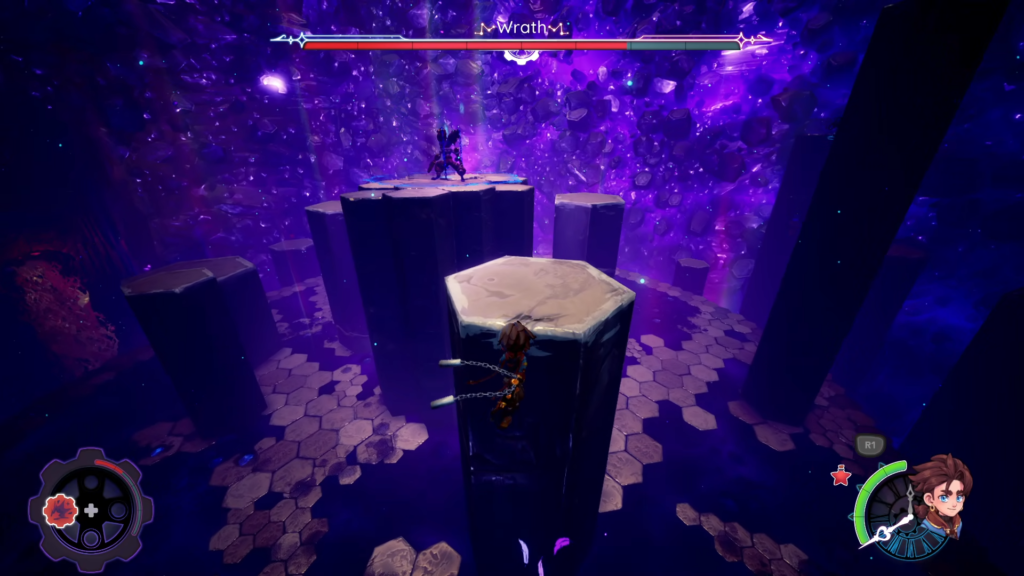
That doesn’t change the fact that fighting was a disappointment overall, and it’s one of the major tradeoffs you have to accept in Duskfade.
Wait, There’s More
The narrative is probably the next biggest offender.
Zerian is a young boy who goes on a quest to free his sister from a mysterious tower that suddenly appears in the middle of town. For some reason, that town is exclusively populated with cloud-like beings that Zerian appropriately calls “Cloudies”. You eventually find out it’s all related to a past cataclysm that took place 100 years ago when an order of Clockmakers tried to reach the Eternal Kingdom.
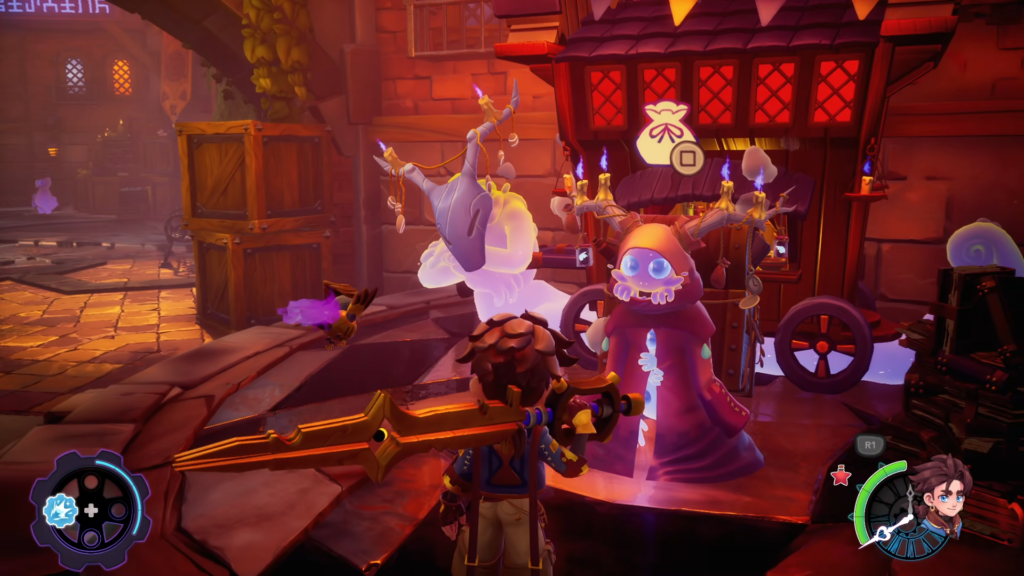
At face value, it makes for a good story that’s filled with emotional moments as you witness the gradual decline of Zerian’s grandfather and see how that affects him and his sister.
But it’s also missing a lot of details. For instance, I never found out why I was fighting ink creatures. I collected most of the additional lore during my playthrough, but it still wasn’t clear to me exactly how humanity was wiped out. The grandfather’s involvement in that disaster and why he, Zirian, and his sister are the only survivors was never fully explained either.
There was so much room to build on these threads through side quests. Instead, the narrative was crammed into a short main adventure, making it seem fragmented at times.
Character progression could’ve gone further too. Sure, you find upgrades and abilities throughout the game, but only the traversal ones have a significant impact.
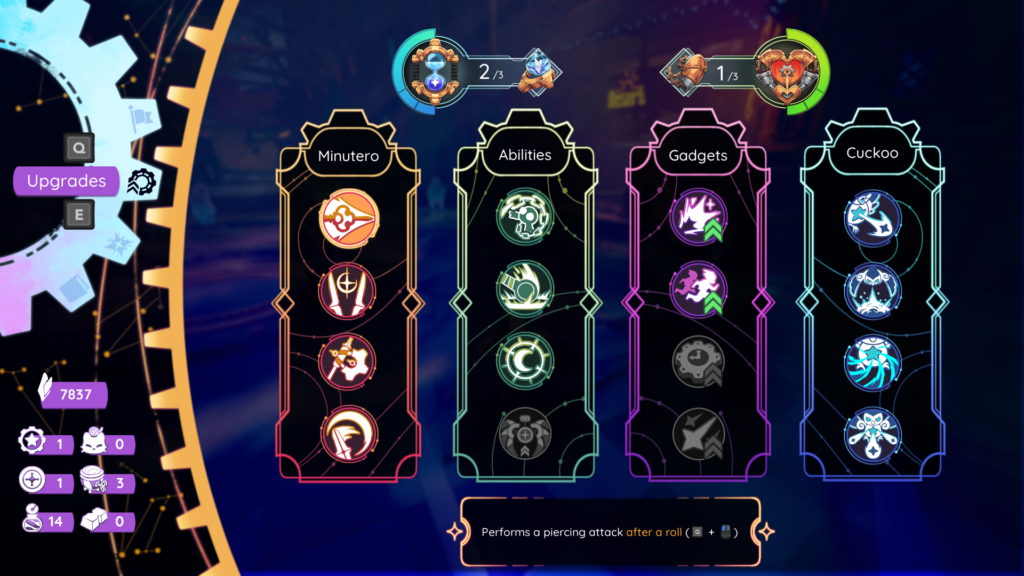
The rest influence combat, and I only used two of them regularly — the sword thrust, and the blast attack. I did find a heavy attack midway through the third area, but it was way too slow to use on anything while dodging torrents of projectiles.
There’s also no real endgame waiting for you after the credits. You can go back to grab all the collectibles if you care about achievements and cosmetics. You could also try to beat the game on expert, but I don’t feel like the combat is good enough to justify that.
Final Verdict
At the end of the day, I had to accept that Duskfade would never bring that extra depth I was craving. I wasn’t going to find new weapons or builds, figure out new tactics to dispatch enemies, or dive deeper into the lore to uncover more about the past.
That’s why I couldn’t shake that feeling that something was missing…because it was.
Duskfade is priced like an indie even though it presents itself as a “AA” title. It therefore has to make the same tradeoffs that other indie developers do. But whereas many of them sacrifice rich 3D graphics in favor of deeper gameplay, Duskfade does the opposite.
If you’re content with a very slick-looking platformer with some shallow combat thrown in, then it could be a great pickup for you. Otherwise, I would wait for the price to come down.
Woody says wait for sale
- 13 hours in
- PC
- Bought it
Leave a Reply