
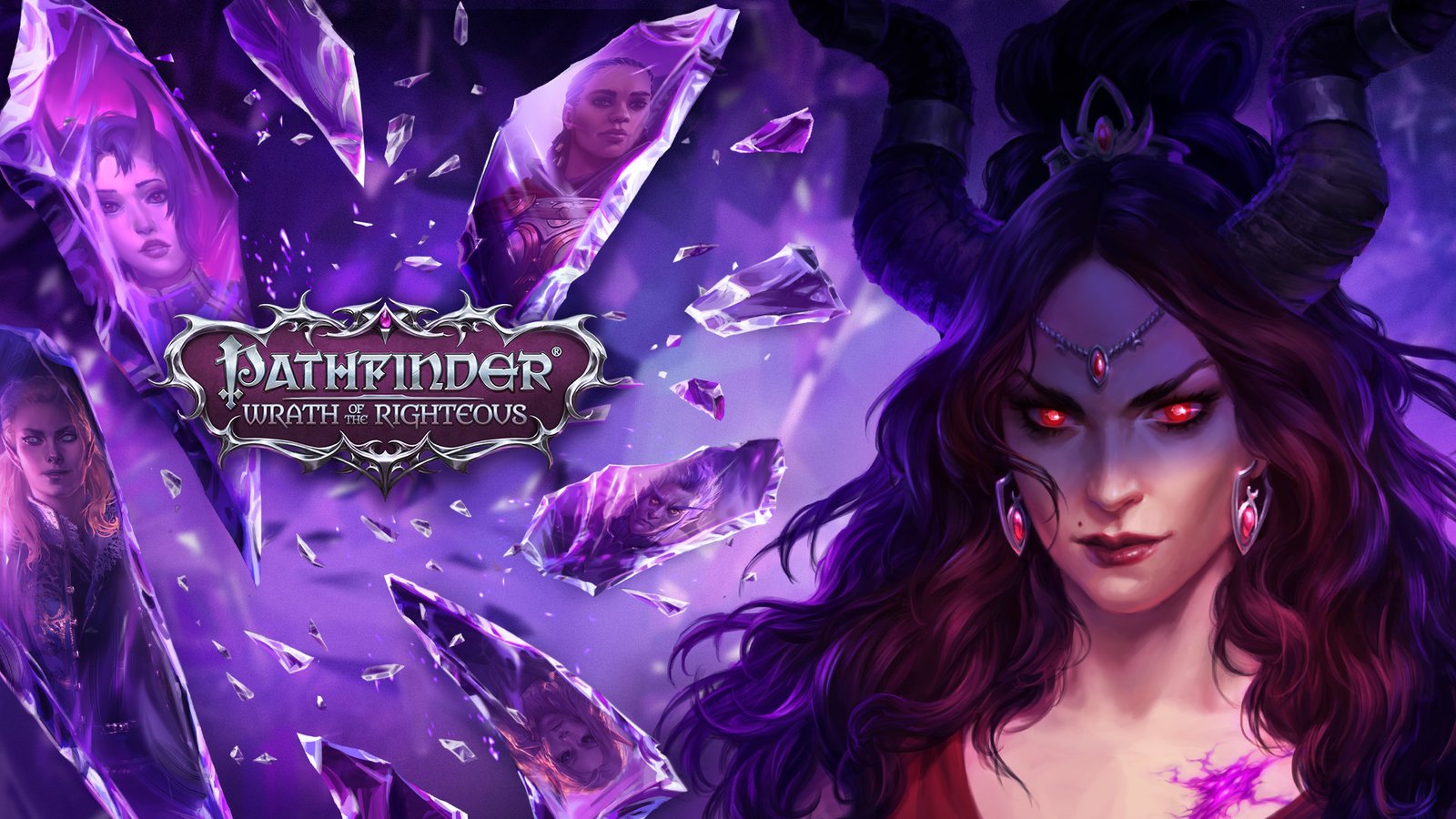
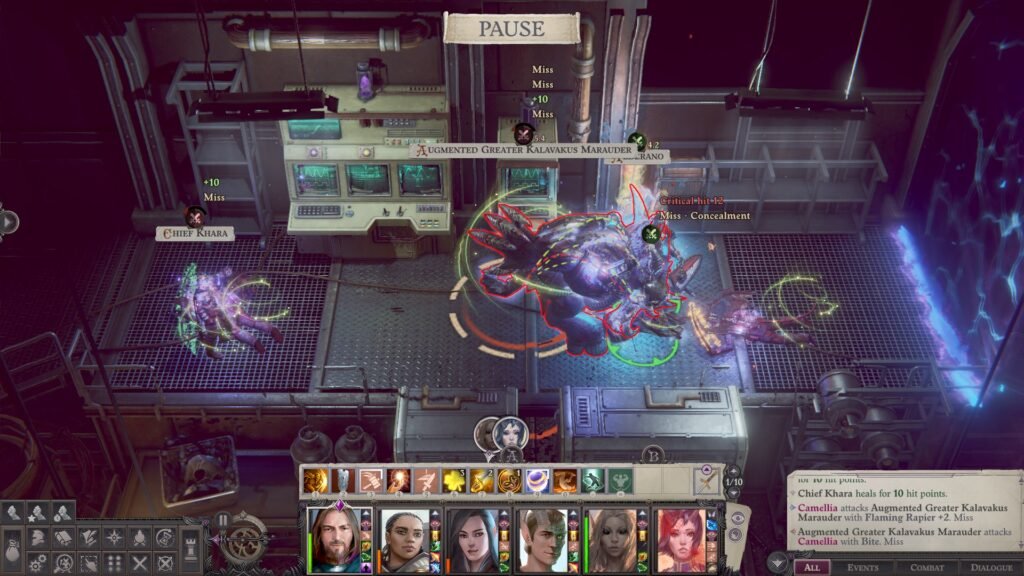
Pathfinder has a huge amount of depth in its class customization, archetypes, and feats, which can feel genuinely overwhelming at first. It took me a while to actually understand these systems, mostly because I jumped in headfirst without looking properly into it beforehand. That made things a bit tougher at the start, but I eventually found my bearings. You have the option to play in Turn-Based mode or Real-Time with Pause, and I chose the latter, so I can’t comment much on the turn-based side, but I’ve heard from others that it’s also very good.
The real-time system definitely requires a lot of micromanaging depending on your difficulty setting, though if you have a strong party, you can let most fights play out on their own while keeping an eye on powers and potions. That worked perfectly for my build, a warrior who could have been very strong from the start, but funny enough, it took me around 100 hours to finally get everything aligned correctly. Once those feats, stat synergies, and buffs came together, watching my front-line warrior cleave effortlessly through demonic hordes delivered an immense sense of build-crafting satisfaction.
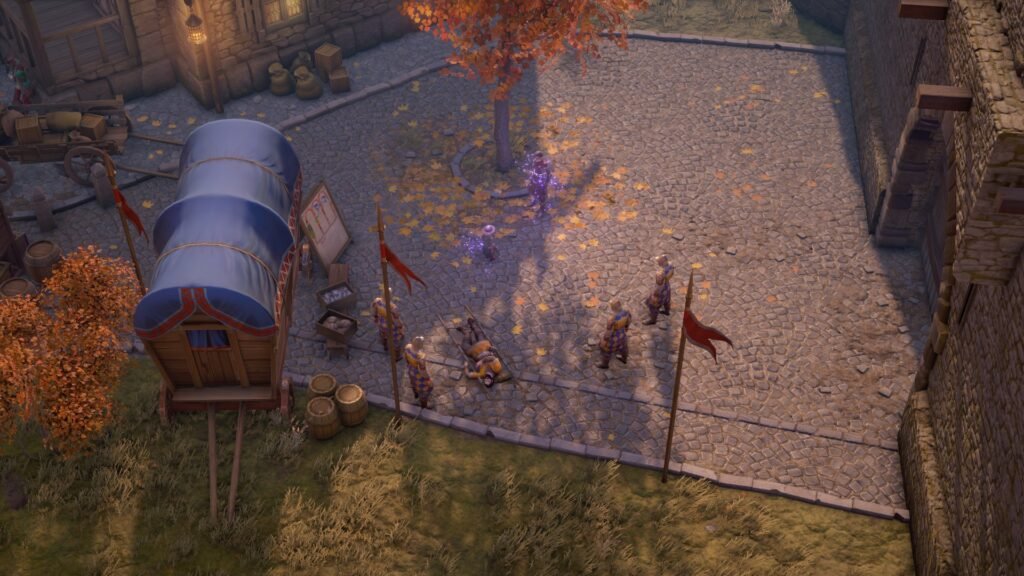
When it came to encounters and battles as a whole, positioning your companions and yourself made a huge difference, and those moments felt great to experience. For example, I kept my warriors and tanks up front with archers and casters neatly positioned behind them. That made battles much more fun, especially when you went into a boss fight fully buffed up and ready to crush your enemies instead of engaging too early. Seeing that play out in real time makes combat feel so deep and rewarding, but also a lot more terrifying when something goes wrong.
Regardless of how fun or well-designed the system is, it isn’t flawless. Buffing before combat takes a lot of time, and throughout much of the campaign, I manually buffed my companions before every big battle, which was actually tiresome and exhausting given how repetitive it became. That’s where a mod called Bubble Buff, which I was recommended later on, really helped. It’s not perfect, but it’s a life saver for that repetitive task. The game can also suffer from incredibly high difficulty spikes that force you to hit a wall, reassess the situation, and spend a lot of time on just one encounter figuring out a new approach. That cycle can be exhausting at times, but it doesn’t stop the game from being a lot of fun once you find the right shop owner with better equipment or other necessities.
The Mythic System: Smooth Progression, Incredible Divergence
What sets Wrath of the Righteous apart from other RPGs, beyond the leveling, casting, and race systems, is its Mythic Path system. This extra layer sits on top of standard leveling and grants your character powerful new abilities depending on the path you choose. Alongside standard leveling, which makes you vastly stronger on its own, the Mythic Path eventually makes you god-like, granting your character incredible powers. This path leads you toward becoming either a saintly angel or a demonic force of evil, and if that’s not enough, there are several subclasses and divergent paths that dramatically change the game. You can become a Lich who commands the dead, or abandon the crusade altogether and become a ravenous swarm that devours everything in its path, becoming the very threat you were meant to stop. These paths drastically change the game and offer tons of replayability. They completely reshape how your character functions and how the world responds to you, letting you fully lean into a walking power fantasy.
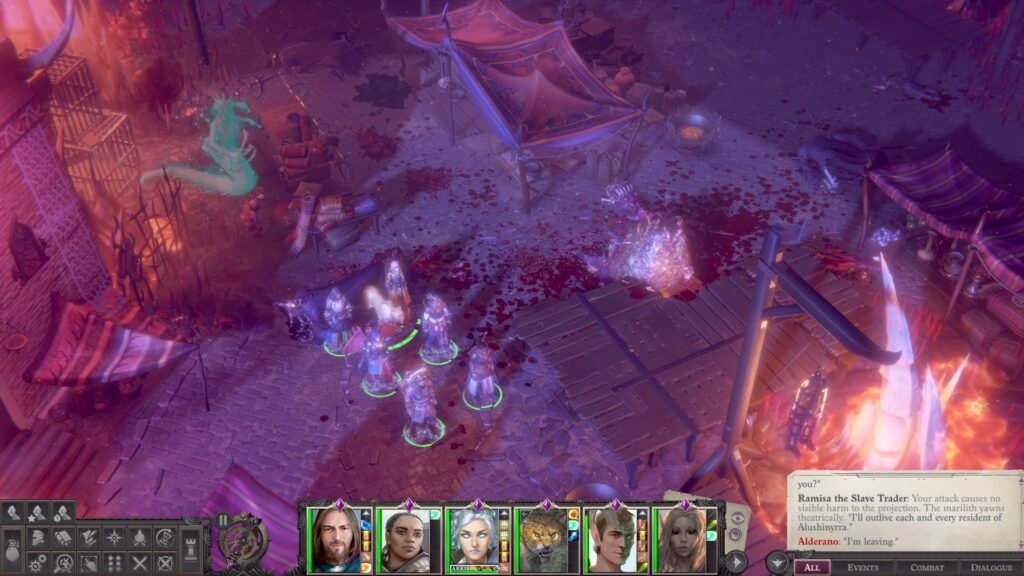
The game’s massive replayability comes largely from how drastically each path changes the campaign, quests, side quests, companion quests, and even how everyone views you, complete with unique dialogue. Your companions’ loyalty shifts significantly based on how you act and what they can accept, whether for good or ill. The world around you isn’t static either; it shapes itself around your decisions and how you treat it. Between the mythic paths, the range of races, arcane classes, subclasses, and backstories, you can have a hugely different experience each time, and each playthrough can feel almost like a different game.
Crusade Management: A System That Bogs Down the Flow
The Crusade system is where the game falters the most, especially when you have to hire crusaders to progress the story, like taking over a fort or defeating a demon army standing in your way. Over time, you gain access to all kinds of crusaders to hire depending on your decisions.
Sadly, this system tends to slow down the game’s pacing and, in my experience, is the game’s most boring mechanic. That said, there are settings in the menu that let you automate this part if you don’t want to deal with it directly. So depending on the mileage you’re getting from it, it’s completely up to you whether you engage or not.
Narrative & Tone: Dark, Epic, and Morally Complex
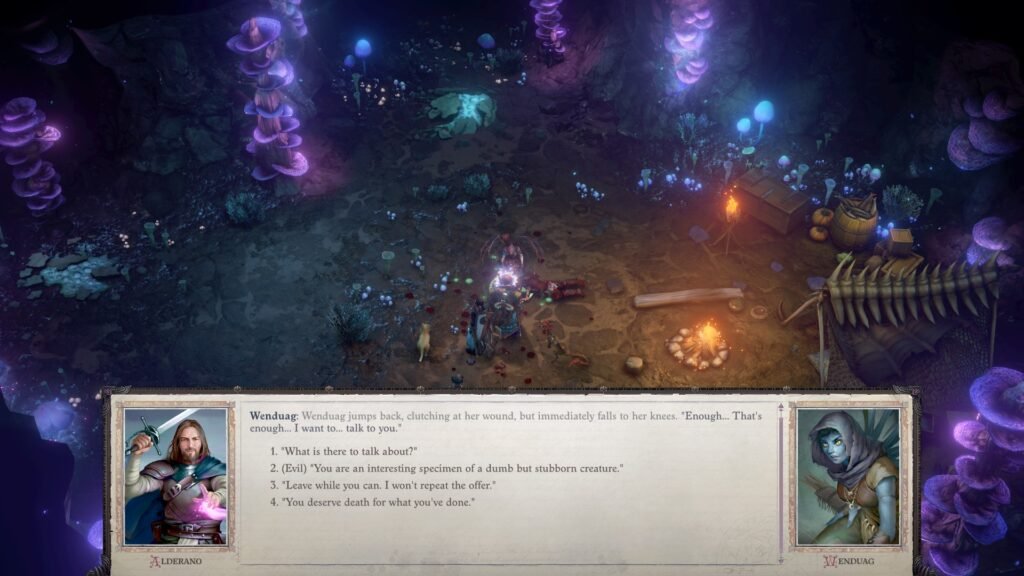
Comparing Kingmaker and Wrath of the Righteous, I’d say Kingmaker has a much more classic feel, with a lighter tone and a more grounded, basic adventure. Wrath, on the other hand, throws you straight into the unknown darkness of the Worldwound, a rift torn open from the Abyss, the realm of demons. It’s dark from the very first moment, set against apocalyptic warfare, and far less forgiving in combat compared to Kingmaker. You’ll quickly realize the game is much grittier, constantly questioning your morality through difficult choices and consequences that blur the line between right and wrong. As Commander of a vast crusade, or whichever path you end up taking, it’s up to you to navigate failure, devastating consequences, or glory in the fight to close the Worldwound, or to dominate it entirely. The game pulls you in from the very first moment, and it becomes terrifyingly easy to lose hours inside this dark, captivating world, with each new task keeping you on your toes.
You’ll also pick up a large cast of companions along the way, each with unique dialogue and genuinely strong voice acting. Arueshalae’s arc stands out the most, whether you guide her toward an incredible redemption story or push her further toward darkness depending on your own choices. A few others land just as well, though I’ll admit some, like Sosiel, feel a touch weaker by comparison, coming across as a little too easygoing next to the rest of the cast. Every companion moment is elevated by fitting music and strong voice acting throughout and I appreciated the extra effort put into this portion of the game.
Final Verdict
Pathfinder: Wrath of the Righteous is a game of incredible highs and real friction. On one hand, you’re dealing with tedious pre-buffing routines, an annoying Crusade Management system that slows the game down, and brutal difficulty spikes that can bring your progress to a full stop. On the other hand, you get unmatched mechanical depth, satisfying real-time combat, and a Mythic system that lets you become truly god-like, delivering an absolute peak power fantasy. Once your build finally clicks and you’re leading your crusade through the dark, morally complex world of the Worldwound, the sheer scale and ambition of the game overshadow most of its flaws, making it feel like a sure-fire masterpiece.
If deep, story-driven RPGs are your thing, this is a clear recommend. It’s a must-play, with deep choices, rich world-building, lore, and so much more, no need to wait for a sale to justify picking it up. The one caveat: if you don’t enjoy reading, this game can feel tedious, since it leans heavily on text-based dialogue and lore, and voice acting isn’t present everywhere. But the music carries those quieter, text-only moments well, and when voice acting does show up, it’s genuinely excellent. If you can handle the micromanaging and push through a few tedious sections, this is a CRPG worth experiencing at least once.
Kris Says Must Play
- 113 hours in
- PC
- Bought it
Leave a Reply