

Introduction: A Personal Connection
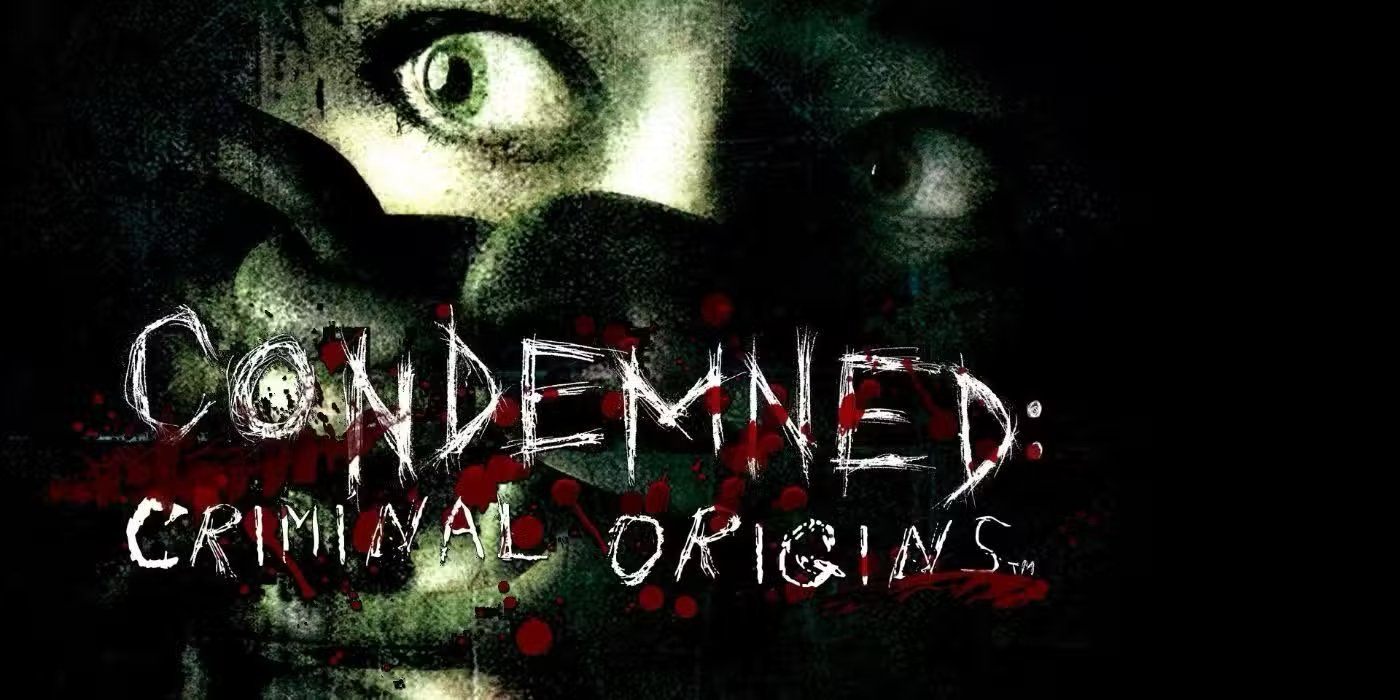
Released in 2005 and developed by Monolith Productions, Condemned: Criminal Origins is a first-person psychological horror game that puts you in the shoes of Ethan Thomas, an FBI investigator hunting down serial killers in a city that seems to be falling apart. For me personally, writing this retrospective is quite personal. Condemned was one of the very first games I got when I bought my Xbox 360—which was the first console I got after transitioning from my PlayStation 2 into the new generation. Being young and lacking money back then, playing this game was an absolute blast. Beating it four times, I cannot forget how much I enjoyed it.
What makes Condemned so special is that it doesn’t rely on the usual horror tropes. Instead of giving you a powerful arsenal and encouraging you to shoot everything that moves, it makes you feel vulnerable. You’re searching through abandoned buildings, dark corridors, and filthy streets, often armed with nothing more than a piece of wood or a metal pipe. Nearly two decades later, it is still remembered for its unique blend of psychological horror, disturbing environments, and visceral melee combat. It’s the kind of game that sticks with you long after you’ve finished playing, not necessarily because of what it shows you, but because of how it makes you feel. And that’s exactly why I wanted to revisit it.
Gameplay Mechanics & Design Critique
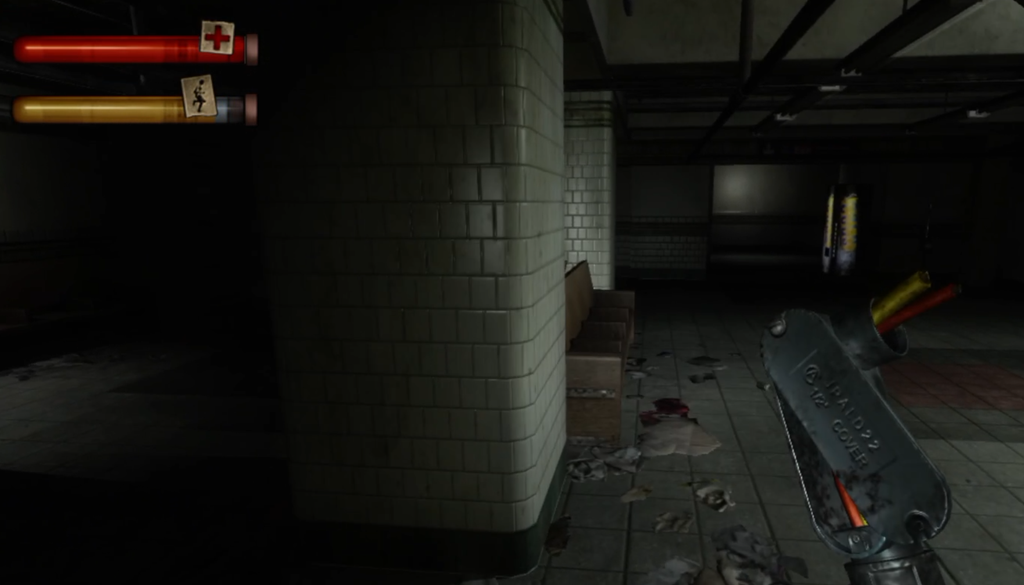
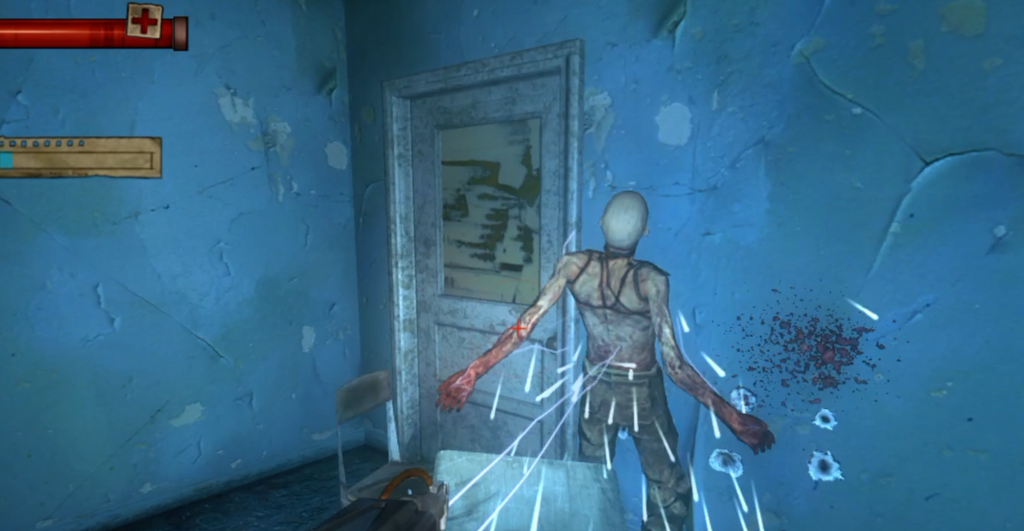
Condemned offers you a variety of weapons, but you can’t carry an entire armory on your back. The developers built the game to make things feel immersive: weapons can break, and you can’t grab multiple weapons at once. You aren’t Rambo; you can’t carry a machine gun, a pistol, a steel pipe, and a bat all together. You can only hold one weapon at a time.The protagonist, Ethan Thomas, feels heavy and grounded. To me personally, he looks like Mike Tyson—short and muscular. The way he moves, walks, and runs is intentionally slow and heavy to give you a genuine sense of weight and vulnerability while playing.
The Deflection Mechanic & The Jacket Ammo Gripe
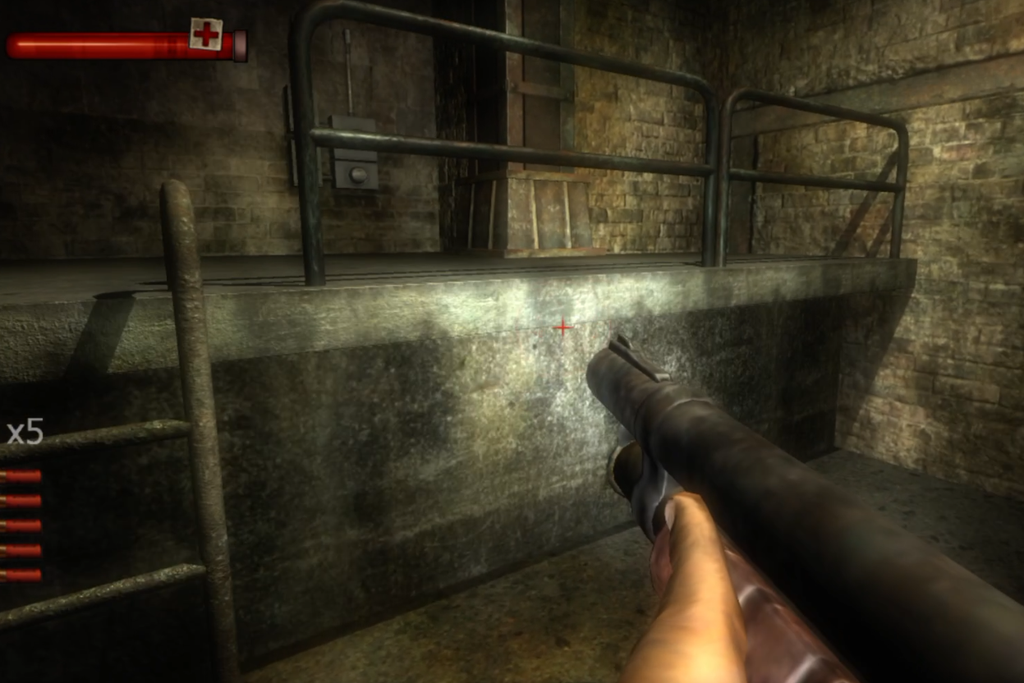
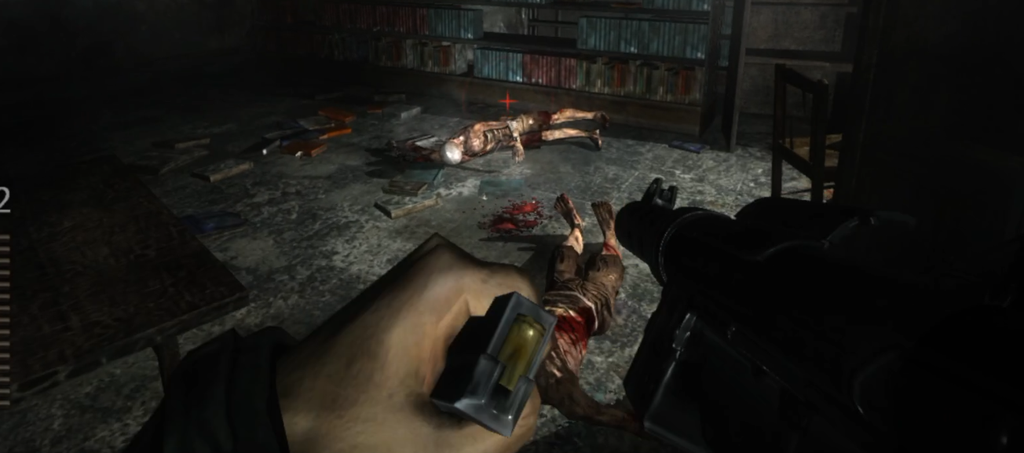
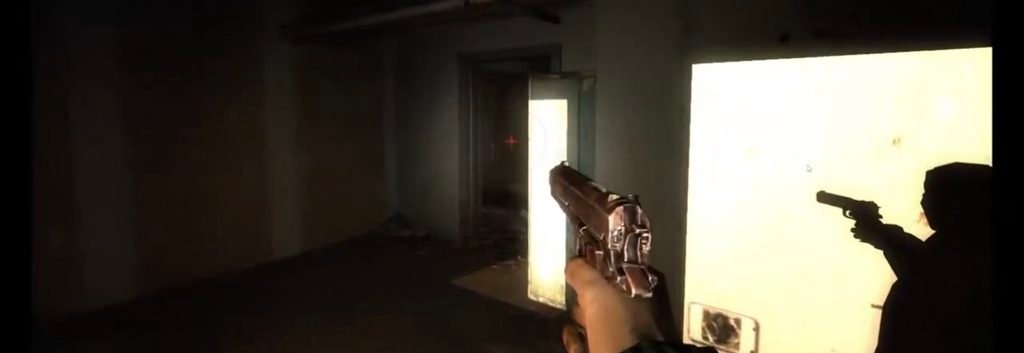
In my opinion, Condemned is one of the first games that added a proper deflection/parry mechanic. When you successfully deflect an enemy’s hit, you push them back away from you, which is a vital tactical tool during brutal close-quarters brawls.However, there is always one thing that has bugged me across my four playthroughs. When you find a pistol on the ground, it usually only has 6 to 8 bullets. Once you empty the magazine, you have to throw
the weapon away. If you find another dead body with another pistol nearby, why can’t you just take the magazine out and keep it in your pocket? Ethan is wearing a huge jacket with lots of pockets! Why can’t you just pocket a partially used magazine with two or three bullets left and swap it when needed? The game doesn’t offer this because it purposely wants you to feel vulnerable.On the bright side, when you do empty a gun completely, the game doesn’t just strip it away from you—you can actually flip the empty firearm around and use it as a melee weapon to beat enemies with it. The same goes for shotguns and submachine guns
Presentation, Atmosphere & Forensic Tools
Each location—such as the subways, abandoned offices, department stores, and the final mission’s old abandoned farm—is incredibly detailed. The developers took their time designing each setting carefully to give you an authentic vibe of abandonment and rot, populated by disturbing, feral homeless enemies.
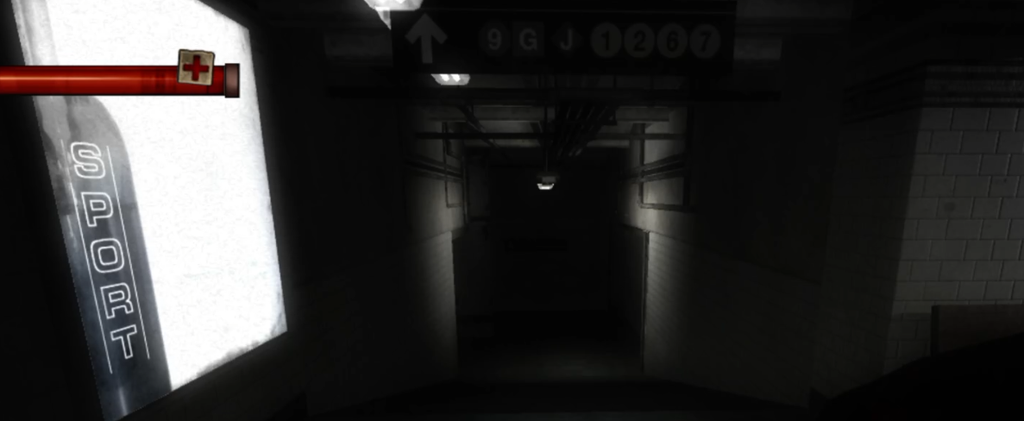
To truly appreciate how good this horror game is, you must put on your headphones to immerse yourself completely in the world. The lighting design is an absolute masterpiece. The game is pitch-black in places like subways, and if you turn off your flashlight, you realize how blind you are and how easily an enemy can jump you out of the dark. That’s why the game doesn’t rely on cheap jump scares; most terrors come from the suffocating darkness, forcing you to be 100% focused and concentrated on your surroundings.
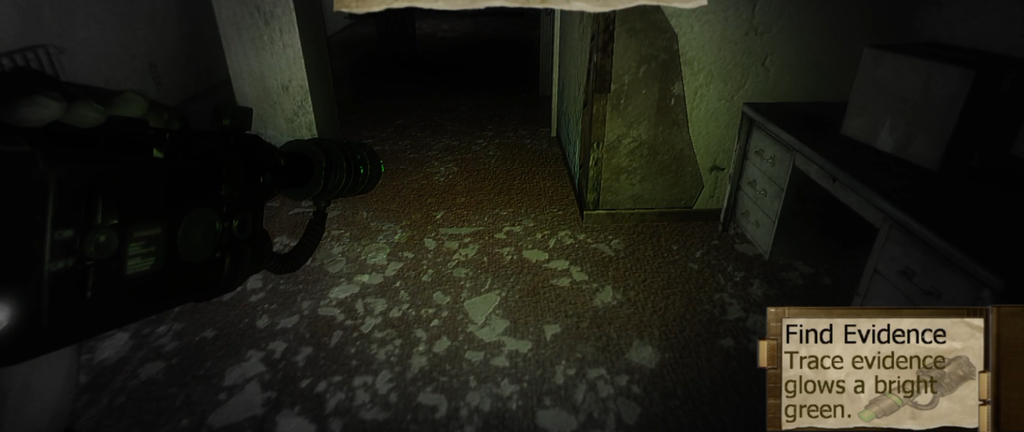
One element worth noting is that the investigation mechanics feel somewhat too limited and can only be used in specific, scripted locations. I wish the game had allowed players to use their forensic tools—like the UV light, laser, and gas spectrometer—more freely throughout the environment, giving us more freedom to investigate clues and discover evidence on our own
TECHNICAL PRAISE: REVOLUTIONARY ENEMY AI”The enemy AI in Condemned is incredible for a game released over twenty years ago. Back then, it felt just as revolutionary as The Last of Us feels today. Enemies coordinate, flank you, and come up behind you with terrifying intelligence—mirroring the brilliant AI Monolith created in F.E.A.R.”
Story & Narrative Breakdown
The story begins like a standard serial-killer investigation, but gradually reveals something much stranger: a city consumed by violence, a killer who is hunting other killers, and a mysterious force influencing people’s minds.
Ethan Thomas is Framed for Murder
You play as Ethan Thomas, an elite criminal profiler working in the Serial Crime Unit (SCU) in Metro City, investigating a serial killer known as the ‘Matchmaker‘, who poses victims alongside mannequins. At the opening crime scene, Ethan encounters a mysterious man. After Ethan loses his firearm, the stranger takes it, murders two police officers (Detectives Dickenson and Becker), and throws Ethan through a window. Surviving the fall, Ethan is framed for the murders. Malcolm Vanhorn, an older family friend, helps him escape. Ethan must clear his name and discover who the mysterious man really is.
The Hunt for Serial Killer X
Assisted remotely by colleague Rosa Gale via forensic analysis, Ethan discovers the Matchmaker and other serial killers are turning up dead, murdered using their own methods. Rosa dubs the unknown culprit ‘Serial Killer X’ (SKX). Ethan realizes SKX is tracking his investigations and using him as an unwitting tool to locate new victims. Meanwhile, Metro City grows increasingly violent, filled with feral vagrants, hallucinations, and strange human-like creatures.
Strange Clues: Dead Birds and Metal Fragments
Throughout the game, you encounter dead birds and collect strange metal fragments. Reports reveal that birds are dying in areas where violent crime spikes due to unusual sound disturbances damaging their brains. Humans are affected similarly, experiencing paranoia, hallucinations, and uncontrollable aggression—explaining the feral enemies roaming Metro City
The Shocking Reveal: Serial Killer X is Leland Vanhorn
Tracking SKX to an abandoned apple orchard, Ethan finds the Torturer dead and is captured by SKX. Malcolm intervenes and identifies the killer: Leland Vanhorn, Malcolm’s own nephew. Leland reveals he has been using Ethan’s investigations to hunt down and execute other serial killers. Malcolm believes a malignant force has corrupted Leland.
The Real Enemy: The Hate
Malcolm tasks Ethan with destroying the source of the madness—a biomechanical creature known as ‘The Hate‘ (or the Oro Dark Primary), which generates sonic frequencies through implanted devices across the city. Ethan defeats The Hate in the barn by tearing out its metal implants, though the wider conspiracy remains unresolved
The Ending & Leland’s Fate
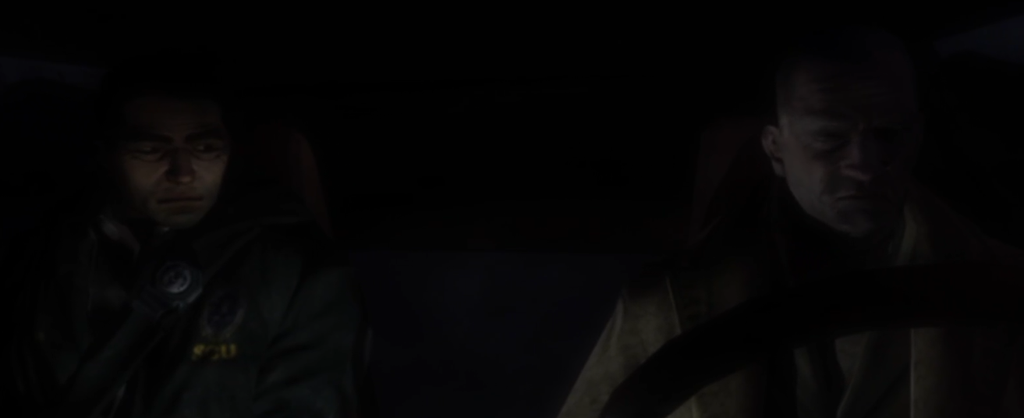
Escaping with Malcolm, Ethan discovers Leland tied up in the trunk of Malcolm’s car. Given a moral choice, the player can choose to shoot Leland for revenge, or spare him—though Leland ultimately dies by suicide with a hidden gun either way.
The Final Scene: Ethan’s Transformation
Meeting Rosa in a diner, Ethan learns the FBI suspects Leland had ties to an ancient cult. While hiding what he knows, Ethan goes to the restroom and looks in the mirror. For a terrifying moment, his face transforms, revealing metal implants identical to those of The Hate. The game ends on an ambiguous, chilling note, suggesting Ethan’s investigation has permanently corrupted him.
Ending Analysis & Open Mysteries
Condemned: Criminal Origins explains some of what is happening, but its ending leaves important questions unanswered. The game builds toward a larger conspiracy involving the strange violence spreading through the city, and the final scenes suggest that the story is bigger than Ethan Thomas’s individual investigations:
• Serial Killer X: Leland Vanhorn is connected to the killer, and his uncle, Malcolm, has been manipulating events.• The Metal-Covered Creature: Its identity and connection to the strange violence aren’t properly explained in the first game.• The Cult: Rosa reveals evidence of a larger conspiracy, setting up the sequel.• Ethan’s Reflection: His face changes to resemble the creature, suggesting that the evil influencing the city may also be affecting him, leaving the exact meaning ambiguous.Condemned 2: Bloodshot might have answers, but that’s for another day
Behind the Scenes: An Interview with Niles Sankey
Lighting and Level Designer for Comdemned Criminal Origins By Brokowski
Brokowski: To start, I’d like to ask about your time at monolith studios. In the mid 2000s many would consider this to be a major player in game development and in top form, especially for FPS horror. Nowadays it is almost unheard of for a single studio to release multiple big hitters like F.E.A.R. and Condemned back to back. Do you think game development was easier or more efficient during the xbox 360 life cycle? Do you have any thoughts as to why modern game development cycles require so much more time, effort and $?
Niles Sankey: In my opinion, there are a few major reasons why game development is more expensive and complicated these days
1. Art Fidelity has increased by a significant margin. Each game requires many more artists, technical artists, animators, etc. We didn’t need all that for games back in the mid 00s. We had something like 50 developers working on Condemned. It’s much easier to manage a team of 50 compared to a team of 800+. The team culture is also more unified, because most of the team knows each other. If you need something from engineering, it’s much easier to just talk to them, as opposed to having to make a production request and then that request is filtered through ten layers of management and approval.
2. Focused development. The games we developed were more focused with less features. They didn’t try to do all these different game modes, features, etc. They focused on a tight story campaign and had a very basic multiplayer component. A lot of games today try to do too much.
3. The social culture was much different in the 90s and 2000s. In the early 2010s the era of “toxic positivity” and intersectional politics started to enter the social fabric and was especially present in game development. It became very difficult to give honest feedback. You risked being accused of pseudo-sexism if you interrupted the wrong person (this actually happened to someone I know). Activism started causing issues with both hiring and the studio social dynamics. That’s when I left AAA to go indie. A lot of talent left the AAA scene. Coupled with a culture of fear, honest feedback became increasingly rare, which ultimately will cause a lower quality game and delays to address fundamental issues that should have been reported early in development
Brokowski: In my opinion (especially since I recently started my first playthrough), Condemned has been incredibly influential of the modern gaming horror landscape– and I don’t think it necessarily receives that recognition enough. Did you and the team have any trepidation at the time about making a horror game so different from the standard? FPS, Melee Combat focused, ETC
Niles Sankey: I was hired onto the project when production began, and it was an incredibly tight schedule. I hit the ground running and personally didn’t have time to consider all the “innovative” choices we were making. I was given an assignment and I did my best to deliver. We never really thought about the potential of the game being “influential,” and it almost felt like the game was a minor failure when it released (this wasn’t helped by the lack of support from our publisher). We were very proud of the game, but it felt like it fizzled on arrival. I’m happy to see that it aged well!
Brokowski: How different is it to design levels for a game primarily focused on melee combat, compared to a regular First Person Shooter like Halo? In my playthrough, I notice the levels often tend to be very wide open with numerous pillars for enemies to hide behind or tight, claustrophobic hallways. Was this intentionally part of your level design decisions for this title?
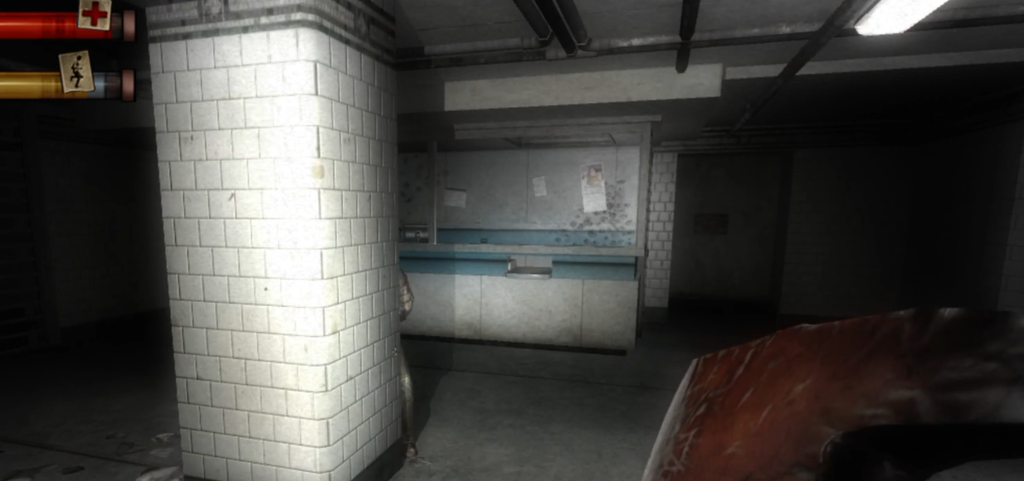
Niles Sankey: The pillars in the game are essential for the AI to be convincing. The AI was specifically designed to take standing cover and then step out of cover and melee attack. Pillars and convex wall corners were the best level design tool for this job. So as a result, there are a lot of these in the game.I also think player movement speed is a big factor here. Condemned (and FEAR, which were very similar in design) had relatively slower movement speeds, which works better for horror and suspense. Games like Quake or Halo have the challenge of very fast player speeds. This requires exaggerated level proportions, which makes level scaling very difficult—everything looks too big compared to the player character. Fast action games also make “horror” experience much more challenging, since it’s hard to create claustrophobic levels, and the player can just run and jump away from any dangerous or scary situation.So having a reduced player movement speed goes a long way toward letting a level designer build claustrophobic spaces where players can’t bunny-hop to safety. It also lends itself well to a melee combat game, since you want players and enemies in close proximity with slower movement speeds. The melee combat just works better. While there is overlap in level design principles, designing levels for Condemned and Halo was very different.
Brokowski: Condemned forensics’ scenes: scanning rooms with uv lights, lasers, gas spectrometers, etc– it added a really unique (at the time) and brilliant procedural crime scene twist to the game. It really made you feel like a detective working for the bureau when you’re not fighting to stay alive. However, these tools are usually presented in a way thats very streamlined– such as only opening them at an exact crime scene. How did the team striek the balance between method investigation while also keeping the game grounded in horror? As someone who worked on lighting (im thinking of the UV lights, etc) , was this something you had to approach differently compared to your typical duties?
Niles Sankey: I have to give credit to other people on the team for the forensic tools and their use/placement in the levels and narrative. Our lead designer and creative director, Frank Rooke, designed most of these tools, if I remember correctly. Our job as level designers was to understand how the tools worked and then spatially build the crime scenes so it would flow into these sequences. There were some forensic tools that allowed for more creative level design, like the UV light (which I love), but most of the forensics in my levels were single-instance uses.
Brokowski: After working at Monolith, I know you moved to another Studio (which I hope we can discuss in a later interview!). What can you say about your time at Monolith that was unique compared to every other studio you’ve worked for/with? Can you provide me any detail about working with Jace Hall?
Niles Sankey: I never worked with Jace; in fact, I’ve never met or seen him.Monolith was great, but it really was run on a shoestring budget relative to other places I worked. I’ll never forget my first day. I was shown to a small office that already had two designers working there. It was a tight fit, and then we hired one more designer and crammed him into the same office. I was given a sad little dusty PC with a small CRT.I remember rebuilding the skybox for the first level. I took a sunset picture of Lake Washington (down the street on the way home). I made a texture from that photo and added it to the level, but the lighting levels were blown out and the texture needed adjustment. So I asked my leads for Photoshop, but they said they couldn’t afford it. So I just left the texture as is, lol. Which is why when you look out the window, it’s completely blown out. It kind of looks intentionally stylized, but it wasn’t intentional.
Brokowski: Feel free to NOT answer this, as I understand you didn’t work on this game– thats partly why im interested in your thoughts. Do you have thoughts about condemned 2? Its a controversial sequel, so I’m curious of any criticisms or feedback you would have being a developer on the first game.
Niles Sankey: I think Condemned 2 lost a bit of the charm. I played it but only remember a little bit. There were some fun sequences, but I think the design and story is a bit overthought. But maybe I’m biased.
Brokowski: Did you work on the PC or xbox version of this game? Regarding Xbox, was the team excited to have a launch title to work with– or was that difficult to deliver so quickly? Was there any significant challenge in porting this to PC? PC version unfortunately does not work on the Steam Deck.
Niles Sankey: I worked on both the Xbox 360 and PC versions of Condemned. It was definitely exciting to be working on a launch title. We had one year of production development, and I still can’t believe that we delivered it on time. The development was very difficult and very stressful. The F.E.A.R. team at Monolith was the “A Team” and we were the new “B Team,” so I think there was a lot of uncertainty. That said, our team had many Monolith vets—extremely talented men and women. Many of us were new to the company, and we were so grateful to be working with these talented folks. The experience was a frenetic mix of joy and unhappiness… and lots of work.Regarding the PC port, I actually don’t remember. We fixed a few minor bugs. But I don’t remember the game being much different. For me, it was a short and low stress 6mo job. We had extra time, so me and a few other devs built a new game mode for F.E.A.R. (for fun, no one knew we were making it). It was so much fun but was sadly never made official (or really shared w the F.E.A.R. team). That’s a story for another time.
Brokowski: Recently I learned that Jace Hall actually owns the IP to Condemned, not warner bros or xbox or monolith. If Jace Hall decided tomorrow that he would want to work on a Conemnded 3, would you be interested to support it?
Niles Sankey: Maybe.. But I don’t think Jace even knows who I am.
Leave a Reply