
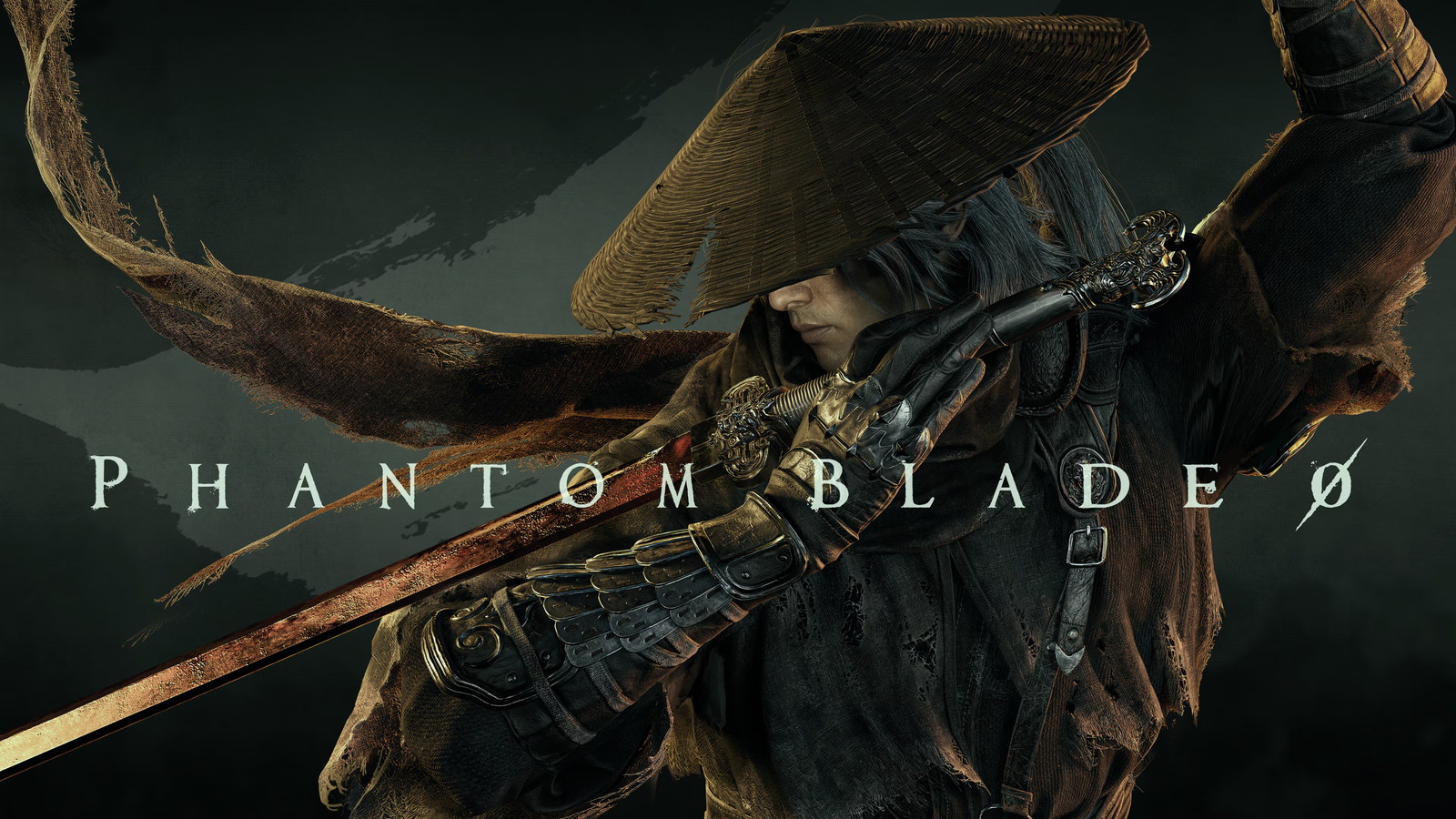

I’ve had a close eye on Phantom Blade Zero since it was first announced back in 2023. I was instantly taken in by its initial teaser trailer featuring intense combat, cinematic Kungfupunk flair and insane wuxia animations. It honestly looked too good to be true, and I knew then that I NEEDED to play this day one. The subsequent breakout of East Asian, AAA, combat-focused action-adventure titles over the next couple of years only served to bolster my anticipation. I had even higher hopes for Phantom Blade Zero following the success of Lies of P, Black Myth: Wukong, Stellar Blade and the criminally underrated Wuchang: Fallen Feathers—it’s getting a sequel, so I still call it a success. Though I’ve been more cautiously optimistic since Lost Soul Aside—don’t get me wrong, it’s a great time and I did like it, but it was a far cry from the others listed and not quite what I was expecting, but that’s a review for another day.
That being said, I’m really glad to confirm that I’ve had a sincerely positive time with Phantom Blade Zero thus far, and it falls more closely in line with the former examples than the latter. S-Game specifically coined the term “Kungfupunk” to describe their trademark blend of traditional wuxia with dark fantasy and modern rock, and they just might end up putting it on the map. Allow me to explain.
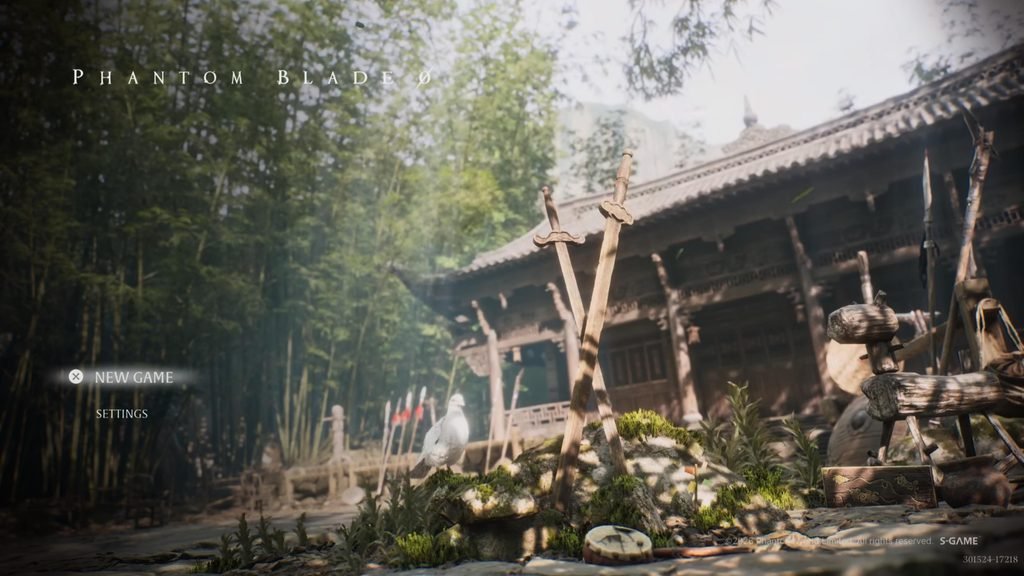
66 Days to Live and a Heart to Find
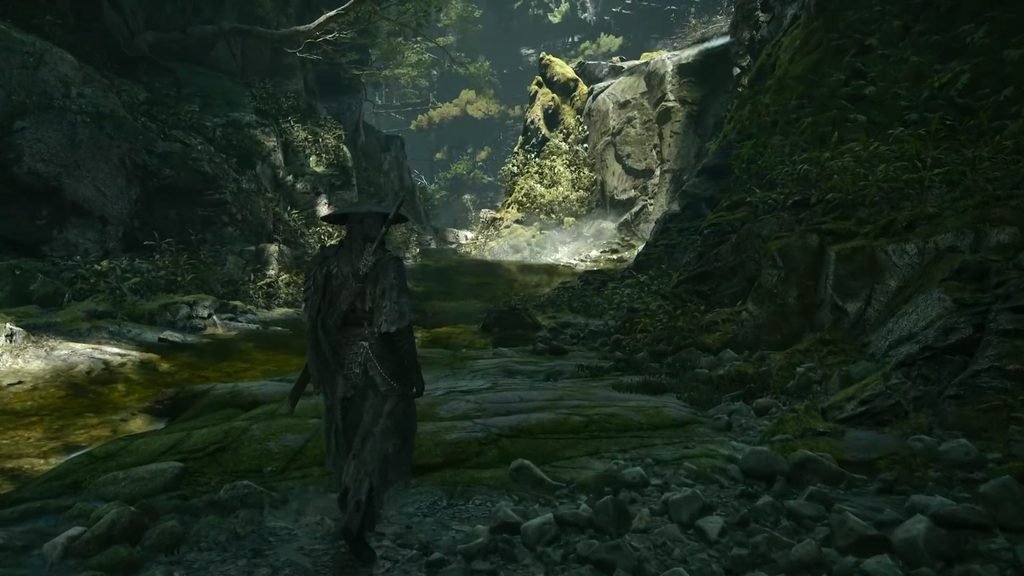
So, I boot up the game, play through the opening tutorial—it’s pretty decent, typical onboarding through a sparring match, but it’s Phantom Blade Zero, so of course it’s cool as hell—and then I’m quickly ushered along and given free rein to begin my journey in the first open environment. I do the typical slow walk around, taking in the sights—the detailed rocky terrain, sunlight glinting off distant cliffs, a shallow, green stream rippling to my left—and my very first thought is: “Damn, this looks just like Black Myth: Wukong”—and Wuchang: Fallen Feathers—and I say that with the utmost fondness and respect. Phantom Blade Zero’s general aesthetic, particularly the organic environments, level design and UI, is extremely evocative of Game Science’s work—even the maps are near-identical—and it all works wonderfully. You can already see the impressively high production value and detail-focused dedication from the devs.
Phantom Blade Zero pretty much throws you right into the story with very little exposition—an approach I greatly appreciate. Everything the game tells you in the first ten minutes is everything I’d gleaned from the trailers and YouTube videos I watched leading up to the launch. The plot premise is intriguing. You play as Soul, an elite warrior with a tainted heart and 66 days left to live; you’re tasked with searching for a heart that won’t kill you. Soul seems like a pretty stand-up guy—he’s no Musashi, Onimusha fans know—but he’s polite and formal with other characters, reserved but not cold. In fact, even without a clear beat on his motivations and characterisation, he seems to emit a general warmth and compassion, a sense of trustworthiness, which alludes to some serious subtle storytelling. I dig it. Soul does seem to have quite the badass reputation though, if an off-the-cuff comment from a creepy NPC I was certain I’d have to fight later is anything to go by.
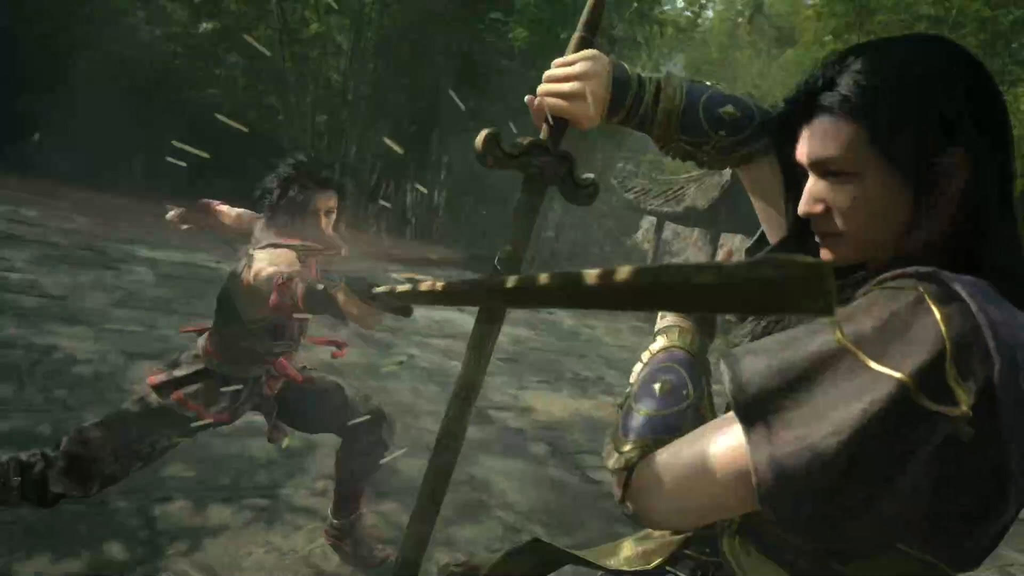
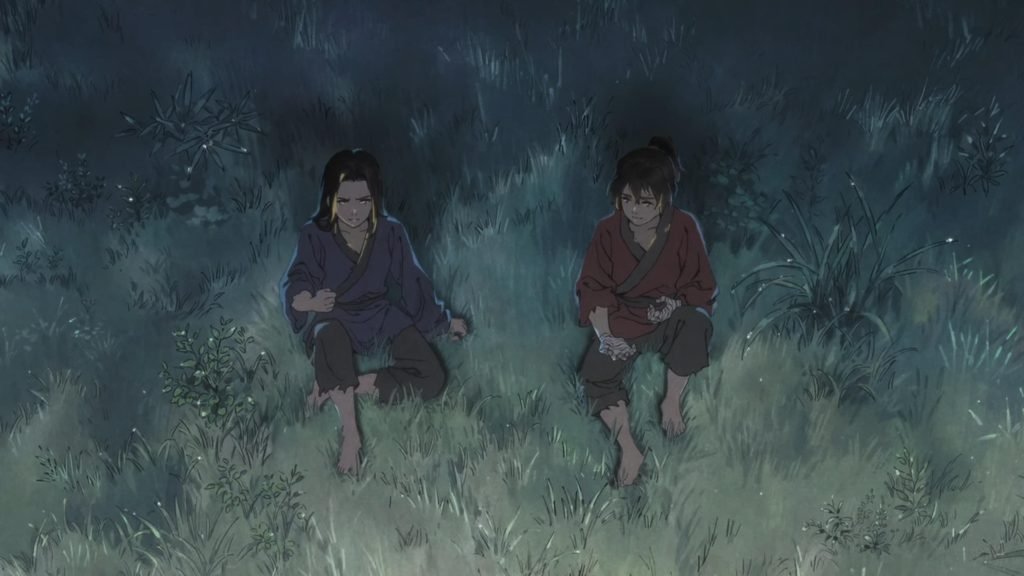
In terms of the supporting cast, there’s Soul’s childhood friend, sparring buddy and possible rival, Zuo Shang. He’s introduced at the very beginning and provides some banter whilst we spar through the tutorial. The story explores that relationship more in these stunning, hand-drawn cutscenes that serve as flashbacks to Soul’s past. And whilst I am very intrigued by the nuance of said bond, I like to keep my critiques totally spoiler-free. There’s also a young lady who seems to be following me; her name escapes me, but she seems nice, and I instantly empathised with her plight. She seems rather vulnerable in a hostile land and asked for help with her sick father, so I’m currently hunting herbs for her as part of a side quest. As is clear, the narrative is pretty vague at the beginning, but the plot is gripping, with tight writing and character dialogue that flows naturally.
Outside of the cutscenes and dialogue, lore is also delivered through collectible items which contain excerpts to flesh out the world-building—if you can be bothered to read it all, that is, I just be wanting to fight! All in all, it’s clear that S-Game have worked hard to create a unique and compelling world with a rich mythos. It’s honestly enthralling—even if the majority of it is going completely over my head right now.
Red Means Dodge Blue Means Parry
If you’re at all familiar with Phantom Blade Zero, then you already know combat is this game’s bread and butter. Fast-paced, visceral and theatrical, these fights do not disappoint. It did feel somewhat inaccurate and floaty to begin with and took me some getting used to, but it’s deeply gratifying and deliberate once you get accustomed to it. It’s all about timing. Parrying, attacking and dodging at the perfect moments is essential. Besides basic attacks, you have to keep an eye out for glowing red or blue enemy attacks; red means dodge and blue means parry. Timing these perfectly leaves enemies open to powerful, flashy ripostes that are a genuine joy to execute.
I find Phantom Blade Zero’s combat somewhat reminiscent of Nioh, but there’s no stance switching or stamina management here—which is refreshing honestly, as I’m so tired of being at the mercy of that ever-inadequate green bar. Oh no, in Phantom Blade Zero you have Sha-Chi, basically your stamina, posture and skill meter all wrapped up in one nice package. Phantom Blade Zero definitely abides by the old adage: “the best defence is a strong offence”—or whatever; the game rewards aggressive play! Basic attacks do not drain Sha-Chi, but holding the block button does, and once emptied, your posture will break, resulting in Soul entering a staggered state and leaving you wide open to enemy attacks. One nagging thought I did have when watching that initial teaser trailer was: “How the hell are you supposed to read enemy attacks and telegraphing with these wild animations?”. That thought stayed with me, even as I’m playing the game right now, and my only answer is… I don’t know, but S-Game managed it. Without sacrificing any of that signature finesse, Phantom Blade Zero’s enemies are able to accurately communicate when best to block, parry, dodge or go in for your own attacks through movement alone. This definitely has an element of trial and error; some of their manoeuvres will definitely baffle you on the first encounter, but the game has yet to feel unfair or overstimulating.
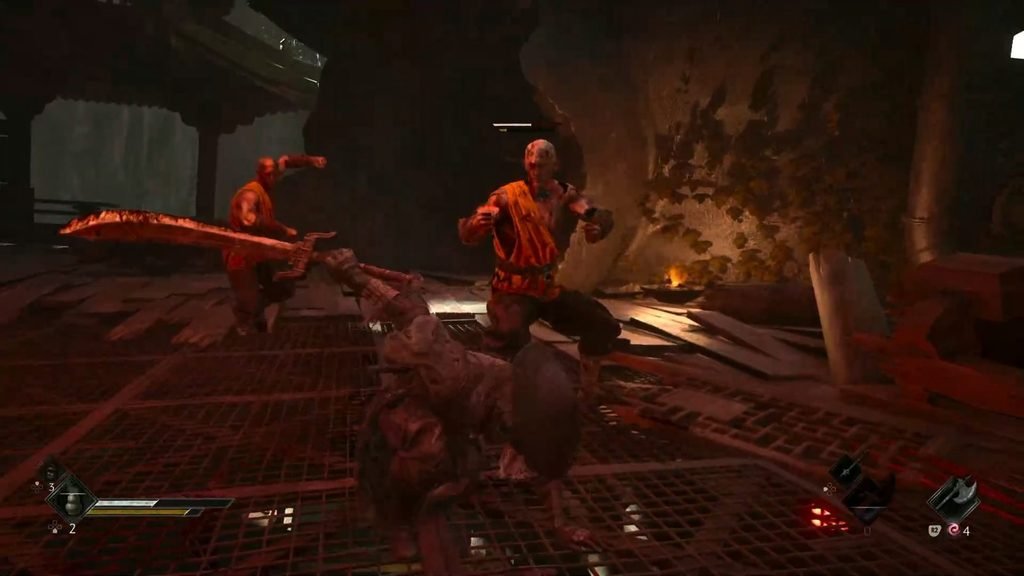
Combat is also fairly in-depth and complex, with tonnes of combos, special abilities, different weapons and weapon-switching attacks. As I said, it’s all about timing; you parry and launch your basic attacks to drain the enemy’s Sha-Chi, staggering them and opening them up for your Power Surges—high-damage, cinematic, unblockable ultimate attacks that will absolutely tear enemies up. Performed by tapping L2, Power Surges are unique to each weapon and are charged up by hitting enemies to build up your Sha-Chi Essence. There is a lot—and I mean like an overwhelming amount—to dig into here, for hardcore combat fans and aura farmers alike. Each weapon has its own special abilities. Alongside Power Surges, there are Weapon Skills which consume your standard Sha-Chi gauge. You press L1 plus triangle or square to perform these, shredding foes with swift whirlwind slashes or heavy guard-busting strikes for massive damage and stat debuffs. These animations look particularly cool as Soul pauses mid-battle, methodically switching his stance before drunkenly swaying into violently acrobatic manoeuvres, whipping his sword around, leaving trails of blood arcing and swirling through the air. I got a bit carried away there, but you get me—it looks and feels anime as hell, and I love it!
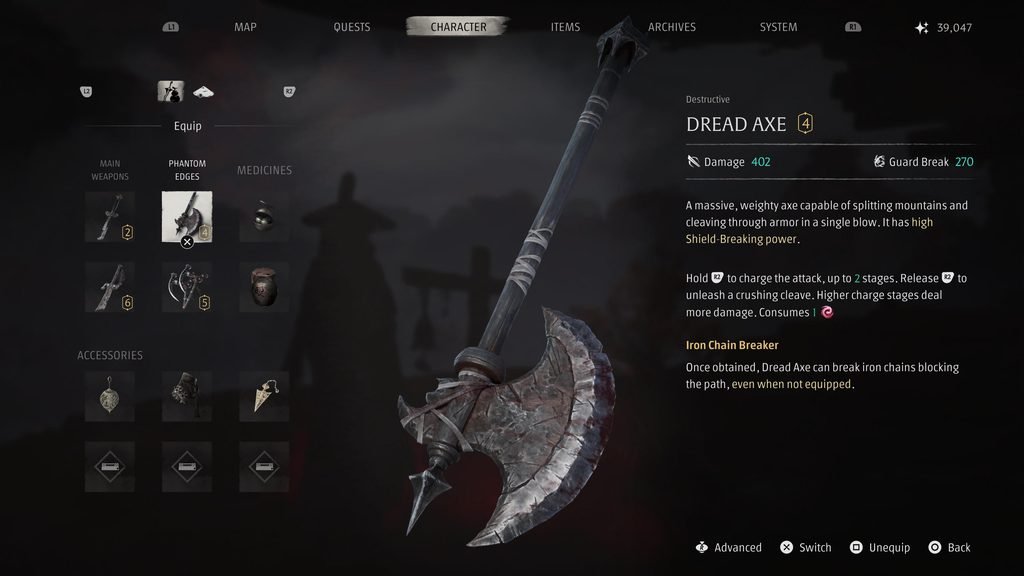
Finally, there are the Phantom Edges: limited-use power moves that can be utilised both in combat and exploration, both for devastating attacks and destroying environmental obstacles, opening paths to otherwise blocked-off areas. Phantom Edges are powered by Remnant Sparks, and the only way to recharge them is through resting at Bells (checkpoints)…or dying, so use them sparingly. Don’t worry though, using your Phantom Edges outside of combat for exploration purposes is completely contextual and does not cost Remnant Sparks. The first Phantom Edge you unlock is the Dread Axe; you can use it to perform a powerful overhead swing—with a considerable build-up, so time it wisely—that smashes the ground (or an enemy, if you time and aim it better than I do ninety per cent of the time). The Dread Axe can also be used to break chains in the environment to progress on with your travels.
The combat is supported by awesome, brilliantly choreographed wuxia animations—think Crouching Tiger, Hidden Dragon, House of Flying Daggers or Jet Li’s Hero—that turn every encounter into a playable kung-fu movie scene. All the weapons have their own unique animations, and it’s unlike anything I’ve seen in another video game to date. Soul moves like water, flowing around enemy attacks and striking out with his own in swift, unbroken motions—as long as you don’t get slapped.
Light on Platforming, Heavy on Style
Besides combat, there is some light platforming, but it’s mostly scripted—press X to climb this wall or slide down this rope, etc.—and of course, these animations are also decadent and slick, but Uncharted or even Ghost of Yōtei this is not. Soul does have a dedicated jump button—you simply tap X and he will abide—but I’ve come across no real call to utilise it. As a platforming fan, yeah, I found it a little disappointing, but it’s nowhere close to a dealbreaker; the combat and exploration more than make up for it. You do unlock a Phantom Edge that operates as a sort of grappling hook pretty early on, but again, it’s completely contextual and scripted, with very little player input or agency.
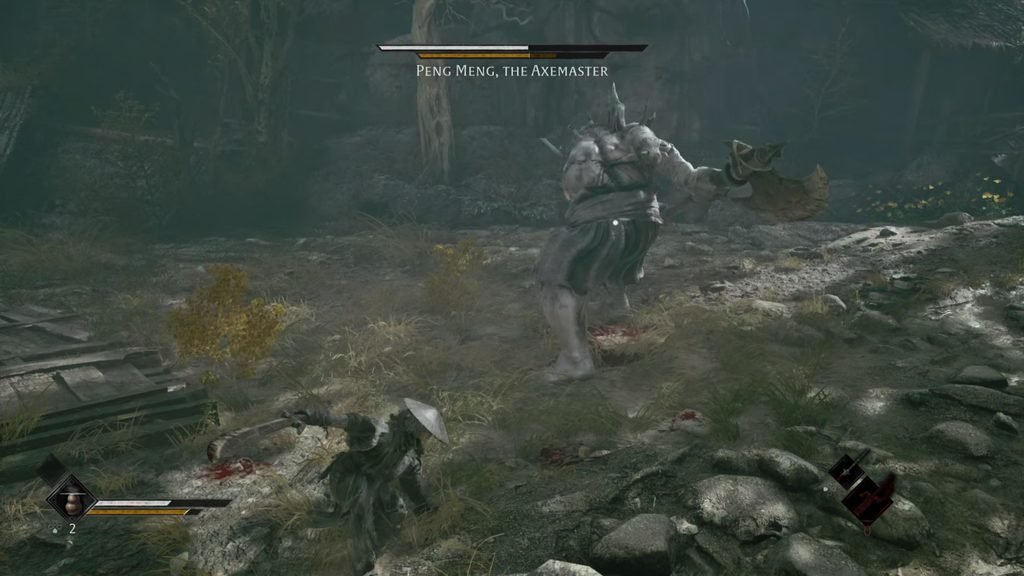
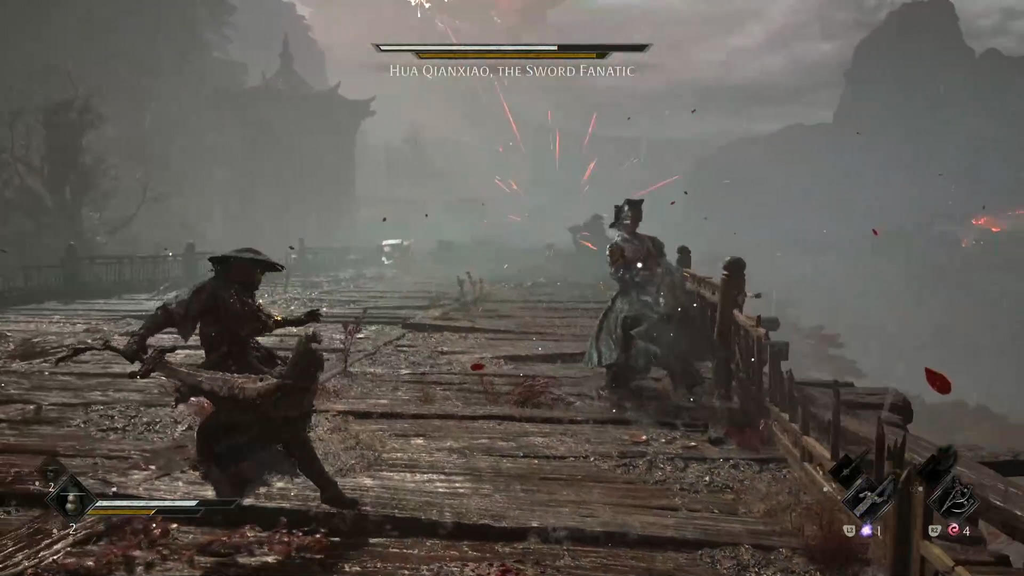
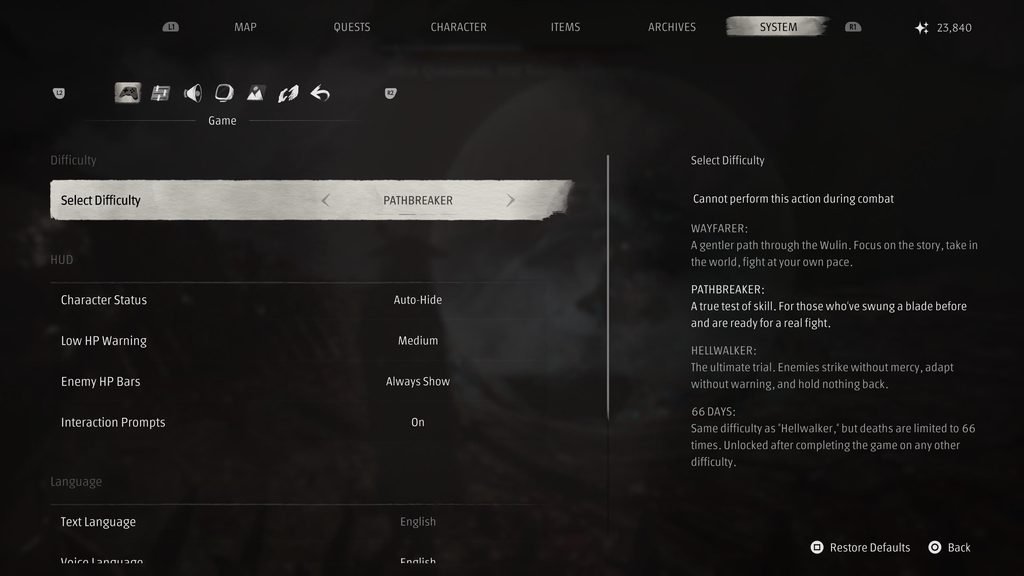
In terms of difficulty, I’m playing on Pathbreaker (standard) and the combat is challenging—the first proper skill check, Peng Meng, kicked my ass for like thirty minutes, and it seems like I’m going through it all over again with Hua Qianxiao, more on him later—but it’s not brutal. Phantom Blade Zero is not a Souls-like; there are no penalties for dying and enemies don’t respawn when you use a checkpoint or die, but it’s not a generic hack-and-slash either. Its difficulty is more comparable to Ghost of Tsushima or Stellar Blade than Sekiro or Nioh. Mastering that parry and dodge timing is an absolute necessity—shout out to Peng Meng for drumming that in—but it clicks pretty quickly. It’s classic easy-to-learn, difficult-to-master fare.
Off the Beaten Path and Into the Loot
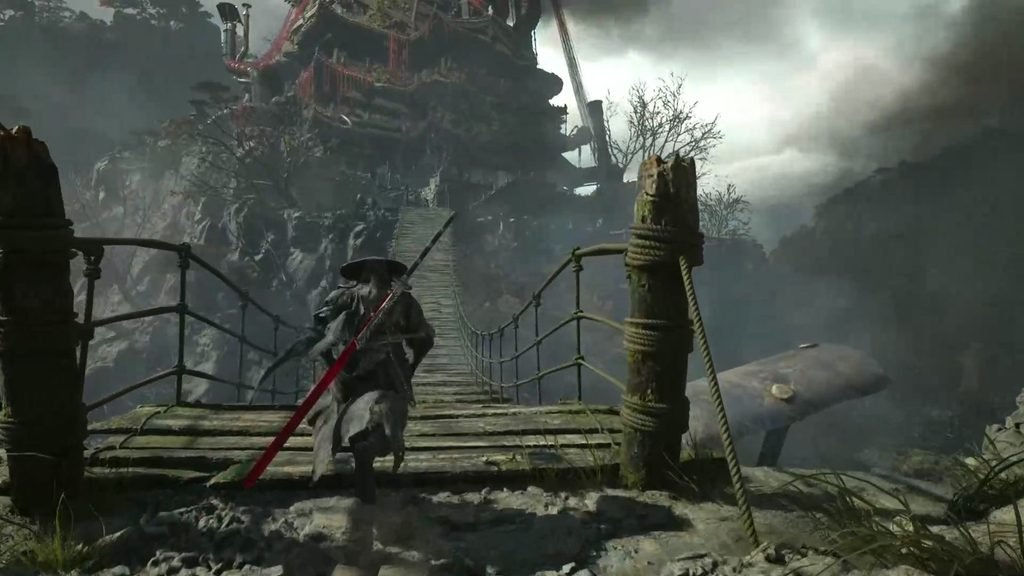
Phantom Blade Zero’s environments are genuinely fun to explore. The levels are linear yet open and—at the risk of sounding redundant—similar to Black Myth: Wukong’s more open areas, but with more branching paths and way fewer invisible walls. Exploration is engaging and rewarding; going off the beaten path will reward you. S-Game have actually been relatively generous with loot, I came across an abundance of Remnant Dust (the game’s currency), upgrade resources and collectibles in my first few hours alone. The amount of loot to be found definitely suggests the game wants you keep on top of your weapon upgrades.
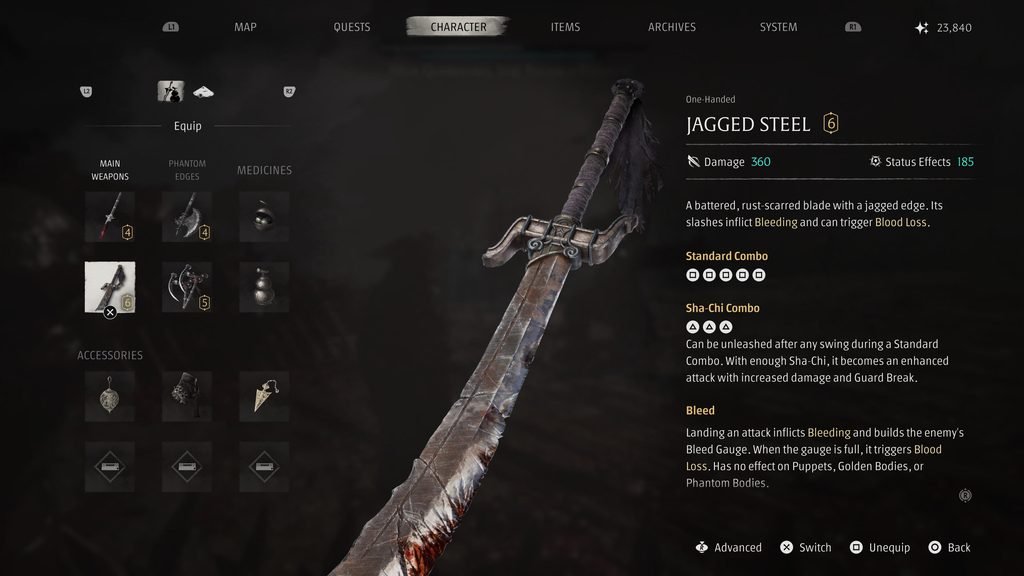
Progression looks particularly in-depth, with potential for some serious buildcrafting. You collect Remnant Dust to unlock perks and abilities in the skill tree, as well as weapon upgrades. I got two new weapons besides the starting sword in the first half hour—a pair of swift dual swords and my fast favourite, the heavier Jagged Sword—setting a promising precedent for weapon variety. They really do just keep coming. Each weapon type has its own individual upgrade material that you can take to your Blacksmith, Forge (that’s really her name, I’m not even playing), or you can just use any bell checkpoint. I haven’t figured out if travelling to Forge serves any unique purpose, so she seems kind of redundant apart from unlocking the ability to upgrade weapons once you meet her, but we’ll see, I guess. The Phantom Edges are essentially boss weapons and are obtained by defeating said bosses. They have their own upgrade material too (it’s literally charcoal, no cap). You can also find and equip accessories for small buffs like the two I have currently equipped: Hunter’s Insight, which gives you increased damage and Sha-Chi depletion, and Battle Wraps for increased damage—I always go for damage buffs.
Overall, there’s a crazy amount of potential for player expression and build customisation; I’m very excited to dig deeper into the systems and git gud!
Gorgeous Gloom and a Soundtrack that Slaps
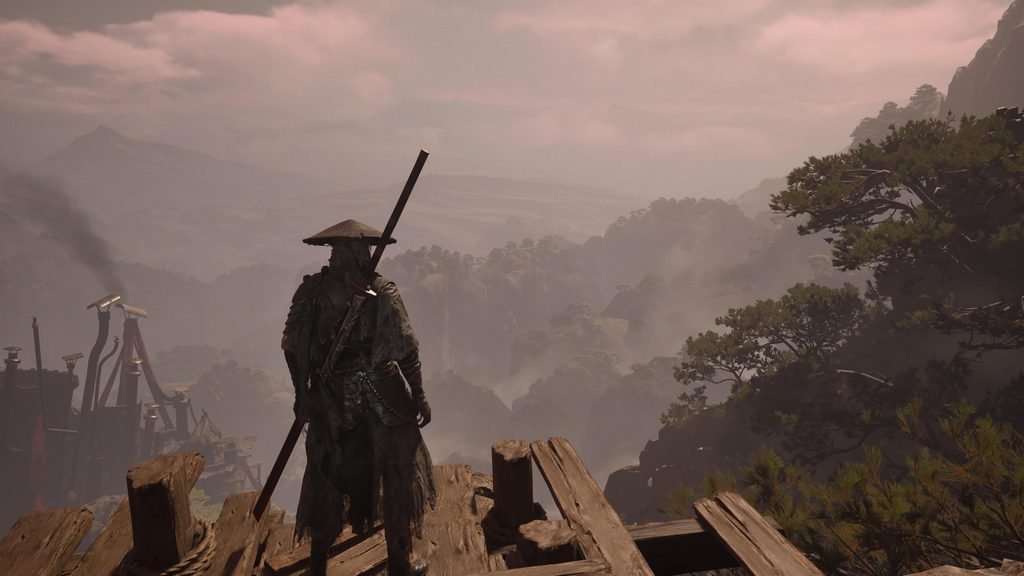
Now for the graphics, and if I haven’t made it abundantly clear already, Phantom Blade Zero looks gorgeous! The visuals are crisp, clear and high-fidelity, with captivating, earthy environment design and clean character models. I really appreciate how the muted colour palette, grim-dark, Ancient Chinese underworld theming and Kungfupunk aesthetics give it an instantly recognisable and distinct visual style. Despite the seemingly drab filter, the beauty bleeds through—dulled yet still vibrant—and environments look lush, natural and inviting. Enemy designs are suitably creepy and otherworldly, featuring detailed, memorable and monstrous bosses and mobs, like the imposing mass of Peng Meng or the grey, washed-out, zombie-like thralls that hound you in the early game.
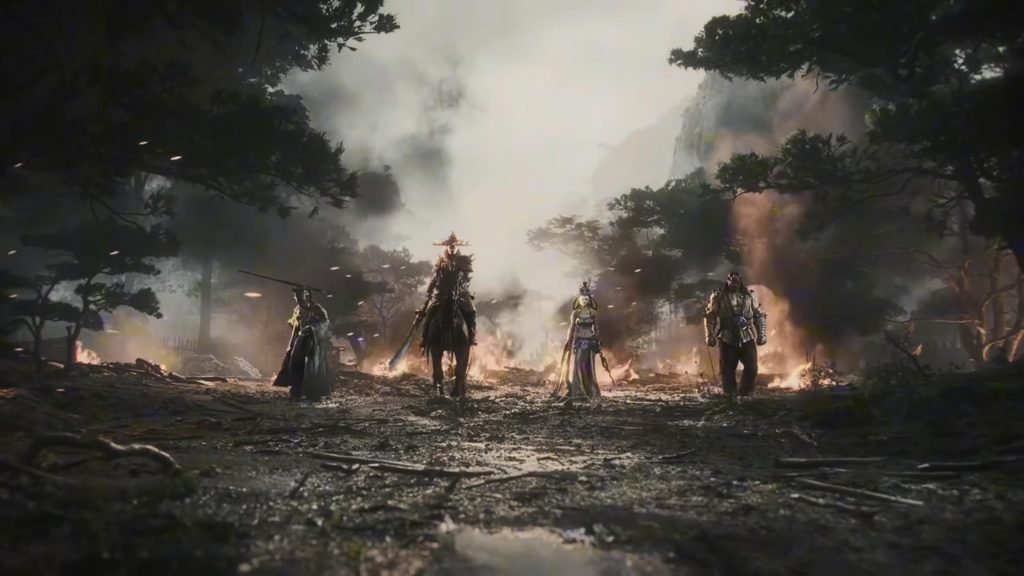
Supporting those stellar visuals is the soundtrack, and damn, this really took me by surprise! The tracks in this game SLAP! There’s one cutscene in particular, a few hours in, where there’s an Avengers-esque clash. It starts off introducing all the different characters with title cards before exploding into an epic battle. It’s a really cool scene on its own, but the music elevates it to the next level! Matching the intense conflict beat for beat, it goes insanely hard and had me bopping along the whole time. Mixing traditional Chinese string instruments, electric guitar riffs and hip-hop beats, it’s dynamic and immersive. Equal parts upbeat, tense, ominous, melodic and melancholic, it adapts naturally to the action on-screen, whether it be chill, atmospheric tracks during downtime or tense and exhilarating scores when the fighting kicks off. I am thoroughly impressed by this OST.
Sound design is no slouch either; implementing a diverse soundscape, it’s ambient and engrossing, grounding you in each moment. Whether it be the soft whistling of the wind or the slashes and crashes of weapons, it sounds great—and that parrying audio cue is super satisfying. The English voice acting is good too. All of the characters sound authentic, with no bum lines or stilted delivery. One standout performance is Hua Qianxiao—whom I’m currently stuck on—his voice actor definitely understood the assignment and nails this eccentric personality.
A Day One AAA That Actually Runs
So far, performance has been smooth on the base PlayStation 5, with zero hiccups or crashes. It shouldn’t be rare for a day one AAA title to showcase a functional performance, but we know it is, so this is super refreshing. The accessibility options are pretty much what you’d expect. It’s got the usual three difficulty options, Wayfarer, Pathbreaker and Hellwalker, with a fourth mode called 66 Days— basically Hellwalker with permadeath, no thanks—unlocked upon completing the game. Phantom Blade Zero also has standard HUD toggles and language options, though voice acting is only available in Chinese or English.
Kunfupunk Gets Put on the Map
To summarise, I am overjoyed to declare that I’ve had a splendid introduction to Phantom Blade Zero. The combat, animations, world, story, sound design and narrative coalesce seamlessly into an intensely engaging and enjoyable product. I’m excited to progress, perfect my combat skills, figure out a solid build, and delve deeper into this supernatural, enigmatic, and engrossing new universe. S-Game have coined, presented, and perhaps even popularised the term “Kungfupunk”!
Leave a Reply