
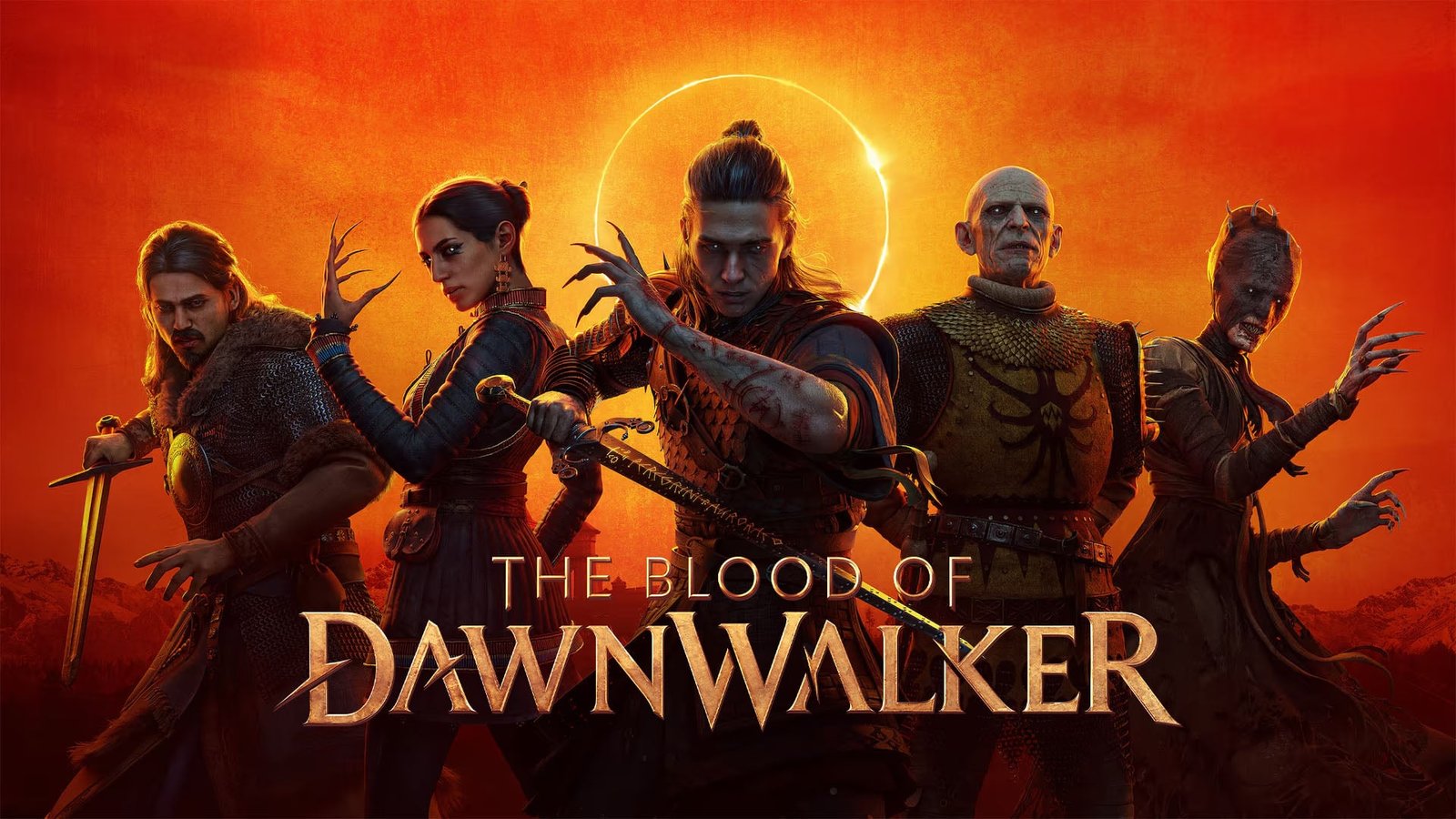

When I first heard that former Witcher 3 developers had built a new studio to create a gothic vampire RPG, it almost sounded too good to be true. It’s one thing for veterans of an industry-defining masterpiece to strike out on their own with a new vision, but it’s even more exciting that they’ve chosen to tackle a severely underserved mythology. There are far too few great vampire games out there that actually focus on the vampires themselves or their lore, and Rebel Wolves seemed perfectly suited to fix that.
The Blood of Dawnwalker is not blood shy, it is not afraid to show you the ugly cost of witchcraft, or the utter damnation of losing your soul to a swirling crimson void, and it is not afraid to give you seemingly impossible choices. This should sound familiar to anyone who has spent some time walking in Geralt of Rivia’s shoes, which is to say, these developers are simply applying what they already do best to a brand new world that they get to shape from the very start, and it was wonderful to behold.
A Family to Save and a Castle Full of Vampires
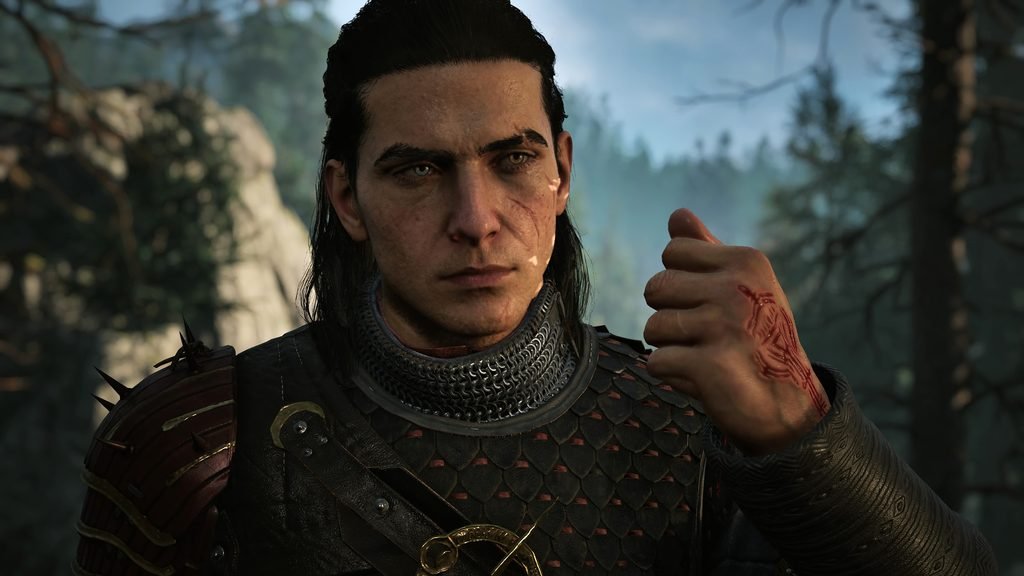
The Blood of Dawnwalker is the first in a planned franchise of games, making it basically an origin story. Our protagonist, Coen of Laslea, is young and not yet wearied by the world, but he is wearied by the trauma of his past and the present reality of living under vampire rule. His mother is sick, his siblings are losing their childhood, his father is desperate to do something about it all, and his girlfriends don’t love him (oops, that comes later). Rebel Wolves does a fantastic job of setting up the stakes and investing you in the characters while also introducing the game’s unconventional storytelling tactics that create the primary tension of the whole experience.
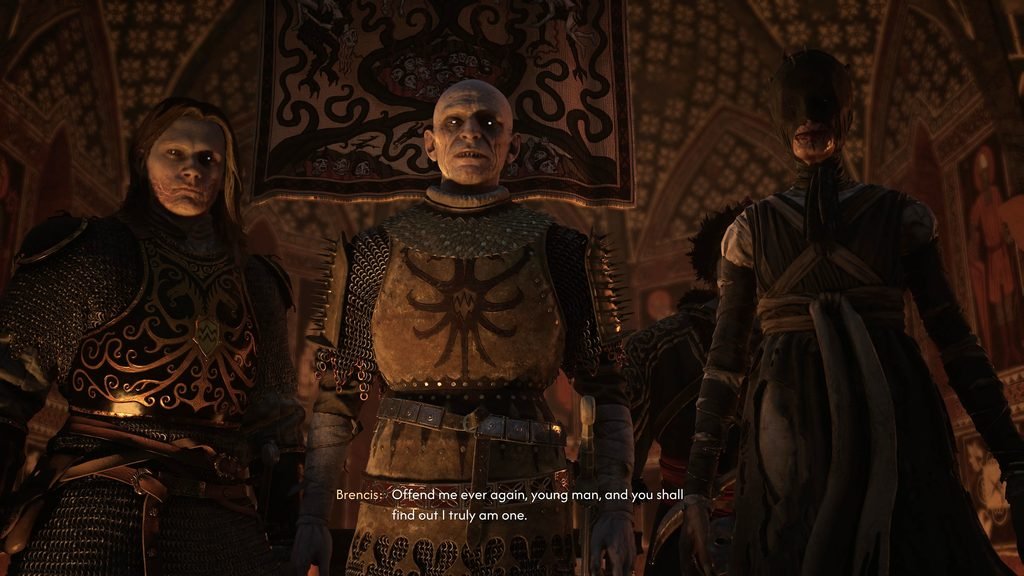
As an RPG, it’s basically already promised that this won’t be a linear game, but that idea is taken a step further by the lack of any true “main quest”. Once the prologue is over, and Coen is properly turned into a dual-natured Dawnwalker, you have only one ultimate goal: save your family. The evil vampire leader Brencis kidnaps Coen’s family away to his castle, and now you’re free to seek any means necessarily in order to rescue them. From this point on, The Blood of Dawnwalker becomes an intensely character driven experience with each major questline focusing on a different potential ally, their past, and their own personal motivations that also reveal more about Coen in turn. You can do them all, or you can do none of them and march straight to Brencis’ castle. I really enjoyed this level of freedom, and I think it embraces the fact that side quests and exploration are often the best parts of role-playing games. Above all, Rebel Wolves created the valley of Vale Sangora as a true narrative sandbox with a story that unfolds very organically, and they don’t force you to approach it in any one way.
Well, except that you’re on a timer. Sort of.
Time is Blood: Spend Your 30 Days Wisely
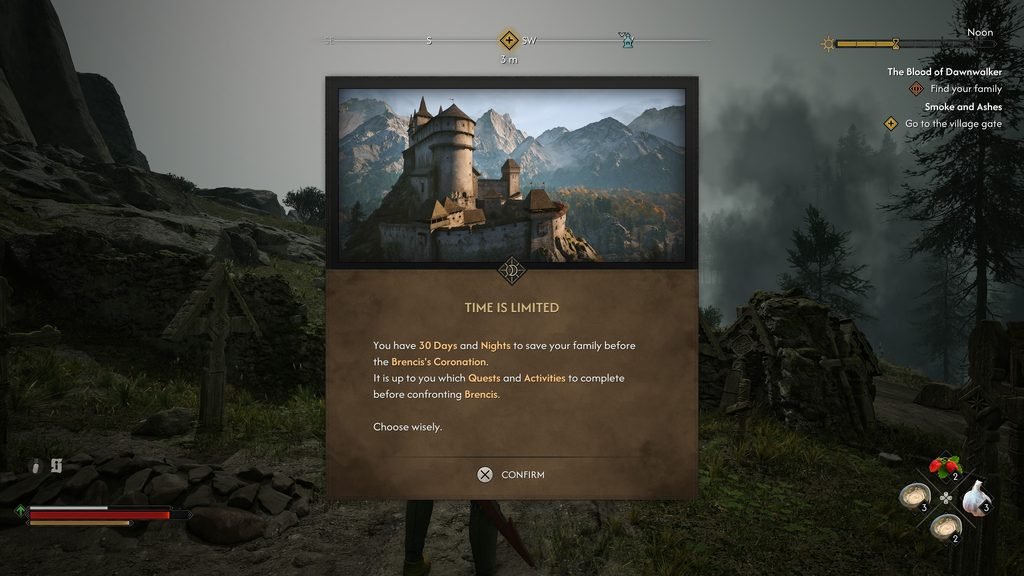
The first major gameplay element that has to be discussed is the 30 day in-game time limit. It is actually less like a timer and more like a form of currency, which I really appreciated. Every day has 16 total time segments, 8 during the day while Coen is human and 8 during the night while Coen is a vampire. Most every quest or activity in the game will cost a certain amount of segments, and spending those segments wisely is how you plan your journey to Brencis. I was initially worried about a restriction like this in a genre that typically encourages completionist playstyles due to the high volume of content, but in my own experience I don’t feel like I actually missed out on anything I wanted to see. As long as you don’t go chasing every single open-world activity, obsess over maxing out Coen’s abilities, actively skip time from the shrine menu, or neglect the quests that actually are timed, I’m fairly certain you can see all the meaningful content in one run. The main thing is, you’re in control of how time passes, and in that sense it’s just another role-playing mechanic and a tool that adds additional weight to your actions. It provides valuable urgency.
Combat is honestly one of my favorite parts of the game. The light directional elements in concert with parrying, using abilities, and popping mapped consumables worked very well for me. In a world where RPGs are risking their identity by abandoning turn-based more and more for action, it’s encouraging to see Rebel Wolves introduce another layer to fights in a similar way to what Warhorse has done with Kingdom Come: Deliverance. The only weaknesses here for me is the fact that upgrading your stats or unlocking new abilities will often cost time segments. I’m not actually opposed to character building being restricted by the time mechanic, it’s only that it can create an uncomfortable situation with your own enjoyment of the combat itself. You can be very efficient with your build and time segments, but fewer abilities also means fewer actions for you to take and usually more waiting on cooldowns. If Rebel Wolves could make more of the combat variety innate to the system itself and not just your upgrades, I’d be more than happy to use and be restricted by time segments while fleshing out the nitty gritty of my build. I think that would be a fun way to push build variety, but as it stands, it feels a little like being optimal cheats you out of gameplay.
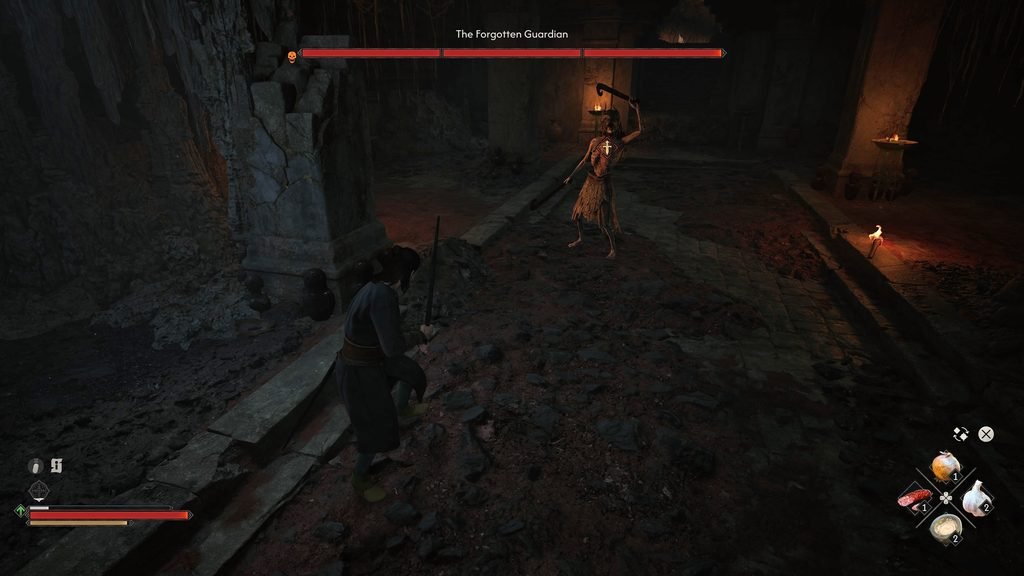
The duality of being a human by day and a vampire by night is really refreshing, not only from a narrative perspective, but also in gameplay. You have a skill tree exclusive to your vampire form, claws in combat, and a blood lust mechanic in conversations that will cause you to feed on and kill NPCs (even “essential” ones) if your health is too low at night. Swords eventually outpace claws and the blood lust becomes very easy to avoid, but just the fact that these things exist at all makes the world feel more real and engaging. They’re details you don’t always see anymore, especially when it comes to the blood lust.
Lastly, there is an infamy system tied to your actions against Brencis and his court of vampire bosses. As you complete quests that disrupt their individual operations, the whole valley will slowly become more aware of you, and more violent. Do enough quests aimed at a particular boss and you’ll unlock a special quest ending in a confrontation with them. It’s not a complicated system, but I love how there are so many ways for the game to give you consequences for your actions. A high infamy will basically make the central city of Svartrau a hostile fortress against you, but you can also plan around this.
Vale Sangora: Pretty Valley, Familiar Caves
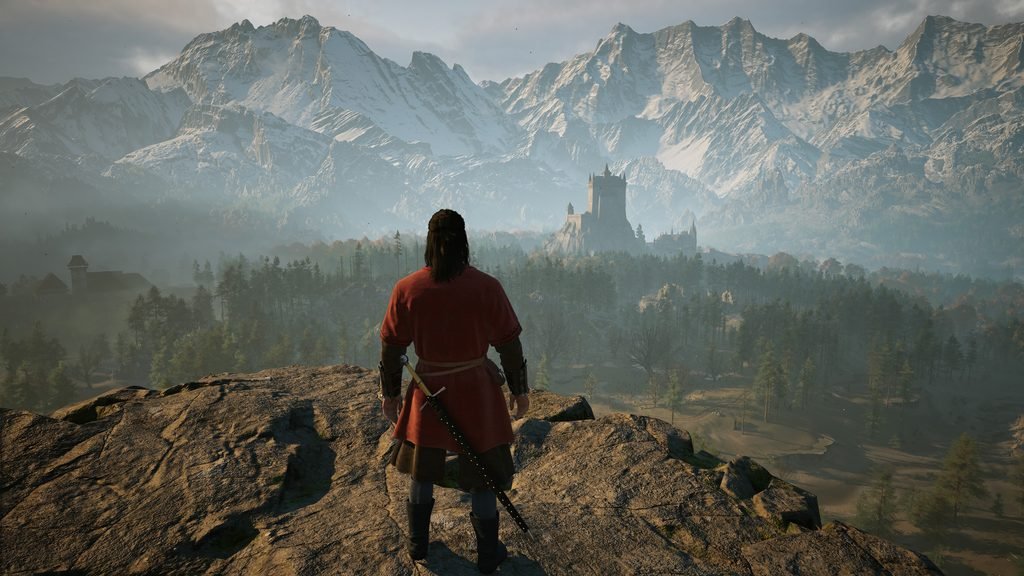
The valley of Vale Sangora is exactly what it needs to be, but there is plenty of room for Rebel Wolves to improve world design in the future sequels. I enjoyed combing through most of the map looking for secrets and making my way to the next objective, it’s also a beautiful realization of Unreal Engine 5, but there’s not a lot of variety or exciting locations to be discovered on your own. Svartrau city is easily the best location in the game, as all the other towns are little more than small hamlets and any other point of interest is either quest specific or a variation of similar looking underground tombs and caves. This at least kept the map screen free from clutter, which is always a good thing.
Traversing the map is well-paced and not too reliant on fast travel. There are plenty of fast travel shrines at your disposal, and even more that you can repair for a time cost (which I avoided), but I appreciated the restraint shown by the developers when it comes to the actual size of the valley, although resource management almost certainly had a part to play in that. Even if you had to run from one location to another entirely on foot, it never felt like it took that long, especially with your special day and night traversal perks that unlock a magical super sprint and wolf form respectively (yes, Coen can turn into a wolf and it’s badass). Some have bemoaned the lack of proper mounts, but I didn’t mind it at all personally.
Everyone Bleeds Eventually
I’ve already mentioned the importance of the characters in The Blood of Dawnwalker, but I really can’t stress it enough. All the brutal realities of living in a gothic dark fantasy ruled by bloodthirsty terrors of the night is driven by the relationships and choices therein. You hate Brencis for taking your family away from you, but you’ll also learn what motivates him and how he became who he is by the time you meet him. How you deal with him in the end might be different from what you planned initially. Each member of his court has their own story as well, some are tragic and some double down on menace.
There are some people who you can’t help no matter how much you try, and choice concerning others that you’ll wrestle with no matter what you choose. It’s not futility, it’s the genuine complexity of the human (and not so human) condition that Rebel Wolves has so deftly translated to their game and made you a steward of. Everyone will feel the effects of your choices and nothing will be the same for any of these characters ever again, so choose carefully.
Smooth Frames, Questionable Eyebrows
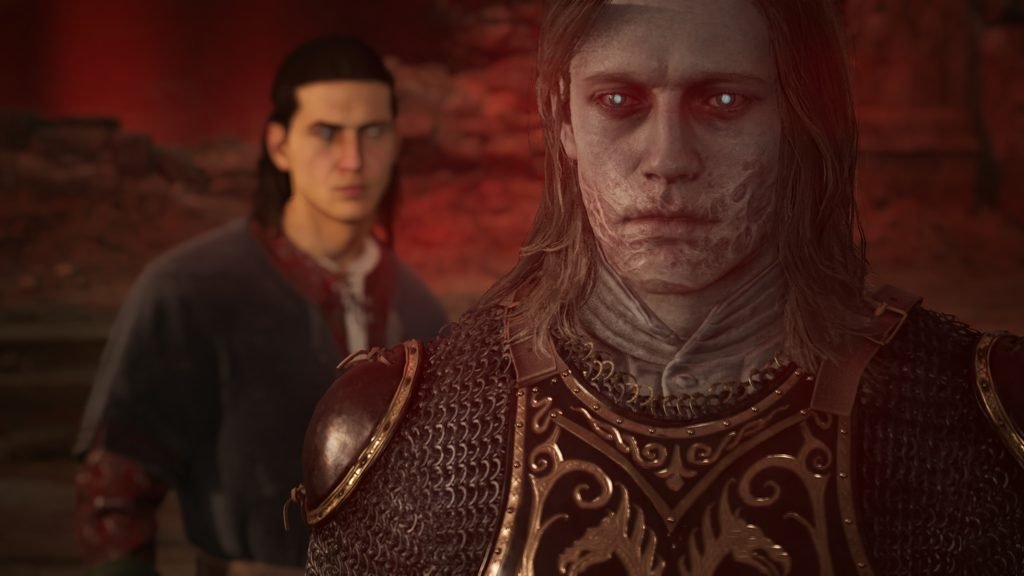
I played the whole game on my base PS5 in balanced 40 FPS mode and I didn’t have any glaring issues. You have the usual early build jank that is sometimes typical in Unreal Engine games, but nothing crazy. My only real complaint is that for some reason most of the facial hair and eyebrows on NPCs in the game is really messed up, like it’s thinning or placed too far inside the model. Crake, one of the most important characters in the whole game, looked downright silly for most of my playthrough. I don’t think it’s so bad on quality mode, but in performance mode the visuals are even more inconsistent.
Final Verdict
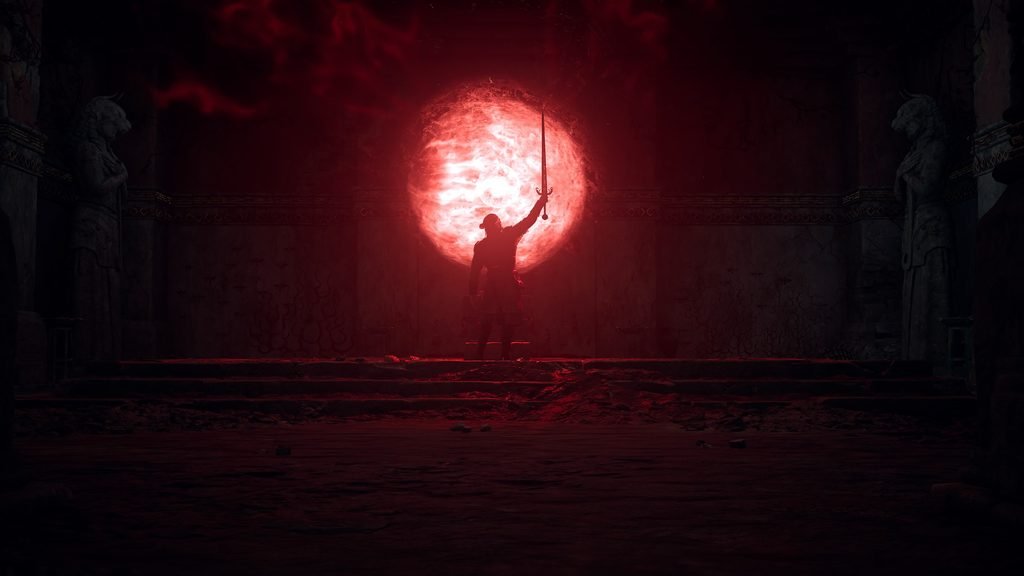
The Blood of Dawnwalker represents all of Rebel Wolves’ well-earned experience with dark fantasy and role-playing games. It has great writing and dialogue pathing, characters with depth and diverse motives, choices that sit with you long past making them, and unique spins on gameplay mechanics that keep things fresh and add much needed texture. It’s everything you love about The Witcher 3, yet also entirely its own and in many ways improved.
There are a few seams brought on by a smaller budget, a commercial engine, and a debut title, but the emphasis belongs on what Rebel Wolves was able to achieve in spite of that. This is an exceptionally well-thought-out game that knows its own strengths, weaknesses, and how to leverage them. I am thoroughly impressed, and very excited for what comes next. Rebel Wolves has something very special on their hands.
Wesley Says Must Play
- 55 hours in
- PS5
- Bought it
Leave a Reply