
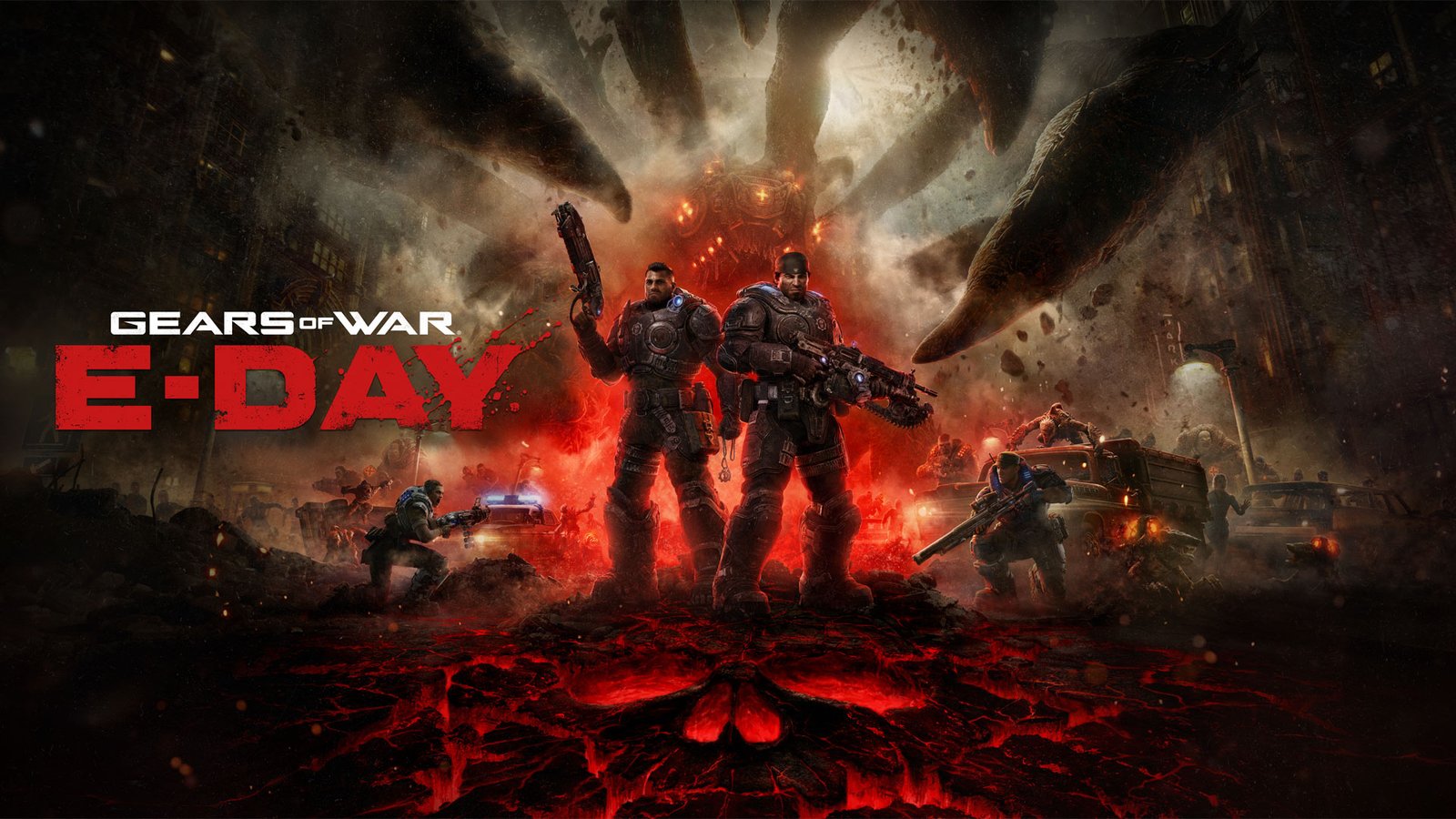

Playing Gears of War: E-Day was a genuinely unexpected and cathartic hit of nostalgia! The solid, traditional, cover-based third-person shooting instantly transported me back to the Xbox 360/PS3 era of gaming. It honestly had me thinking, “They really don’t make ‘em like they used to… but The Coalition did!”, and with all the technical, graphical, and quality-of-life improvements of the modern era.
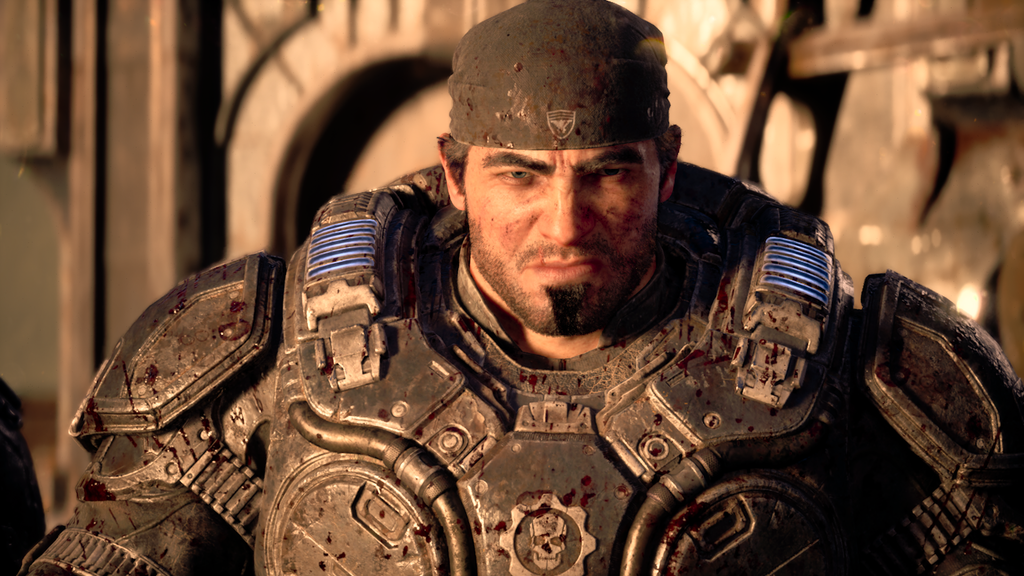
Grounded Horror & Rentless Tension
The emphasis on gritty, grounded, gruesome vibes is evident from the opening, and what a perfect opening it is! Outside of the optional start-up tutorial that gets you acquainted, or re-acquainted, with the game’s mechanics, the beginning of the game acts as an organic-feeling primer.
It starts off linear, taking place in tight, cramped spaces: wrecked streets, alleyways, abandoned stores, and most notably the Kalona City Police Department. This linear setup mirrors the intimacy of early cutscenes and character interactions, as the cast and the terror of the Locust invasion are introduced.
Kalona City’s police station evokes Resident Evil 2’s Raccoon City police building. It is an excellent opening location, setting a solid, grounded tone. Flickering cinematic shots highlight the foreboding horror of Marcus and co’s initial introduction to a Locust Drone in the KCPD. The game also takes its time to set up the characters we’ll spend the rest of the game with through well-crafted, well-timed, close-shot cutscenes and compelling dialogue sequences.
The story draws you in instantly, managing to set up the tension, high stakes, and intrigue despite it being a prequel. It communicates a lot and gets you invested in the characters without much exposition. The supporting characters, e.g., new squad members Mags and Lucas, are memorable and likeable, featuring surprisingly touching, heart-wrenching moments that might have some shedding tears. Lucas’ rookie perspective was a nice one to see and is a great example of some decent, subtle character development as the story advances.
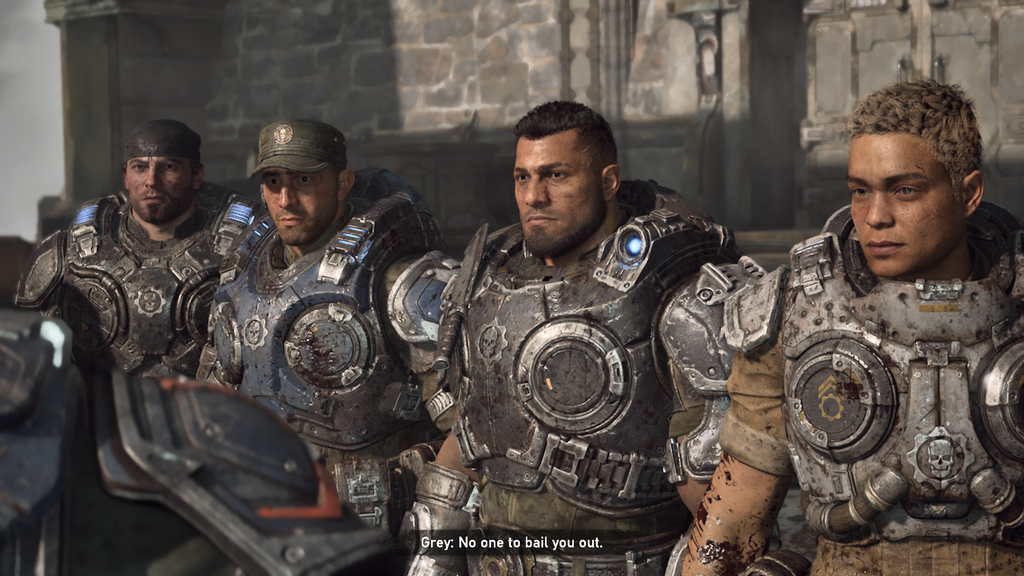
The writing is impressive, down-to-earth, and gritty. The depth of that brothers-in-arms bond between protagonists—a younger Marcus Fenix and Dominic Santiago—is on full display from the get-go. It immediately highlights their shared loss of Santiago’s older brother, Marcus’ gruff exterior, and Dom’s dedication to his young family, which hits particularly hard with the added prescient context of the earlier titles.
As the game progresses, it confidently flicks between down-to-earth horror nuance and blockbuster action movie territory, with endearingly tropey cutscenes and dialogue scattered throughout. These are interspersed with dark, gut-wrenching cutscenes that spotlight the depravity, brutality, and cruelty of the Locust, whilst showcasing the bravery of the Gears. Some scenes were genuinely and surprisingly hard to watch.
But E-Day is never ham-fisted and never forgets its grounded focus and what story it’s telling. Without giving away too much, I wouldn’t say the game explores any themes particularly deeply—a lot of it is fairly generic action-war movie stuff—but it works. The story never takes itself too seriously, nor does it fail to take itself seriously enough. The action, levity, and tension are all well-balanced and only complement each other throughout. There’s no deep philosophical questioning of who the bad guys are a la Spec Ops: The Line; this is standard action-war movie fare and really has you rooting for the losing team.
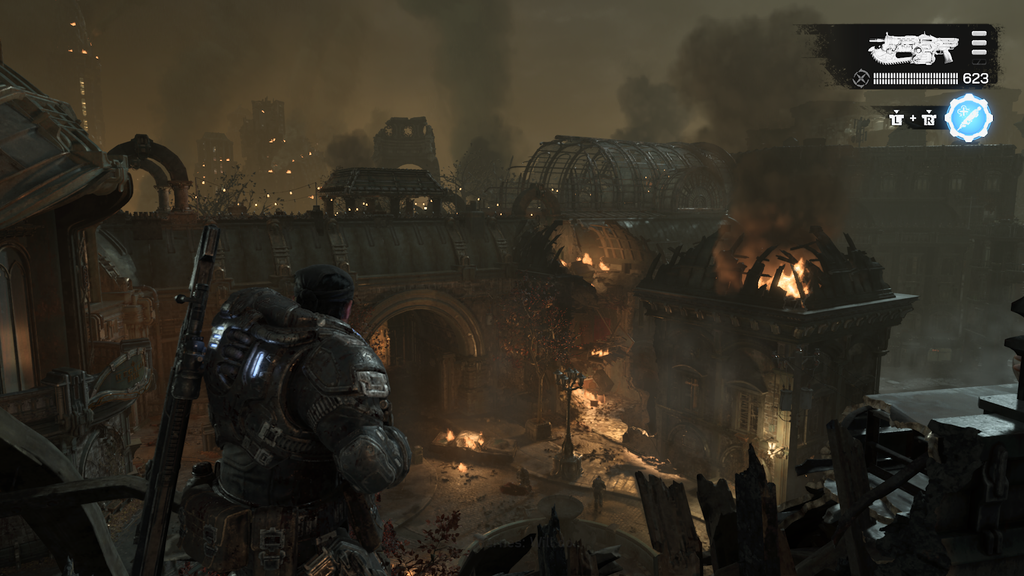
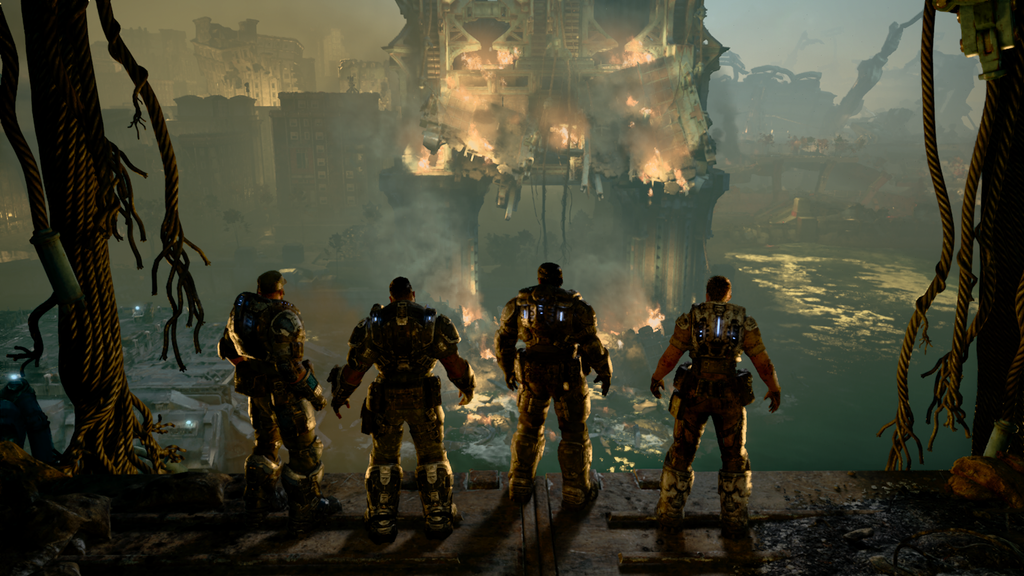
Kalona City is the real star of the show, providing a look at the planet Sera that’s more relatable and similar to Earth than ever before. Despite the apocalyptic scenario and setting, Kalona feels alive and organic.
The environment and sound design perfectly and immersively depict the immediacy of the ravages of the Locust invasion: a war-torn cityscape, crumbling buildings, Locust hives bursting from the ground, ground-shaking rumbling, distant gunfire and explosions, random skirmishes, panicking, screaming, fleeing and dying civilians—Kalona is on its last legs, fighting for its life… and losing.
Straight-Up, Deeply Immersive Gears Action!
This is just good, old-fashioned, cover-based third-person shooting. At the risk of sounding redundant: they just don’t make ’em like they used to!
Gunfights are engaging, enthralling, fast-paced, and hectic, with super-snappy, satisfying gunplay. Sprinting between and vaulting over cover feels great; the dynamic cover system looks and works brilliantly. Whether it be standard waist-high barricades, high walls, pillars, or the low protrusions in the cracked earth, Marcus naturally adapts to the form of cover, crouching, standing, or crawling appropriately. The game did sometimes misread my intentions and stick to the wrong piece of cover, but this was far from a game-breaking issue—just a temporary halt on the otherwise stellar immersion.
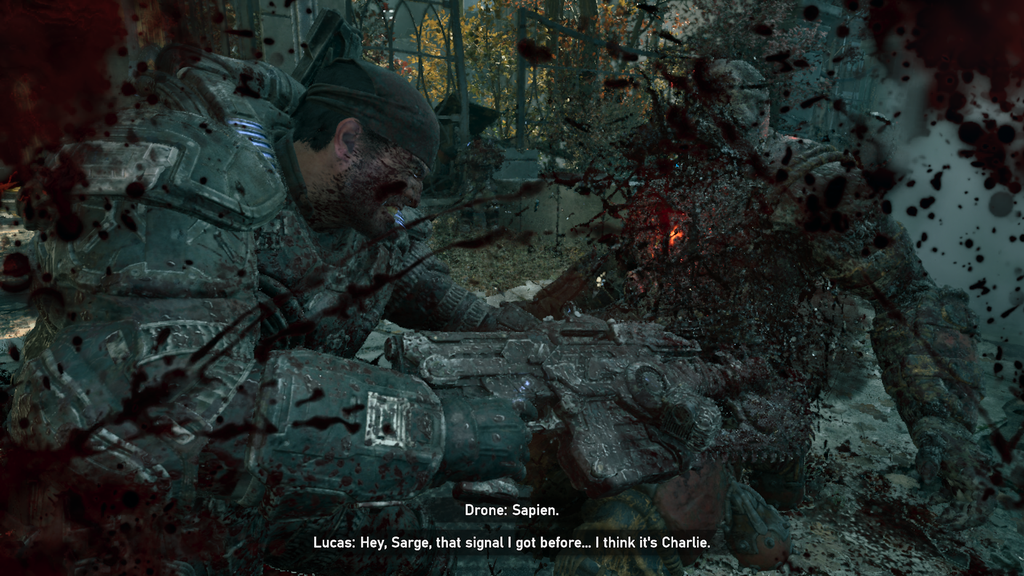
Weapons feel great, with satisfying and realistic feedback and recoil. Peppering Locust hordes with bullets honestly never gets old. There’s a decent amount of weapon variety. I mostly stuck with the franchise’s iconic Prototype Lancer, Longshot, FRAG grenades, and Striga handgun, but did switch out due to necessity when ammo was low or the situation called for something else—like the less accurate and devastating but more versatile Breachshot, or the heavy, ammo-laden Ripper.
The heavy weaponry, like the Vulcan Gatling Gun or Troika Heavy Machine Gun, were just as fun and devastating to let loose with as you’d expect, if annoyingly quick to overheat and slow cooldown. The scripted sequences with the Gatling guns on the copters were fun, but even more exhilarating were the unscripted moments when I’d turn the tide of battle by taking down a Boomer and turning their Heavy Boomshot on the remaining horde.
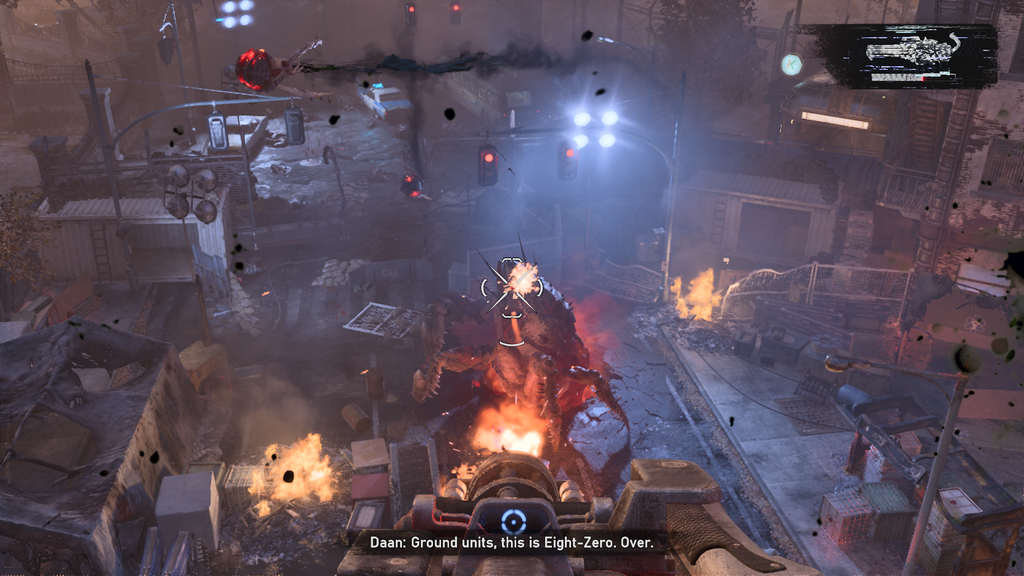
The destructible environments create a wonderful sense of inertia as you can shoot through glass and weak structures to pick off enemies, even when they’re attempting to take cover. Fights feel desperate and highly mobile; the surprisingly spongy Locust encourage you to move and reposition to avoid them and close their tunnels. Locust hordes burst randomly from underground, and you have to juggle multiple enemies as you plug their holes.
Aside from some random bugs with Jammers that get stuck with heads burrowed—making them unkillable and forcing me to reload the checkpoint to fix it—enemy AI is decent. They will seek cover appropriately, hunker down when overwhelmed, and attempt flanking manoeuvres, promoting the idea that the Locust are genuine threats: monstrous as well as intelligent. Enemy diversity is as expansive as you’d expect from Gears, with plenty of returning and some new foes I won’t ruin for you here.
The most common and iconic enemy, Locust Drones, are bigger and stronger than our Gears and when enraged will throw caution to the wind and charge at you. You can either try to gun them down, run, or my personal favourite—face them down with your Prototype Lancer’s chainsaw attachment! If caught, they’ll tackle you to the ground and pummel you like gorillas, leaving you completely at the mercy of teammate intervention as you desperately mash the X button to prolong your demise whilst awaiting assistance.
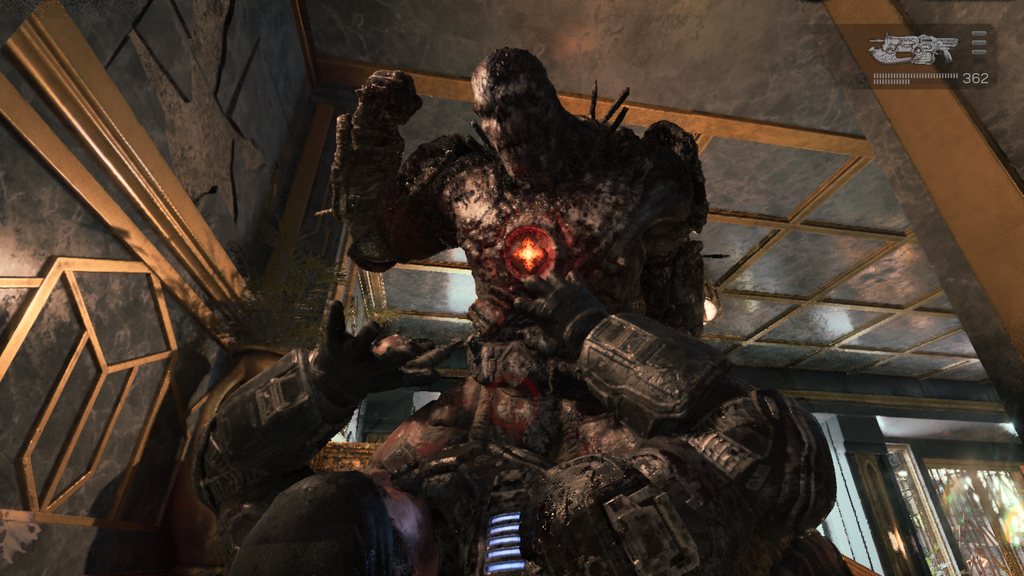
I played exclusively single-player and the teammate AI is generally reliable and useful: taking down targets, saving you from a pummelling, and reviving you when downed. It wasn’t always perfect, with some unresponsive moments and poor positioning that obscured my view or blocked me from maneouvering freely, but the teammate AI did generally make me feel like part of an elite squad. (Dom did let me down once early in the game. He literally stood there and watched me bleed out. I probably deserved it though, not my best performance—I ran straight in without thinking and instantly got locked onto at close range by two shotgun-toting Drones.) Downed revival is charitably quick, just takes a second holding X. There’s no direct order function, but you can use ping to highlight enemies, equipment, and positions for your team.
Tactical gear, triggered by pressing L3 & R3, was useful. I stuck to the adrenaline spike for its instant heal and temporary damage buff. It really did its job and helped out in tight spots, reviving me from the cusp of death whilst providing a damage boost and bolstered damage resistance to handle the threat. The game encourages you to sit on your tactical gear and time its use for crucial combat moments.
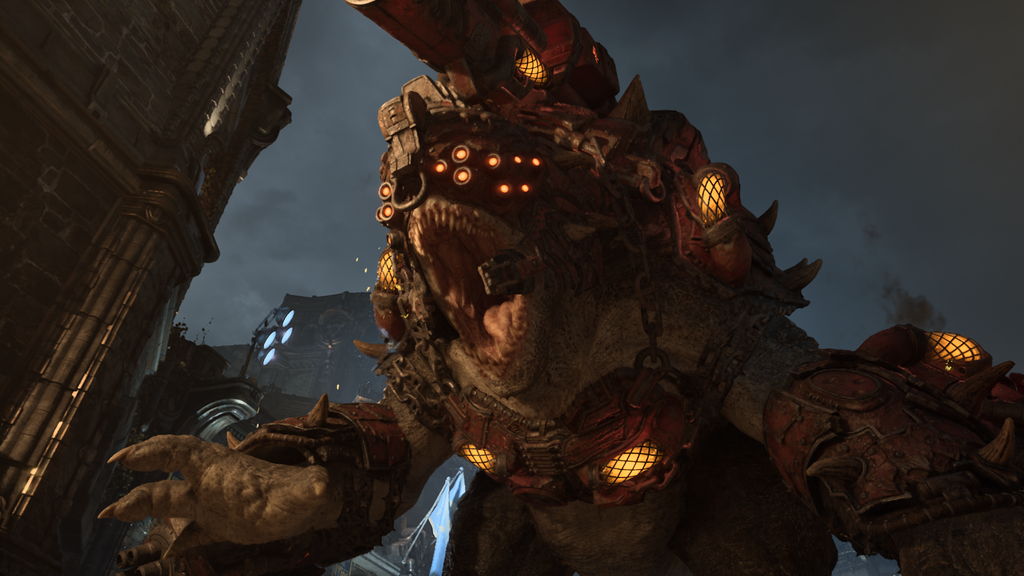
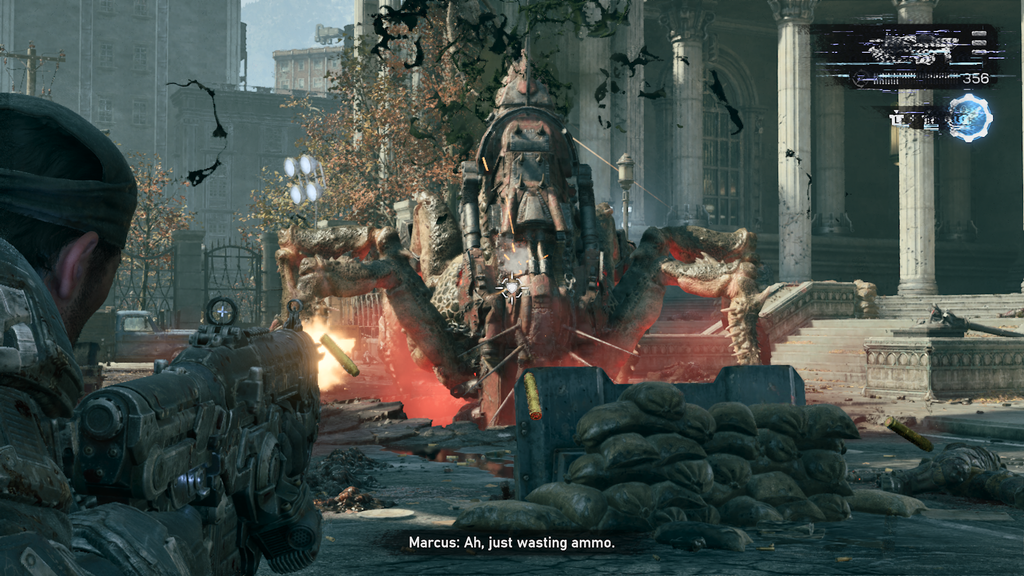
I found the boss fights to be genuinely exhilarating, if rather repetitive, spectacles. They definitely don’t do anything new or particularly impressive, but the game does an excellent job of using them to display the scale of the Locust incursions and the grotesque horror of the Locust horde. Each fight was memorable in its own right. From the iconic Weaponised Brumak to the relentless Scoria beetle duo, I enjoyed them.
Unscripted Encounters & Tactical Upgrades
As earlier stated, the opening is pretty linear, but the game opens up as you progress. Exploration feels organic, realistic, and rewarding with collectibles (COG Tags, Lore items, and Sera Artefacts) and resources (ammo, weapons, and hard-cases) to be found in environments.
Side objectives were well-implemented, fun, short, and snappy. I enjoyed their organic implementation and quick accessibility; they help to flesh out the lore and tell isolated stories of Kalona’s destruction that support the wider narrative. They’re also made worthwhile by the rewards: weapon mods, slots, and components.
The open areas of Kalona City are also littered with random events that, paired with the side quests, really enhance the immersion and give the game an authentic, unscripted tone. For example, in the early game, soon after Kalona opens up, I stumbled across another group of Gears staked out in a decimated apartment block, waiting to ambush an incoming Locust patrol with a bunch of fuel containers. I helped them, but got spotted by the enemies before the other crew’s leader was ready to fire. They commented on it as it happened and again after we’d successfully completed the ambush. Moments like this really elevate the game’s sense of immersion and put you into the shoes of your squad of Gears.
Weapon upgrades are unlocked via weapon slots and mods, which you apply via Supply Caches littered throughout the game. It’s a fairly basic and straightforward system, but gives you enough wiggle room to customise your build somewhat to suit your play-style. By the end of the game, I was constantly hitting Supply Caches to check for and apply suitable mods. New weapons are gathered by progressing the story and picking up weapons from fallen foes; Supply Caches also allow you to switch out your load-out anytime you come across one.
Spectacle, Splatter & Auditory Dread
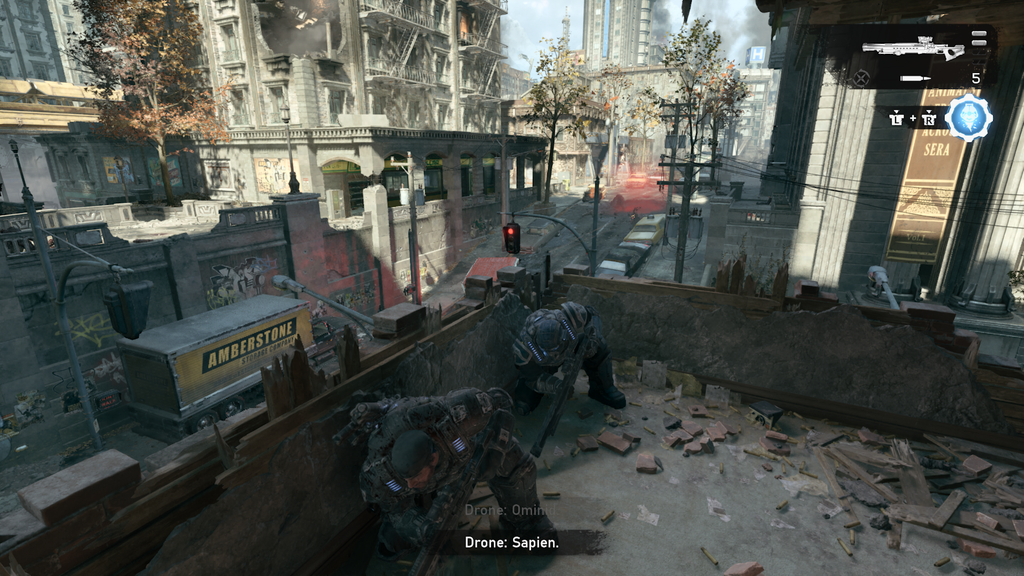
The visuals are a genuine standout feature of E-Day. The Coalition stands with the best of them when it comes to visual fidelity and lighting. The expressive character models and veracious, detailed environments are on par with what you’d expect from Capcom or Naughty Dog.
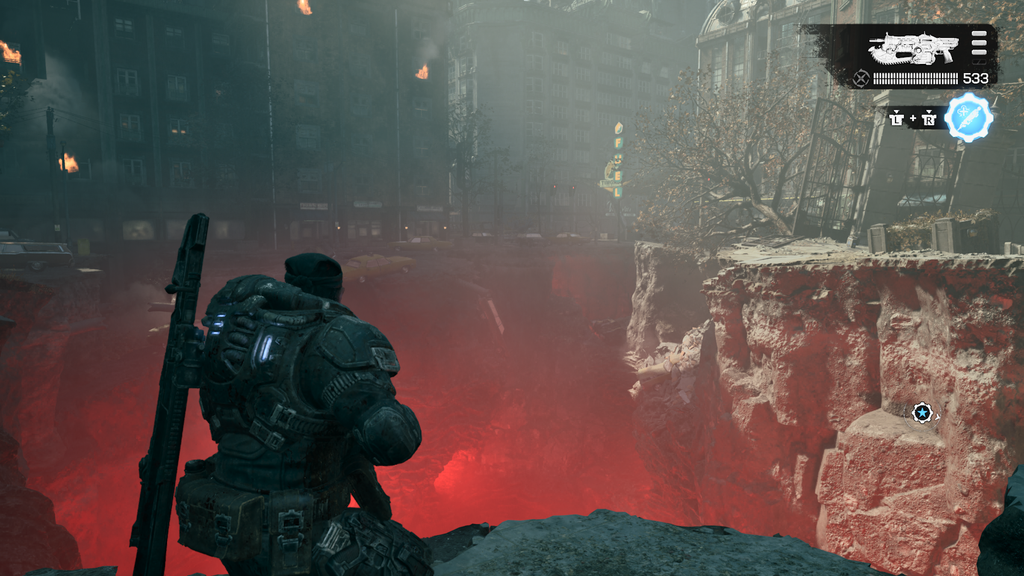
Blood spurts, heads pop, glass shatters, wood splinters, and cement crumbles gratifyingly under the hail of gunfire during gunfights. Meanwhile, the evidence of the Locust emergence is present in every aspect of environment design. Like the aftermath of a devastating earthquake, cracked fissures in the earth, desecrated streets, abandoned vehicles, and empty buildings are everywhere. Dead bodies strewn around environments and bloodstains paint gory pictures. No matter the location, the persistent, oppressive sense of foreboding and violence prevails and emphasises the sheer scale and devastation of the Locust incursions.
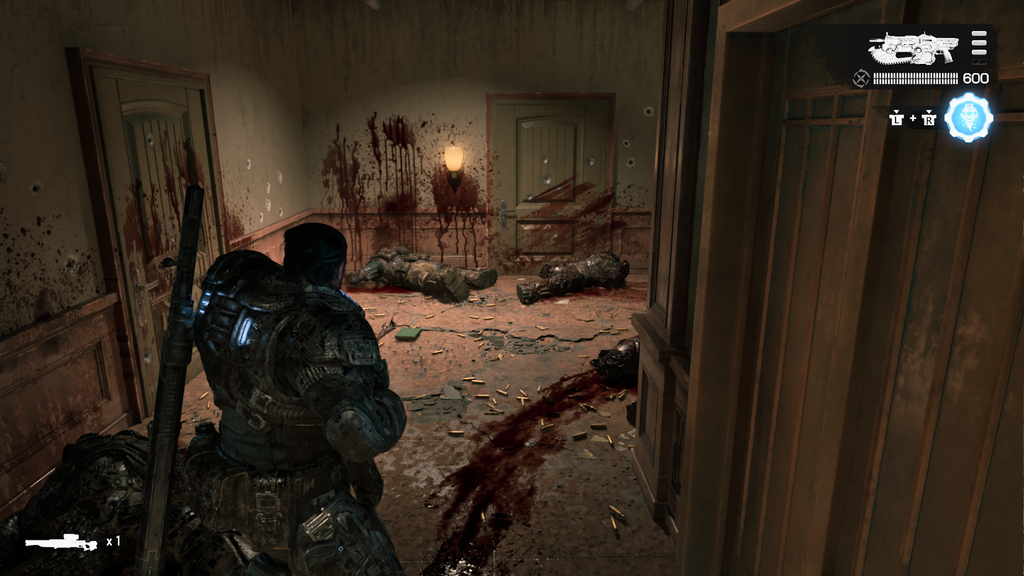
E-Day sports a diverse range of environments, from the desecrated urban cityscape of Kalona, to the dank, eerie surrounding forest on the cliffs, and dark, cramped, labyrinthine subterranean caves of the Locust territory—littered with stolen Gears equipment. The expert environmental design is supported by genuinely impressive lighting, with true-to-life shadows and luminosity.
The UI is appropriately stylised, clean, and useful. It’s not overbearing, but informative: clearly displaying your ammo and notifying you of any nearby side quests and hard-cases with quick, unobtrusive pop-ups. It’s dynamic and intuitive, with easy-to-navigate menus.
The sound design is on par with the visuals, featuring a dynamic, immersive soundscape. Gunfire provides lifelike feedback and each gun has a distinct sound: from the reverberating rattling of the Lancer Prototype, to the deep warbling-buzz of the stationary sentry gun; the Longshot’s satisfying bang and splatter of headshots; and the Breachshot’s metallic clink audio cue signalling your final shot in each mag.
The environmental sound effects are equally high quality and engrossing. The distant rumbling of Locust tunnels, and the cracking, snapping, and crumbling of buildings and the very earth beneath your Gear’s feet. Low metallic groans and creaks as structures balk and collapse are very atmospheric. The distant screeches and guttural grumbles of “Sapien” give away the direction of approaching Locust hordes with serious accuracy. The environmental sound design seriously enhances that constant sense of immersion. The audio effects are brilliant—especially with headphones.
The soundtrack is diverse, dynamic, and emotional. The low, melancholic guitar riffs during downtime in Gear bases and holdouts are somewhat evocative of The Last of Us’s soundtrack, emulating that lonely, hopeless, “we’re-the-last-ones-left” vibe. Ominous, lingering notes play during eerie sequences, like exploring the KCPD and Locust tunnels. Exploration and post-battle sequence tracks suit the grim, macabre vibe and desolate visuals. The OST ramps up for the action with heavy metal, nostalgic, dissonant orchestral, and cyberpunk/DarkSynth tracks that really suit the onscreen momentum.
The visuals and sound do an excellent job of emphasising the subterranean manner of the Locust invasion and its scale and the cataclysmic effects to the planet of Sera.
I Don’t Notice Performance… Until I Do!
I often forget to talk about performance in my reviews because I generally don’t notice it unless it has issues. Gears of War: E-Day, unfortunately, has issues.
Running on the Xbox Series S, it suffered some severe frame-rate dips once I accessed the open areas of Kalona City, or during particularly busy combat encounters and action sequences. I tried switching from quality to performance mode in the settings, but had to sacrifice those crisp visuals for a solid frame-rate and muddy, ugly textures. The downgrade is undeniably noticeable, with flickering textures and obvious pop-in. It was so bad, in fact, I had to perform some technological witchcraft on my old-ass TV to make it compensate for the now awful visuals using a setting I didn’t even know existed: “Reality Creation.” But even that didn’t do much to fix it, and eventually I accepted the sometimes choppy frame-rate in favor of the stunning visuals.
It’s an unfortunate byproduct of owning an Xbox Series S over a Series X and a 6-year-old TV. I can’t confirm personally, but can only hope, that it runs better on the more powerful version of the console. So thank you, Gears of War: E-Day, for exposing the full extent of my outdated setup. I know it’s time for an update!
They’re Making ’em Like They Used To!
Gears of War: E-Day is the blast from the past I didn’t realise I was waiting for. It’s a great return to the roots of the franchise and a genuine must-play for fans of cover-based, third-person shooters. I wholeheartedly recommend this to anyone with an Xbox console or Game Pass subscription, and I’m very excited to continue my adventures in the multiplayer modes.
Make sure to keep an eye out for my multiplayer review of E-Day, where I’ll be covering the Campaign co-op, split-screen, and multiplayer—as well as the Horde Siege and Versus modes—right here on Life is a Game Magazine!
JAe Says Must Play
- 24 hours in
- Xbox Series S
- Bought it
Leave a Reply