
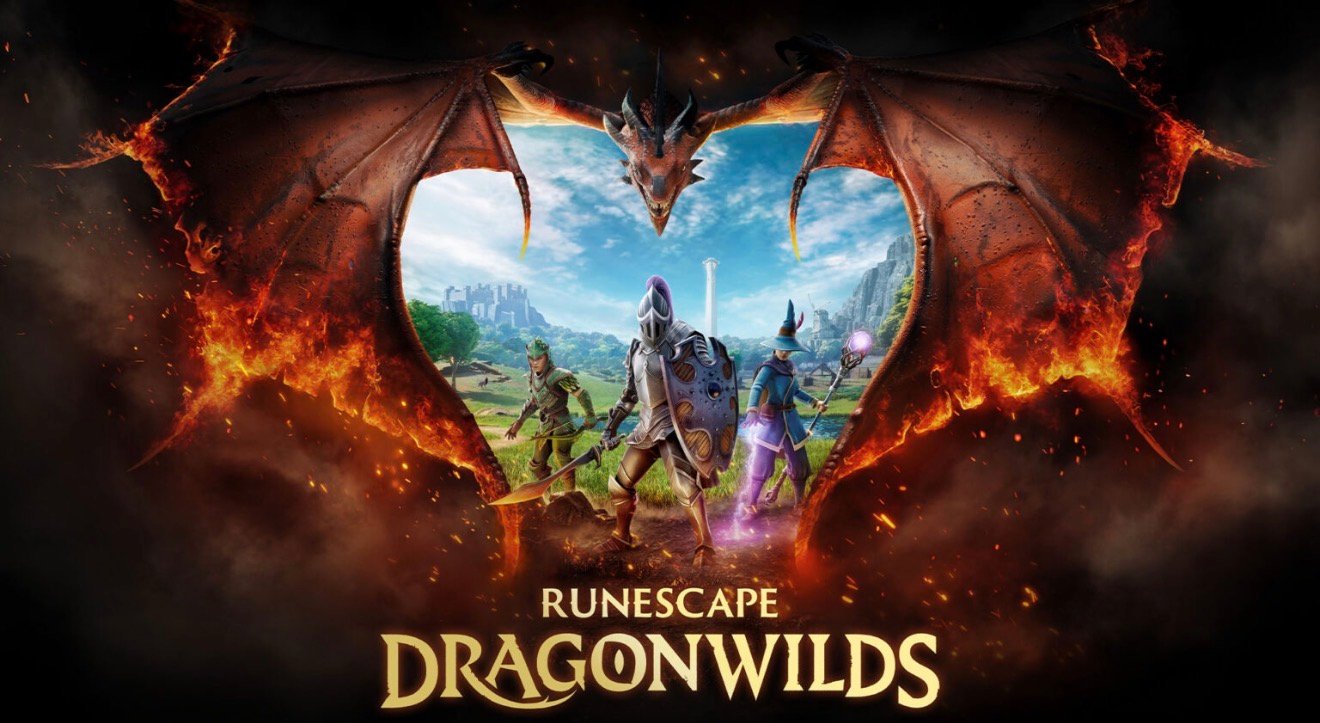
DragonWilds is a survival crafting game that blends seamlessly with the world and systems of RuneScape. It takes a more casual approach to the survival mechanics you might know from Ark: Survival Evolved or Valheim, and it puts more of the spotlight on the RPG elements that made RuneScape so addicting for me as a teen. The progression loop stays engaging throughout, though the game isn’t without its issues. Problems range from worlds disappearing and save data being lost to more minor annoyances like storage sorting and camera issues. DragonWilds needs a little polish, but the Jagex team has been hard at work, with several patches already released since launch.
I spent 65 hours in the world of Ashenfall exploring, crafting, fighting, and absolutely loving my return to RuneScape. But enough chopping trees, let’s dive in.
Welcome to Ashenfall
DragonWilds doesn’t take place on the mainland of Gielinor, but on the island of Ashenfall. Players create their character and spawn inside a church in the first zone, Brynmoor. There, the Wise Old Man greets you and starts you on the path toward eventually slaying Queen Kuldra, the five-headed dragon who rules the island.
The early moments are spent learning the usual survival game mechanics: chopping down trees, gathering rocks and berries, building a crafting table, and making your first tools and primitive weapons. You’re also introduced to the combat mechanics and several of the skills you’ll level on your adventure. Melee, ranged, and magic combat sit alongside farming, cooking, runecrafting, and construction, and many of these skills unlock unique spells that make life on Ashenfall easier.
As you explore the beautiful opening forest, you learn of Velgar, the green dragon terrorizing Brynmoor and the following zone, Ghornfell. The setup is a lot of fun, as the dragon occasionally swoops down on you or your base and rains poison breath over the area. And with this your goal is revealed to be taking down the dragons under Kuldra’s command and, eventually, the Queen herself.
Chop, Mine, Kill a Dragon
Ashenfall is split into five zones, each with its own power level tier from 1 to 8, which is also the power system for your character. The armor sets you craft carry a power tier from 1 to 8 as well, and you’ll typically find yourself one to two power levels under the next zone when you finish the current one.
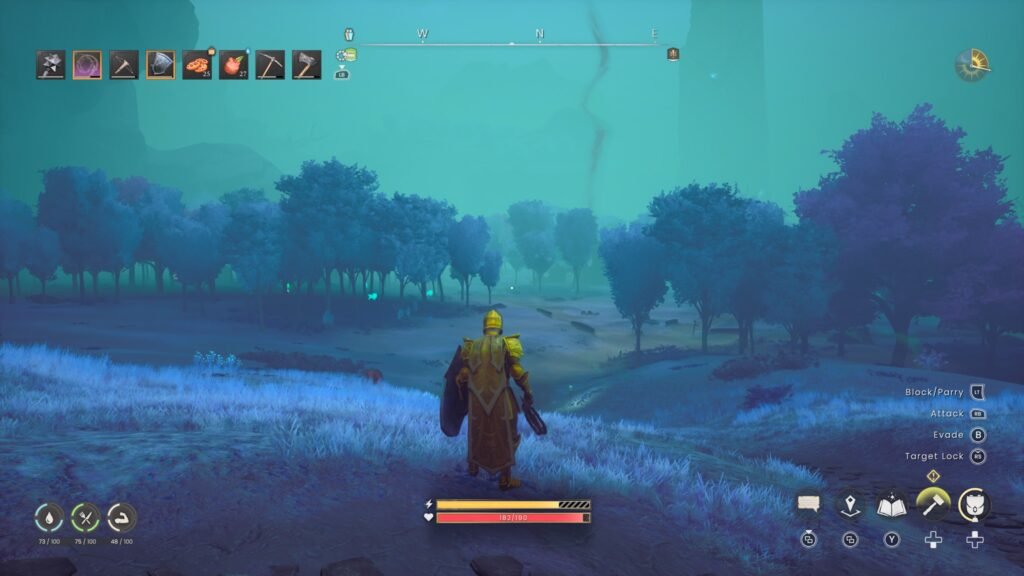
Building up your base is a crucial first step, since you’ll return to it frequently to unload supplies and craft new materials, tools, and gear. I kept my base in the starting zone because it was easier to defend from roving Warbands, and I preferred spending my time exploring over rebuilding in each new zone. The game gives you a buildable lodestone system for fast travel around the map. The Law runes you spend to use the network can be annoying to come by for most of the game, but it was still the most convenient way to move around quickly.
The game eases you into a steadily increasing complexity of progression. You start by crafting your first tools, like the axe and pickaxe, to gather wood and ore. Once those materials hit your inventory, new recipes unlock that combine raw materials into refined ones, and these unlock the armor, weapons, and farming tools you need to upgrade your character and take on tougher enemies. The process is simple early on, when basic materials can craft most of what you need. By the third and fourth zones, even the materials for something like a new chest plate have their own crafting requirements. The crafting stations get more complex too, going from a basic crafting table and loom to advanced tanneries, smelters, and furnaces that produce more powerful materials for gear. It felt like I was getting steadily more proficient, and it was a satisfying system that let me build out a nice area for all my crafting.
The only negative here was my experience in the fourth zone, Dowdun Reach. This zone is a step up in difficulty, as you’d expect, but acquiring the new materials was much more tedious because many are random drops from loot bags off enemies that are far deadlier than those in previous areas. It’s where I died the most and where my progression hit a bit of a brick wall. Some might welcome this increased difficulty and beefed up grind but I was not one of these people.
Beauty of Ashenfall
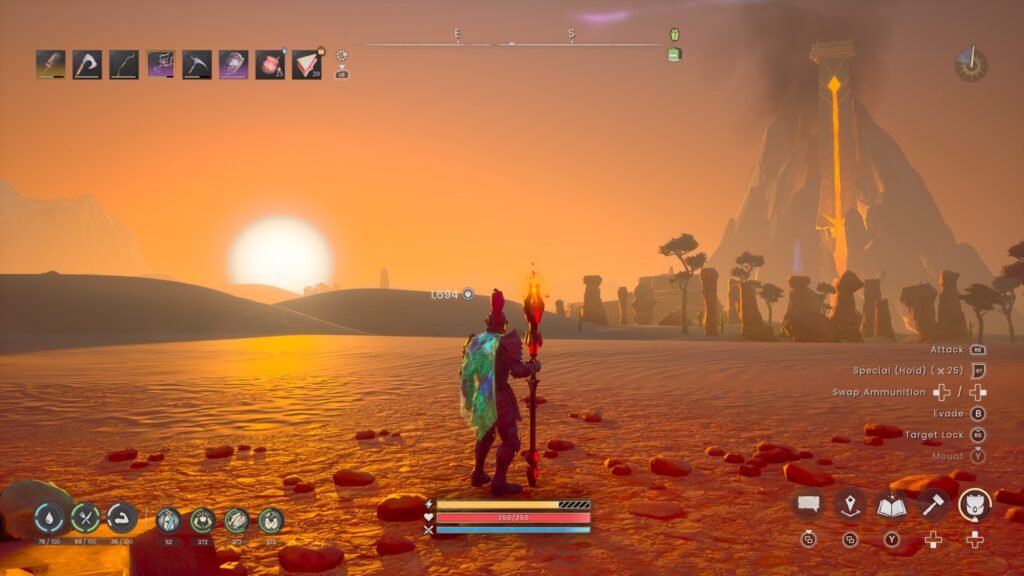
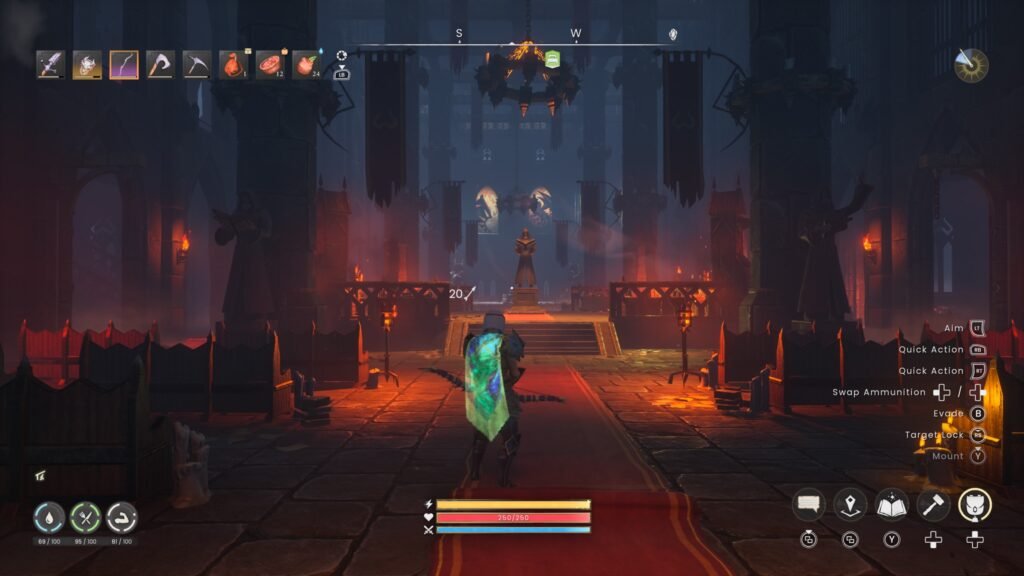
DragonWilds is also absolutely gorgeous. I love the stylized art direction, which looks very “RuneScape” even though the fidelity is much higher. The variety of biomes, from lush forests to imposing fortresses and expansive deserts, kept the game feeling visually fresh. Armor, weapons, and building structures all have unique styles and are exceptionally fun to play around with when building a base. There is no mistaking that this new chapter still very much fits within the RuneScape we have loved for many, many years and its art style definitely doesn’t let you forget.
Sword, Sorcery, or the Bow?
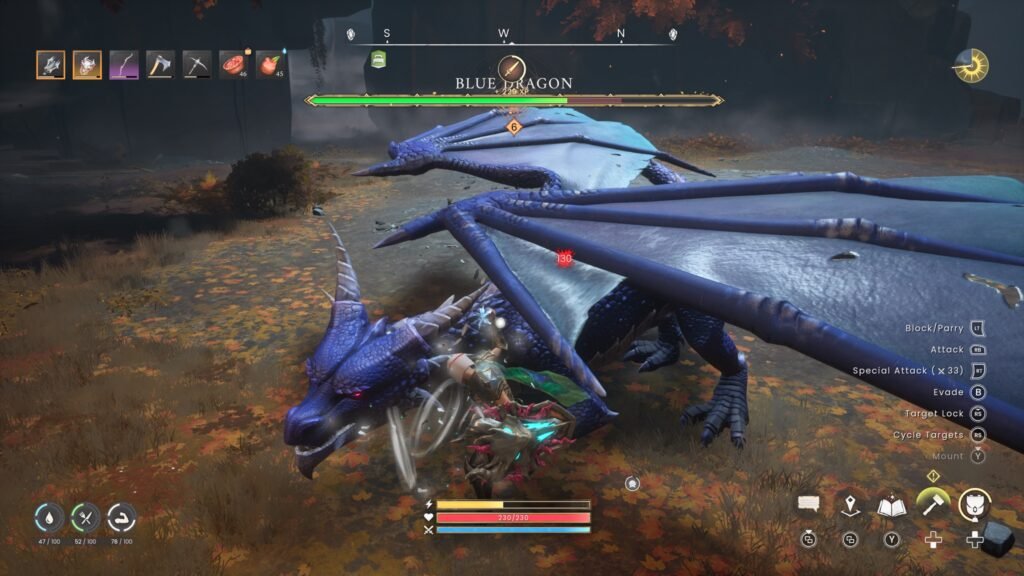
The attack, ranged, and magic skills from RuneScape are all here, and if you’re like me, you’ll use them all a good bit throughout the game. Enemies have strengths and weaknesses against various spell and damage types. Slash, Crush, and Piercing return from RuneScape, along with Water, Air, and Fire magic for wand and staff attacks. Every attack you land on an enemy gives you XP in the associated skill. As you progress, those attacks use less stamina, and you unlock very useful spells to enchant your sword, craft special arrows and bolts, or unlock special attacks with your staff. The damage numbers and sound effects from the MMO are present too, which is a nice and very nostalgic touch.
The combat itself is typical third-person RPG fare, with basic and special attacks, a block button, a parry system, and a dodge mechanic. Nothing special but it works for what the game wants to be.
The Quest to Nowhere?
This is probably the “weakest” part of DragonWilds, but I still enjoyed what was on offer. The main quest isn’t long at all. Most of your time is spent upgrading your gear and building and crafting so you’re prepared to take on each zone’s boss. There are still a fair number of quests, side quests, dungeons, and puzzles to explore and defeat, and I found most of them engaging and enjoyable. Many of the main quest objectives are varied, with fun (if challenging) puzzles and enemies to fight.
Most of the story is told through NPC text, and the premise is simple: slay the dragon, save the island. You get a bit of a lore dump cutscene at the start of every zone, and you’ll meet plenty of fun NPCs with side quests for you. Postie Pete is the best.
The final push toward the end was my absolute favorite part of the entire game. It turns into a mini roguelike, with a gauntlet of puzzles and enemies that challenge you more than almost anything before it, ending with the final boss fight. If you die, you have to start the “run” over, but that lets you gather more resources, craft better gear, and eventually win. And even after that, you can do more runs to acquire even better gear. It’s a very unique way to cap off the game, and I’m very excited for the content coming later this year and into 2027.
Final Verdict
RuneScape: DragonWilds is an excellent survival crafting RPG. It may be too casual for big fans of the survival crafting genre, but as a RuneScape fan, I fell in love with its focus on RPG and quest-based progression and gameplay. I absolutely recommend it to RuneScape fans and anyone with an interest in the genre. It’s especially fun in a shared world with friends to explore and fight alongside. Minor issues aside, Jagex has created something truly wonderful with a solid roadmap to delight players for months to come.
SonnieSLim recommends it
- 65 hours in
- Xbox Series X
- Bought it
Leave a Reply