
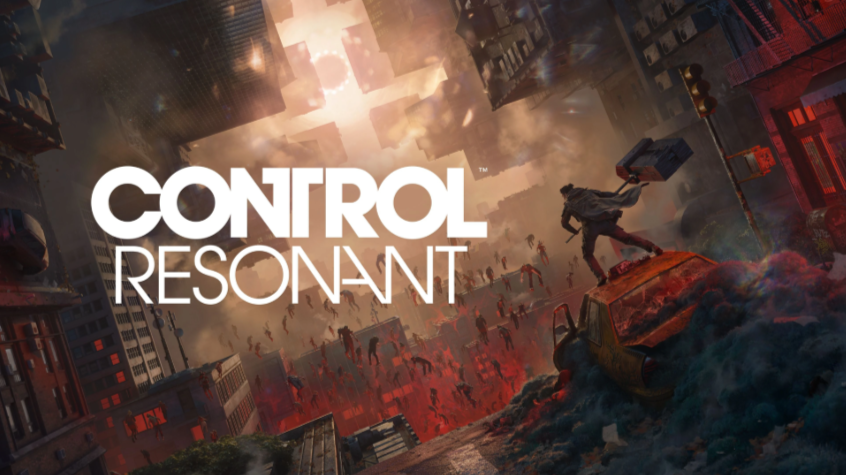

About a month ago, I published a set of predictions about what would and wouldn’t hold up in Control Resonant. I feel like I was more or less on the mark about most of the points I raised, but there was one aspect I didn’t touch on at all…Remedy’s foray into open world.
That turned out to be quite the oversight too, because the surrounding design choices had a major impact on my experience with the game. Let me put it to you the same way the Architect put it to Neo in The Matrix: “…It (the open world) is simultaneously Resonant’s greatest source of strength and it’s greatest weakness.”
To be fair, I don’t think Remedy had much of a choice in the matter. Another romp through the Oldest House would’ve felt constrained and recycled. Moving around a sprawling city with a telekinetic powerhouse like Dylan feels a lot better than trudging through tight corridors and cluttered offices.
But let’s not forget that open worlds have their own pitfalls, and unfortunately, Resonant stumbles into some pretty deep ones.
Traversal is Where It’s At
One of my favorite mechanics in the original Control was Jesse’s levitation ability. Flying around freely in a game is a rare treat, even if it’s just for a limited time. That’s probably why Remedy astutely unlocked the skill for Dylan right from the start. Using it along side his double jump and air dash lets him leap across huge gaps high above the city streets in a way that never really gets old.

Of course, Remedy had to double-down by giving Dylan two other reality-bending traversal tools. This IS a sequel after all!
Reach, which functions like a grappling hook, instantly flings Dylan to pre-determined anchor points on nearby buildings with the press of a button. It’s not the most innovative feature, but the physics-defying jumps that follow are incredibly satisfying nonetheless.
Still, Reach is a very work-a-day skill compared to Shift, which lets Dylan realign his personal gravity bubble to rotate the map in ninety degree increments. Playing the same maps from a completely new perspective was unbelievably cool, and it quickly became my new favorite thing about Resonant. Remedy even took the extra step of making objects fall in the “right” direction — either upwards or sideways.

But the clincher for me was how Remedy intertwined all of these elements together in combat. Levitation was indispensable to deal with flying enemies, and Reach was great to reposition or make a quick escape when things got out of hand. Adding these extra tools to my arsenal forced me to think about vertical movement just as much as where to position myself on the ground.
Bigger maps require better ways to get around, and I have to give Remedy a lot of credit here because they delivered something really innovative and memorable that plays into every aspect of Resonant’s gameplay.
Suffers From Classic Open World Game Problems
But as fun as it was flying across the Manhattan skyline, it didn’t take long for me to start noticing some very classic open world issues.
First off, I wouldn’t have guessed I was in Manhattan if Control hadn’t already told me. Remedy included some assets that gave its world a certain NYC vibe, like sky scrapers, cabs and subways, but the city’s signature features were nowhere to be seen. That generic concrete jungle feel was compounded by the rampant use of recycled buildings that all had the same interior layouts.
I wasn’t really free to explore the city, either. Resonant’s world is more like eight mini-maps connected by corridors cleverly disguised as FBC checkpoints or subway tunnels. That meant large parts of the city were off limits at any given point, and I wasted a considerable amount of time trying to find a way to markers that just couldn’t be reached.
I also wasn’t a fan of Resonant’s brand of side-activities. An unusually high number of side-quests simply involved performing the same tasks once per section. Those, along with the so-called World Feats, were clearly just there as filler to reward me for exploring. Instead, they brought back memories of mindlessly powering through make-work objectives in an Assassin’s Creed title.

I’ll stand by my statement that moving the Control franchise to an open world format is the right move, but my impression is that Remedy avoided going all in. The end result looks good, but comes across as dated and stereotypical. It’s almost like Resonant serves up all the annoying open world memes without drawing any of the benefits.
The Combat Didn’t Help
That wouldn’t be so much of an issue if the combat wasn’t so repetitive as well.
In his preview article, Alex Rowe reported a much harder timing-based style of fighting in the game’s early access cut. It was so unforgiving, in fact, that Remedy rolled out a day-one patch to tone it down — creating what I experienced as a huge problem in the process.
Namely, it turned most of the game’s elite enemies into punching bags. I can’t really explain why, but beating them up was as simple as mashing the square button (X for XBOX players) until they got staggered and I could activate Dylan’s insta-kill. There was a little dodging involved to dance around the occasional attack, but they were so predictable, and the timing window was so generous, that there was no real danger to it.

It didn’t really matter anyway because I became borderline unkillable once I unlocked all of the recovery-boosting nodes in Dylan’s skill tree. I rarely finished a regular encounter with less than 80% health afterwards, and even at level 7 difficulty (out of 8), I would still just casually charge in there without worrying about the consequences.
Resonant offered up a decent assortment of tools to do battle with, but I never felt compelled to use anything other than the scythe. It simply covered the largest area, applied the most stagger, and dealt the most damage. Likewise, I mainly focused on Dylan’s Ignite ability without bothering with the other ones simply because it dramatically increased how fast he could stagger enemies.

I see what Remedy was going for, and I believe there’s an iteration of Resonant’s combat formula that has the potential to be great. That’s not what was on display when I played it, however. Resonant could’ve overcome its lackluster combat if it delivered a top-notch open world experience, but it didn’t, and that’s why travelling around the city started to get boring after a while.
It’s Still a Control Game…And That Means Something
So why would you even play Resonant to begin with? Because Remedy preserved what makes a Control game entertaining, and that means you’re in store for some wonderfully weird sights and detailed world building.
I’m talking about moments like diving down the Sinkhole, chasing Jesse through the Faults, exploring the Oldest House’s basement, and making a brief pit stop in the Astral Plane. That’s when Resonant showcased it’s wildest paranormal twists and out-of-this world visuals.

Most of these sequences ended with proper boss fights too — something that was sorely missing in the original game. A lot of them incorporated the new traversal mechanics in meaningful ways, elevating them well above the regular slogging against Hiss foot soldiers.
As someone who spent a lot of time piecing together the Faden siblings’ origin story as Jesse, I appreciated getting a closer look at the Ordinary Altered World Event and Dylan’s formative years at the Oldest House under Dr. Darling’s supervision. It was really cool to reunite with the NPC cast to discover how their seven-year confinement with the Hiss affected their disposition.
Resonant is undeniably a Control title, and returning fans will get that much needed dose of remedy-verse lore. The problem, if anything, is that most of this content is delivered through extremely linear sections that are situated away from the open world. In fact, I would’ve been ok with a more directed game if that meant more supernatural encounters with fewer lose ends by the time credits rolled.
Verdict
As it stands, Resonant delivers a rather unbalanced experience where you spend too much time mowing down inconsequential foes through a cookie-cutter version of New York in between more curated and thoughtful moments in the game. Folks who are returning to the franchise will find plenty to love, but those looking for a premier AAA open world experience are likely to be disappointed.
The transition away from the Oldest House was still a worthy experiment that showcased what the Control franchise could become one day, but this first attempt didn’t hit hard enough to justify paying day-one prices unless you’re truly a fan who’s been eagerly waiting for this next chapter in Jesse and Dylan’s story.
If the original Control is any indicator, Resonant is likely destined to become subscription fare, so it’s probably best to wait until it drops on PS Plus, GamePass or Luna.
Woody Says wait for a sale
- 36 hours in
- PS5
- Bought it
Leave a Reply