

Wait, wait wait…I know, I know… this is a gaming magazine, but here me out (I mean, its not like any one said we weren’t also into shiny cardboard too). Anyway, now that I hopefully have stopped you from clicking off immediately from me talking about a digital adaptation of a board game, let me tell you, I have been so excited about this one.
A little bit of lore…
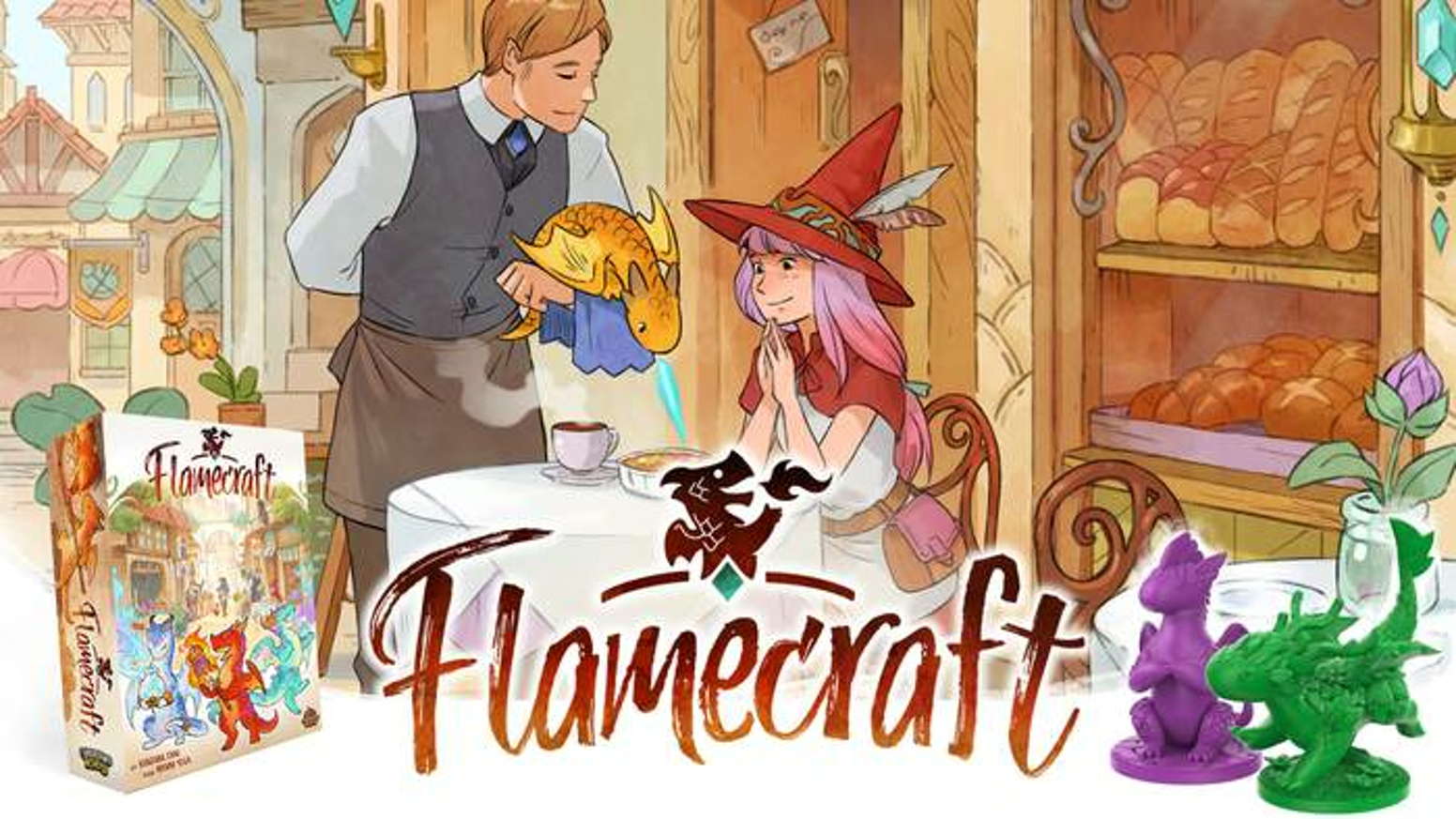
If you’ve never heard of it, Flamecraft is a physical board game by designer Manny Vega (https://www.instagram.com/vega_game_designs/?utm_source=ig_web_button_share_sheet) and artist Sandara Tang (https://www.instagram.com/art_of_sandara/?utm_source=ig_web_button_share_sheet) that came out back in 2022. And to say the least… I love everything that this pair have come out with. Mostly because Sandara’s art style has and will forever have my heart. I mean it truly is unbeatable. A bright and yet muted color pallet that brings a sense of whimsy and warmth to each character. The texture of her style puts forth a feeling of air brush or brush strokes, with its soft and faded edges, which bring out the fantastical aura to all of the projects she works on. The style is dreamy, whimsical, and cute and is a perfect match for the worlds and games that Manny is bringing to life. Whether its Flamecraft, Tea Witches (they just know my heart, tea and witches, what could be better), or their new game, Elementary (was just on kickstarter), I can’t get enough? The game play concept of Flamecraft is pretty simple. Collect dragons from the park and place them in shops. Use their typings and fire-up abilities to gain more dragons, resources, or reputation points. Once you place enough dragons and gather enough resources, you can “enchant” shops to use all the abilities at once and gain big reputation points. Pick up the occasional “fancy dragon” card for special goals for even more points. Then repeat the cycle until the pool runs out of dragons or enchantments. The person with the most reputation points wins.
Ok ok, sorry, enough gushing about the shiny cardboard stuff. Anyway, MonsterCouch Studios (https://steamcommunity.com/linkfilter/?u=http%3A%2F%2Fmonstercouch.com%2F) adapted the board game to steam. They have worked on plenty of other amazing digital adaptations of board games, including Wingspan and Quilts and Cats of Calico. And truly, they have done it again. Their adaptation of Flamecraft blows me away and continues to solidify them as one of my favorite studios (yes, I’m a bit biased since they exclusively create board game adaptations…but let me have this one)!
To adapt or not to adapt…that is the question
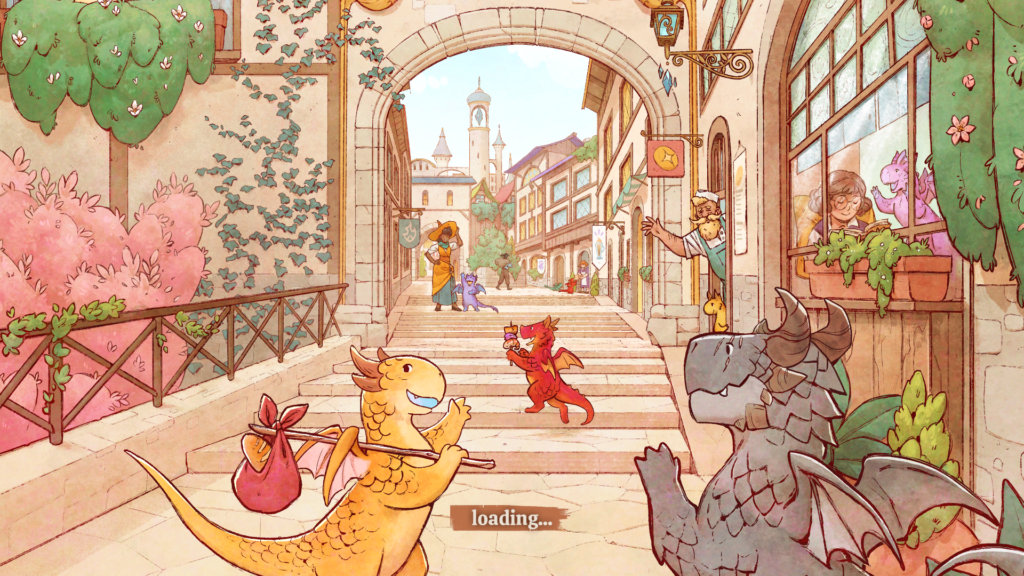
Now, let’s chat about what has me raving so much about this. One of the difficult parts about adaptations, whether its movies, books, anime, etc. is the question of “how similar do I make the adaptation follow the original?”. If you go for an exact copy, people feel like it’s not providing any substance or feel like the adaptation was pointless and they can just go enjoy the original. The other direction is, divert too much and everyone is annoyed with “you missed this crucial part, or that. It’s not even close to the original”. With their adaptation, I believe MonsterCouch has found the perfect balance between the two. They have given a wonderful recreation of the board game in the digital space, while also making use of the digital medium to make it more accessible, enjoyable, and immersive.
Buffet for Eyes and Ears
First things first, (and a very critical point for me) the distinct art style of Sandara Tang was preserved and even evolved in the digital version. Deathfang, Hot Dog, and Mulch all look just as breathtaking as their physical counterparts. Not only that, but they created original NPC’s and structures to fill the town and create a digital “board” space that more than surpasses my dreams. Plus, in the digital version, I just get to have them, static on the card. I can even have them as a character avatar that runs across the area as I do my turn. That moves me to my next point. The animations and haptics just continue to draw you in with each passing moment that you open the game.
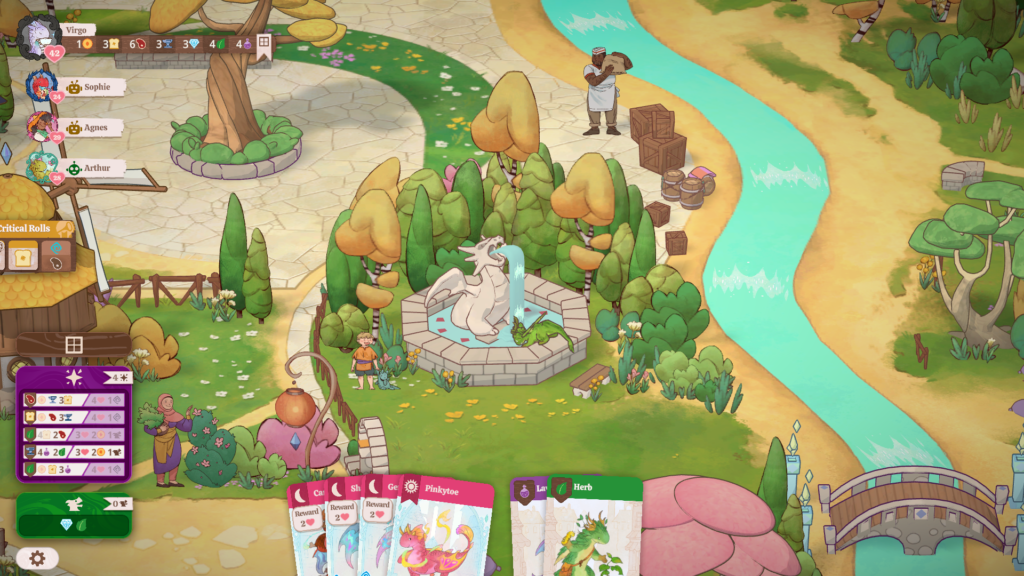
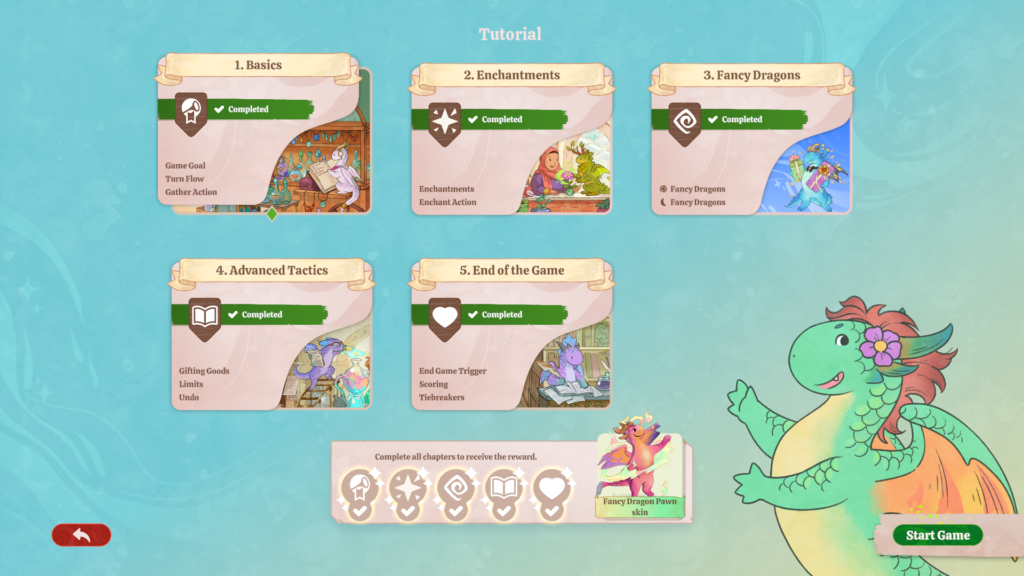
You choose your dragon (my favorite is a blue and white crystal dragon named Frostfire) and all of your movements from shop to shop are followed by your little animated dragon. And it’s not as simple as you click on the shop and it goes inside. No, no, no…while you’re taking your turn, all your game mates can watch your dragon go through idle animations like: doing yoga, taking a nap, or even, hopping in the fountain. Each dragon you click on also makes unique chirps, grumbles, purrs, and noises as you use them within the game (just increasing the cozy, cute factor even more). Say the blue and white crystal dragon isn’t for you, you have plenty of other avatars to choose from (the rumbly grey iron dragons, calming green plant dragons, delicious-smelling, red meat dragons, cozy orange bread dragons, chill purple potion dragons). They even give you the “ultra rare” fancy dragon’s skin, just for completing the tutorial.
Trading my Cardboard for Pixels
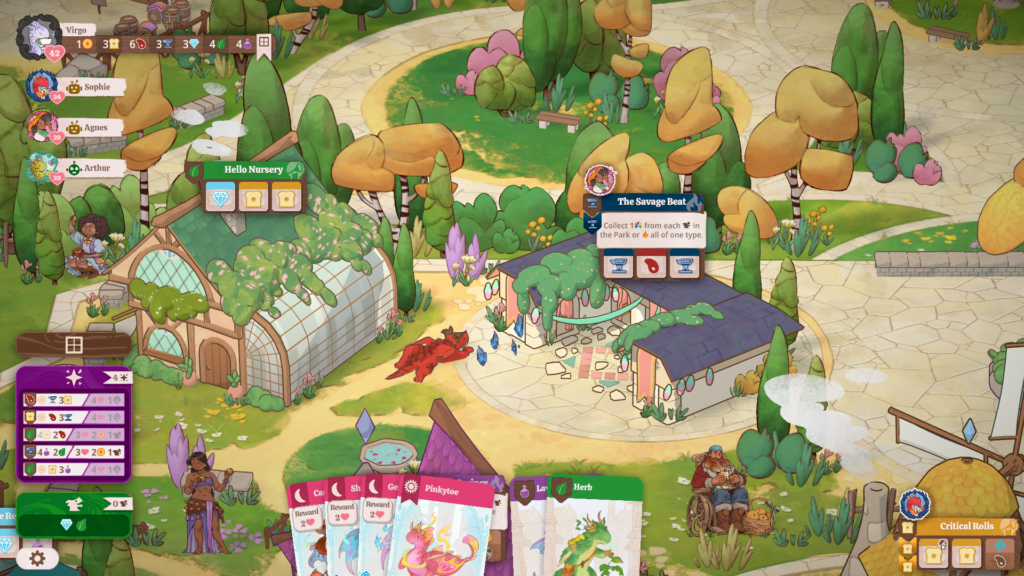
That brings us to the next part and probably what most people care about in a digital adaption. That being, “how do they make the best use out of the digital medium?” This shines through, just beginning with the tutorial. I can not speak for all board games, but one of the most “difficult” parts of board games is the learning process. You’re always stuck between two scenarios. Either you already know the games and are trying to teach other players (which is sometimes my biggest barrier to trying to get other friends to play physical board games) or no one knows the games and you’re stumbling through it just trying to get to the point where you can try a few rounds (because no matter what, that really seems to be other only way that things start to flow). The digital version takes that somewhat painful process and makes it such a lovely experience to enjoy. Each person can go at their own pace. No need to struggle with running through scenarios. The game does it all for you. Guiding you through clicking and navigating the UI to take you through each step of your turn and decide on turn objectives (yes, for the true gamers I know this is what a tutorial is supposed to do, but it is a novel addition within the board game space). That brings me to the next point. This is a great crossroads to cross borders between both spaces. I got the chance to pull a person who had never used steam or discord into the gamer space and have them play this pretty simple game and become introduced to the true gamer space. The reverse side of that is I got to pull my fast-paced FPS games over into the board games space. The digital version just creates this blissful mix that lowers the barrier to entry for the two sides of my love for games (and for me, an opportunity to bring those two worlds together means everything).
A little speakeasy in the back…
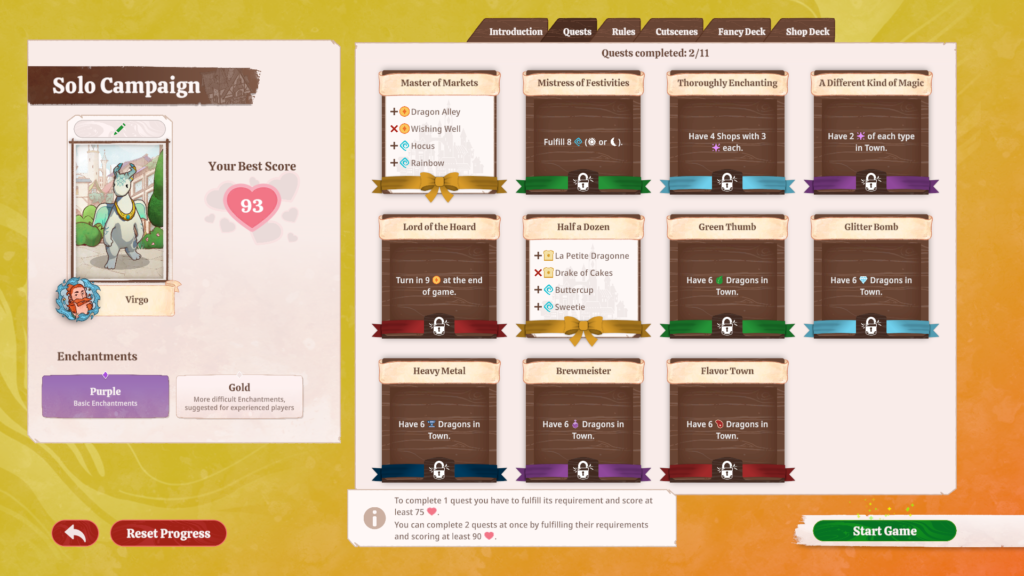
Lastly, let’s talk about what’s different. I would still be just as happy, had this not been an addition (say it was just the competitive board game itself and I can just play with my friends across great distances — because to be honest, with me being lost out here in the void, that’s enough of a selling point as is), but they added a campaign and story mode that can be enjoyed solo. So, not only do I not have to teach the board game fledglings how to play, I can entertain myself with my solo campaign, lol. Jk, jk, all jokes aside, the campaign is just there for vibes and I am totally here for it. The Flamecraft world is set in the whimsical town of people and dragon artisans coexisting, but there really isn’t an in-depth story besides the world building. The campaign provides a fun little extension to that with a variety of cutscenes to give more “flavor” and depth to the world, explaining how this town came to be and some of the quirks and obstacles along the way. The game play for the campaign is mostly like a scenario and puzzle mode. You hop in with quests and objectives to complete within the scenarios they put forth that are different from the unpredictability of playing with others. As you complete the quests, the game changes more as you unlock different fancy dragons and shops (which then get added to your multiplayer and custom games, for even more replayability).
Like I always say, I’m here for great stories and cool art styles. The art style was a given, but the simple little story just had me falling even more in love with the thing that I liked already.
I mean, sorry, I guess this isn’t much of a review and is more of a gush fest for me to talk about one of my passions (this is at least, for me, a tasty dragon-flamed meat skewer…out of ten). I had been waiting months since the demo and betas had come out so that I could breach the concept of board game adaptations to the magazine audience. There are plenty of great adaptations of board games out there (Root, Wingspan, Ticket to Ride, etc.), but my passion for this game and the ease for others to understand and pick it up had me really betting that this was the best candidate for y’all. So, even if you’re not sure about it (even enough to commit to it while its own dev sale for $16), go and grab the free demo (you can’t play online with friends, but you can do the full tutorial, custom games against AI, or even pass and play at home). Hope y’all give it a chance and eventually find as much admiration for it as I do.
Well, that’s all for me today. To all my indie-hunters out there…happy hunting…you never know what’s out there in the endless, unexplored void of Steam.
Virgo says must play
- 3.5 hours in
- PC
- Bought it
Leave a Reply