Windrose Early Access Review
A Pirate Paradise With One Glaring Problem
REVIEWS
5/7/20266 min read
I got interested in Windrose after learning its demo buried Ubisoft’s live-service AAAA pirate game, Skull n’ Bones, when it was released on Steam. That kind of accolade warranted further investigation on my part, so I jumped at the chance to play the game in early access. It also helped that my community voted for a review, so who am I to deny them what they want?
After about 20 hours with the game, it’s clear that Windrose is massive, even in its pre-launch state. That makes sense considering it was originally designed as a PC-only MMORPG titled Crosswind. Kraken Express pivoted to a co-op PVE survival game to scale things down and align with player feedback.
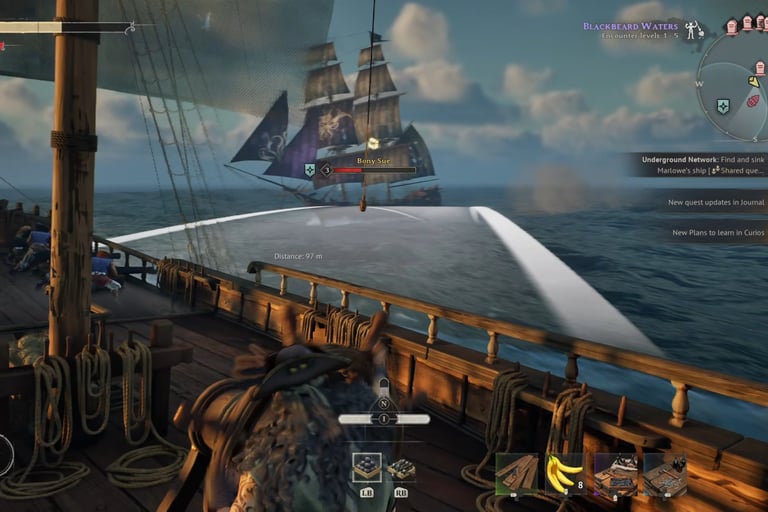
Windrose is clearly inspired by Assassin’s Creed IV: Black Flag. All the core elements are there. You command a ship on the wide open sea, you explore a large shrouded map, and you engage in rewarding naval combat. As an added bonus, you can do all these things with up to 3 of your friends in co-op.
The real question here isn’t whether Windrose is a good game. It is. But is it worth jumping into right now? While it hits a lot of the right notes, some frustrating design choices make it hard to recommend universally.
A Sandbox Pirate Paradise
There’s always something to work toward in Windrose. If you’re not completing main and side quests, you’re building out your base, farming resources for that next upgrade, or exploring some ancient ruin for treasure.
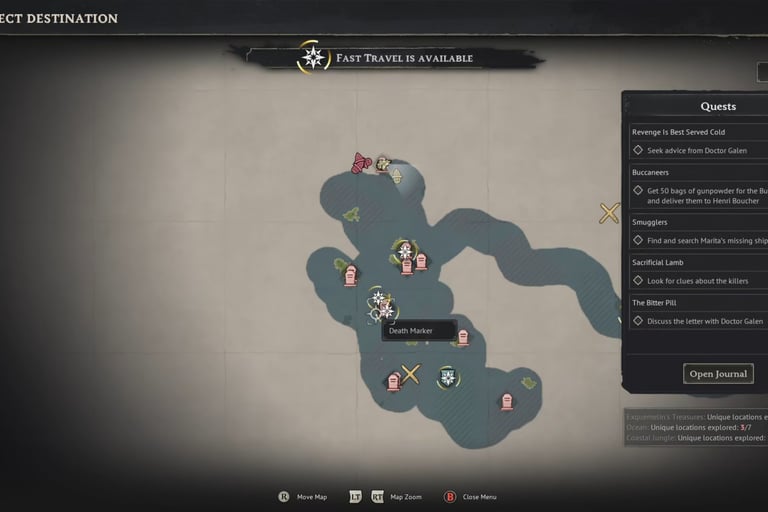
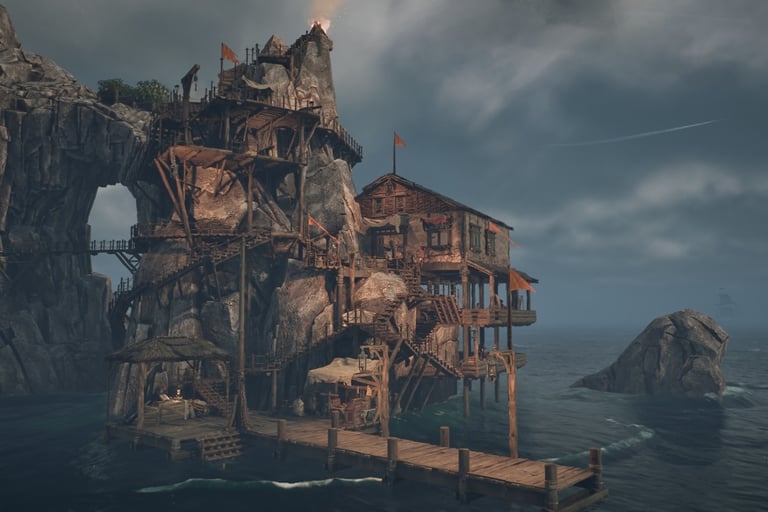
The map is absolutely huge and dotted with plenty of era-appropriate things to discover. Kraken Express nailed the Caribbean vibe with its clear blue oceans, lush jungles, and picturesque sunsets, and the environments are filled with on-theme objects to use as the building blocks for your pirate operation.
The survival system is forgiving in a good way. You never have to worry about dying if you go long periods without food or rest. You’ll suffer penalties to your HP and stamina recovery, however, and that has a big impact on your effectiveness in battle. Consuming more complex meals grants stat bonuses, so you’ll get rewarded for scavenging a bigger variety of ingredients.
Windrose really succeeds at building a credible pirate world that’s satisfying to play around with.
Smart Crafting And Base-Building
The game follows through on that with great crafting and base-building features.
You’re constantly finding new recipes, crafting materials and structures to build. You’ll have to manage production timers to refine raw materials into more useful forms. Luckily, resources are abundant, so farming them for expensive upgrades doesn’t feel like a total chore.
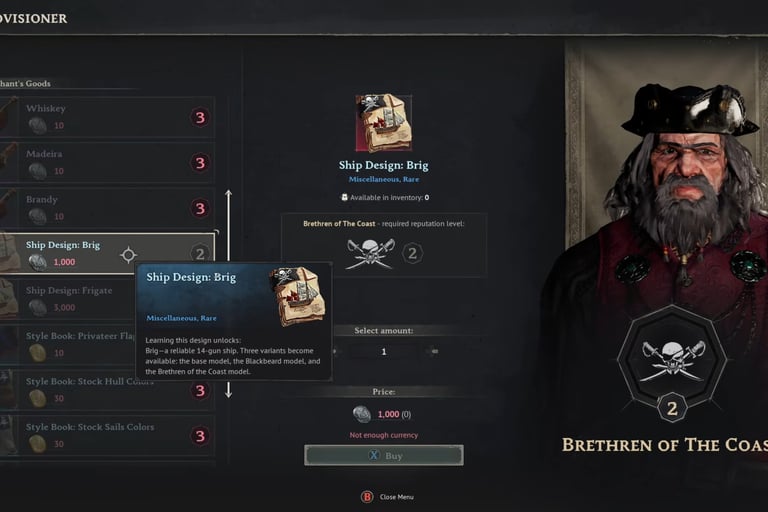
There’s a smart progression system tied to crafting that involves different factions located in the main hub of Tortuga. You’ll use item drops to gain influence with each group. Reaching new levels of influence unlocks better recipes and items.
Each faction sells different wares, so you’ll have to prioritize which ones to align with early on based on your goals. It’s a nice change of pace from games where progression is just tied to farming currency.
As you progress through the game, your sites evolve from small campsites to full-on compounds. You’ll find all sorts of structures and decorations to personalize your bases with along the way.
That adds an element of creativity on top of just crafting for progression. The Steam community is already filled with pictures of player-created fortresses and villas, and I think this aspect will only grow over time.
Ship Combat Basics are There, But Lack Depth
No pirate game is worth its salt without giving you control of a ship and crew.
Windrose does reasonably well in this area too. Anyone who spent a good amount of time at the Jackdaw’s helm in Assassin’s Creed IV will feel right at home.
Naval combat is still about positioning your ship to aim your cannons, followed by evasive manoeuvers while they reload. Once you deal enough damage, you can swing your ship around to board the other ship and take out its crew.
Discovering how to fight on the open seas is enjoyable and engaging. Those encounters encourage you to think strategically in situations where you’re usually outnumbered. You also have to deal with the motion of the ocean and the cannonball physics as an added challenge.
Unfortunately, it can be a bit repetitive because the choice of ammunition is limited to regular cannonballs and chains. Once you figure out how to move like a pro, there’s not much else to ship combat other than building more powerful ships and outfitting them with stronger versions of the same parts.
Regular Combat is Beyond Frustrating
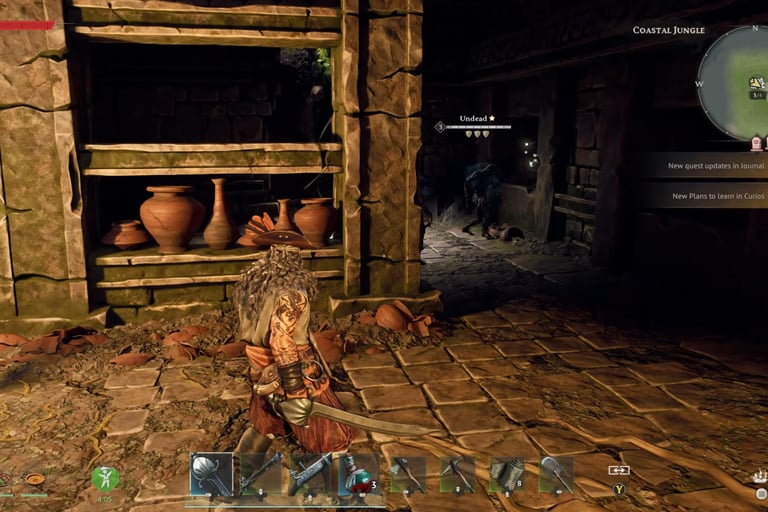
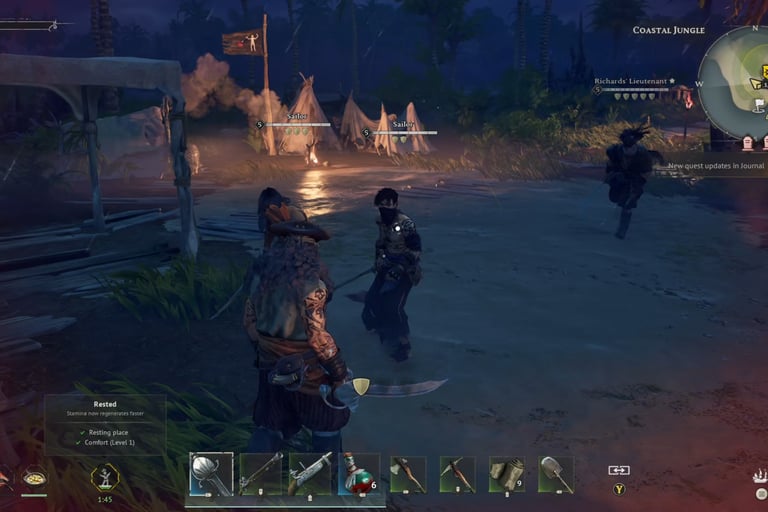
Regular combat is where Windrose starts to unravel. It leans into Souls-like mechanics, like dodging, blocking, and timing your attacks. The problem is that the game isn’t really conducive to that kind of design.
First off, it’s balanced for multiple players, so you’re almost always severely outnumbered in solo runs. That’s a real problem when blocking is directional and you’re constantly getting outflanked. The field of view isn’t wide enough to see what enemies behind your character are doing, so you’ll often get hit without warning.
There are a number of other issues too. The controls don’t feel as responsive as they should. Your ship’s crew gets in your way, keeping targets out of reach. The lock-on feature often points you in the wrong direction. You’ll get stuck in clutter when trying to maneuver around your enemies.
Oddly enough, you can simply brute force your way through encounters by setting a spawn point nearby. There’s no penalty for dying and regular enemies don’t heal when you respawn, so you can charge in and chip away at them until you eventually win. It completely removes the satisfaction of souls-like combat.
There’s a decent amount of enemies in the game, and the one boss fight I encountered felt like a pure souls-like fight, but the jankiness of it all made combat really frustrating to the point where I wanted to quit a few times.
Great Value, But…
At $40 CDN (roughly $30 US), Windrose is a great deal considering you could easily sink 100 hours into it. Between the quests, exploration, crafting, faction progression, and ship upgrades, there’s no shortage of things to do. Even in its current state, it feels like a full experience rather than a stripped-down early access build.
But that’s also part of the problem. You can spend entire sessions just grinding away at progression systems without touching the main story at all. The game is so big, there’s a real risk of burning out on it before it launches in one to two years.
Melee combat in its current form is also a major issue. You WILL die a lot, and many of those deaths WILL feel unfair. This goes beyond just “liking” souls-like mechanics. Fighting in Windrose feels like an idea that still needs to be worked through.
I expect the combat formula will change over time as more player feedback comes in. But whether you should be around while those adjustments are being made really depends on what kind of player you are.
Final Verdict
That may seem like a low rating for a game that peaked at over 200K concurrent players on Steam and sold 1.5 M copies.
It’s not the fans that need convincing at this point, however. This review is for those of you who are on the fence or are just discovering the game now – and I don’t think the case to join Windrose in early access is that cut and dry.
If you’re someone who loves survival games, there’s a strong case to jump in now. You’ll get your money’s worth from all the great sandbox and crafting elements.
On the other hand, if you’re looking for a taste of Black Flag with multiplayer, you may want to hold off until Kraken Express adds more variety to the ship arsenal and fixes the melee combat. Otherwise, you’ll probably get as frustrated with the game as I did.