What Pragmata says about Fatherhood
Gaming Finally It Right and Nobody's Talking About It
EDITIORIALS
Bonafide XP
4/29/20268 min read
1 in 4 children in America right now are growing up without a biological, step or adoptive father in the home. That’s 18 million kids, according to data from the U.S. Census Bureau as of 2022-2023. Hold that number in your head and let it sit there, because I think Capcom may have made the most important argument about fatherhood that gaming has ever produced; and looking at the discourse online right now, nobody is connecting the dots.
Pragmata, for all intents and purposes, should be an unquestionable success without blemishes. It’s a massive AAA, new IP; an absolute unicorn in the gaming industry today. Yet, instead of celebrating what this game actually achieves, there are corners of the internet actively trying to tarnish its core message; and I’m here to preserve it.
When talking about Pragmata, there is a parallel conversation that covers a consistent theme we find in video games over the past 25 years, revealing a massive blind spot in gaming culture: our industry’s absolute obsession with the "broken father" trope. We have spent an entire generation of console cycles conditioning players to believe that a male character cannot be a compelling father figure unless he is first shattered, tortured, and cast down through the seven layers of hell before earning even a sliver of redemption. Look at the gold standards we have placed on a pedestal:
• Lee Everett (The Walking Dead): Was a convicted murderer on his way to prison who had to navigate the literal end of the world, ultimately sacrificing himself to a zombie bite to earn his redemption through protecting a little girl named Clementine.
• Joel Miller (The Last of Us): Watched his biological daughter die in his arms and spent twenty years as a morally bankrupt smuggler before dooming the rest of humanity and forming a new bond with Ellie.
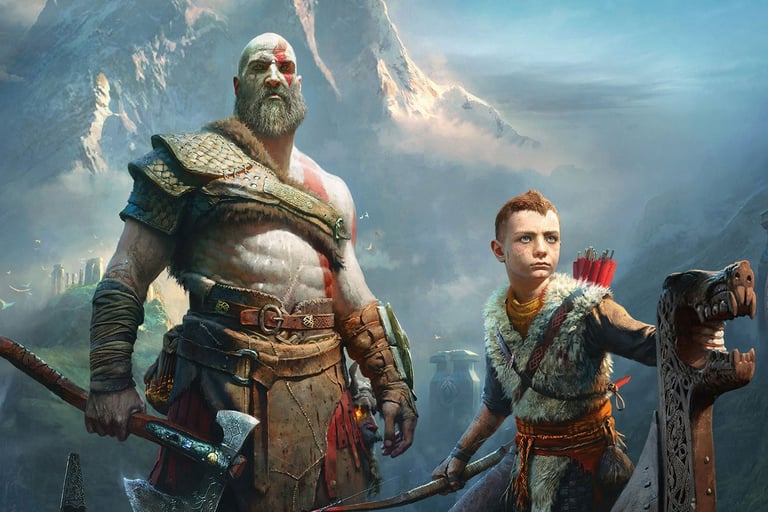
• Kratos (God of War): Lived the life of brutal violence after the murder of his own wife and daughter sent him on a warpath to slaughter Ares the God of War and the entire Greek pantheon before finding a quiet, yet painful path to redemption in Midgard with his son Atreus.
We celebrate these characters, but why is this the mandatory gauntlet? Why do we demand that a male protagonist be drenched in trauma, violence, and moral destruction to be taken seriously as a protector, instead of just celebrating a wholesome, genuinely good man like Hugh, who is simply trying to do the right thing from jump?
To understand all of this and why Pragmata is such a masterpiece, we have to look past the industry's obsession with broken men. So in this video, we'll discuss the lunar survival mission that unites Hugh and Diana as they try to escape, while also discussing the deeply human psychology of what it means to choose someone else over yourself. Let's dive in…
The Architecture of Isolation and The Choice of Presence
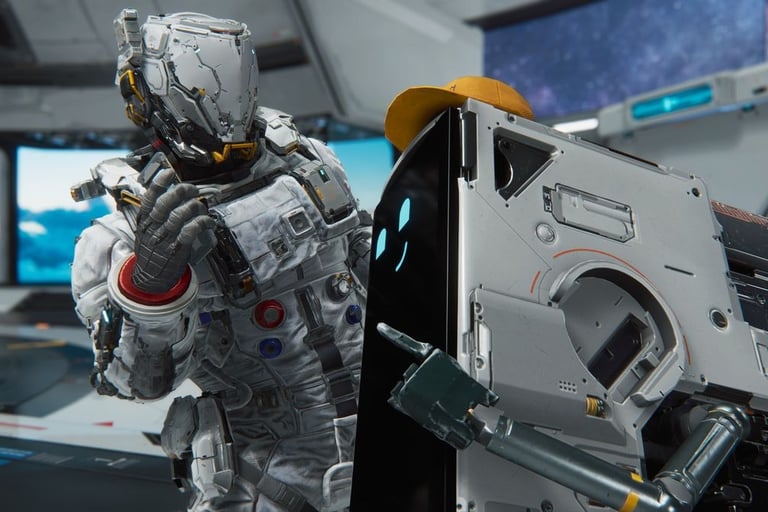
At its core, Pragmata is a story of absolute isolation crashing headfirst into an unlikely connection. The setup is elegantly simple. Hugh is a man defined by a relentless, blue-collar work ethic. He is alone after his team just died in a vacuum, stranded on the Moon in a hostile environment that actively wants him dead; desperately trying to find a way back to Earth. No wife and no kids..
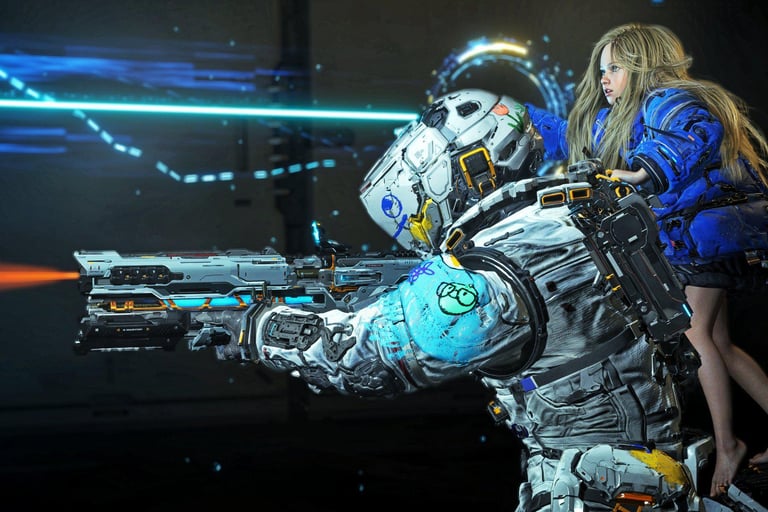
During his journey, he stumbles upon Diana. She is an android child, visually identical to that of a 6-7 year old girl. At the moment of their meeting, she has absolutely no recollection of her original purpose. She is a blank slate, knowing only that she possesses unique, latent abilities that can help Hugh navigate the lunar hazards.
This is where Pragmata’s thesis begins. Hugh has no biological connection to Diana. He has no moral obligation. The game’s harsh reality gives him every logical, survival-based reason to leave her behind. But he doesn’t... He chooses to stay.
Because fatherhood; real fatherhood has never strictly been about the biology. It’s about the choice to stay. The opposite of an absent father isn’t just a "present" one; it’s choosing presence when absence would be infinitely easier. We see it all too often, the man panics at the thought of another life he brings into the world; runs away from the "problem" and decades later comes to the realization. The realization of regret…
The Symbiosis of Combat and Care
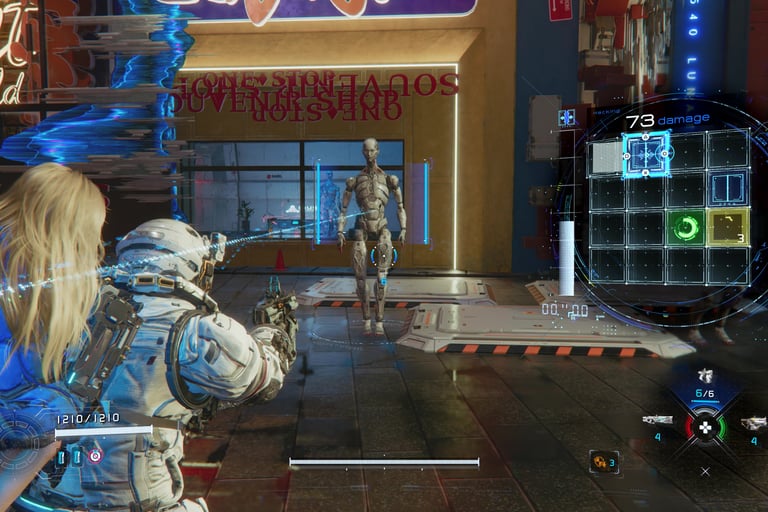
As Hugh and Diana traverse the six distinct levels of the lunar surface, the game seamlessly weaves its thematic weight into its gameplay loop. Pragmata is a kinetic blend of over-the-shoulder third-person shooting and intricate puzzle hacking, designed to dismantle the relentless enemy bots hunting them down. But the brilliance of the game lies in how the mechanics refuse to let you fight alone.
This isn't an escort mission. It's a symbiotic relationship. As you progress, you unlock multiple firearms, health upgrades, and enhancements to weapon strength. But the game forces you to balance your own lethality with Diana's growth. You only become a more powerful duo by actively upgrading Diana’s core hacking abilities. When a swarm of heavily armored sentinels pins you down, Hugh’s guns aren't enough. You need Diana to hack the environmental shielding while you provide cover fire. Your survival is entirely dependent on how well you empower the child in your care.
The Mechanics of Raising a Child in the Void
But it's in the quiet spaces between the gunfire that the game’s true heart beats. This is where Pragmata maps in-game moments directly to real-world outcomes.
• Fathers’ play in early childhood directly contributes to children’s social, emotional, and cognitive outcomes. Amidst the ruins of the moon, Hugh finds relics of Earth: a basketball, a swing set, a slide, a skateboard. He could ignore them. Instead, he engages with her. He even plays Hide and Seek with her. He brings out her curiosity to experience these things for the first time. He lets her be a child when the situation demands she can’t afford to be one.
• Father involvement is linked to higher self-esteem in children. > Diana draws. She creates art for Hugh while they travel. Hugh takes her drawings and sticks them on the cold walls of the Shelter. Over time, this space embodies a blend of the necessities Hugh needs to keep both him and Diana alive; while also becoming a playground for Diana t o grow and express herself with the things completely unknown to her. This is her space to just be a little girl, and not just the weapon Hugh needs to leave this rock. On a mission where survival is the only priority, he stops to say: what you made matters.
• Father-youth intimacy is associated with fewer depressive symptoms across adolescence. > Hugh never lets Diana’s fear become her identity. He protects her innocence with everything he has, speaking to her as a partner, not a burden.
Capcom didn’t just write a warm character. They wrote the clinical definition of an engaged father.
The Gutter of Social Media
Which brings us to the most baffling, frustrating part of this entire conversation.
I grew up prioritizing family. To me, family has always been the bedrock; the foundational structure we build ourselves upon in order to handle the brutal realities of society. It’s everything. Yet, whenever we see the traditional, protective family dynamic promoted in games like Pragmata, it inevitably seems to get dragged through the gutter.
Why has the story of Hugh and Diana somehow brought out the worst in humanity, when it should have reminded us of the greatness of family and fatherhood?
There is a strange, deeply unsettling need for sectors of social media to openly label this game with predatory language. We have an internet culture that is so cynical, so incredibly broken, that it cannot simply look at a man protecting a little girl without projecting the absolute darkest societal sicknesses onto it. They see a father figure laying down his life to protect a child’s innocence, and their immediate instinct is to warp it.
It tells you far more about the current state of our online culture than it does about Capcom's writing. We have become so conditioned to toxic, broken dynamics that when a AAA studio hands us a story of pure, wholesome, protective fatherhood, people don't even know how to process it without trying to destroy it first.
Art, Atmosphere, and the Echoes of a Lost World
For those willing to look past the cynicism, the art direction and sound design of Pragmata stand as a testament to what that protective bond looks like. The vibe is built entirely on contrast.
Visually, the Moon is brutal, sharp, and utilitarian, bathed in harsh starlight and deep shadows. The ambient audio is intentionally hollow and synthetic, filled with the light sounds of machinery and electronically charged synth vibes that ramp up into some hard hitting lofi beats when combat starts to get intense. It is an atmosphere designed to make you feel utterly insignificant.
Yet, Diana provides the warmth. When she uses her hacking abilities, the screen fills with vibrant, bioluminescent hues that cut through the sterile grey of the lunar surface. The level design hides tons of collectibles that serve as emotional anchors. Every relic of Earth they find is a chance for Hugh to teach, and for Diana to learn. Through the warmth of the game's art and audio, we watch an AI learn that she has a soul, simply because a man stepped up and treated her like she did.
The Ultimate Cost of Fatherhood
Every narrative thread, every upgraded weapon, every complicated firefight, and every quiet moment building sand castles builds meticulously to the game's breathtaking climax. I’m not going to spoil the final act for you. I think everyone should experience this for themselves and get a sense of what the ending means to you…
But this is where the game crashes violently back down into the reality of those 18 million kids we talked about at the beginning. The research says that fatherless families are four times more likely to live in poverty. We know that 63% of youth suicides come from fatherless homes, according to the Department of Health and Human Services AND the Bureau of thee Census. The devastating cost of a man choosing his own preservation over his responsibilities.
The climax of Pragmata places that exact dilemma squarely on the table. It asks Hugh what he is ultimately willing to pay to ensure Diana’s future when the safety net is completely removed. He could have walked away in the first hour. He could have chosen himself when the screen faded to black. Every father has a choice to make when a child is involved…
The Mirror
Pragmata isn’t just a video game about a spaceman and an android. It is a mirror. And depending on what your childhood looked like, that mirror either shows you something you are profoundly grateful for, or something you are deeply regretting.
It is easier for parts of the internet to troll this game with predatory language than to look in that mirror. It is easier to demand another broken, violent protagonist than to sit with the reality that a digital character on the moon showed more paternal instinct than the men who were supposed to raise them.
Hugh didn’t just save Diana. He fathered her. There is a massive difference, and 18 million kids know what that difference feels like.
One day, I want to have kids myself and when that time comes I won't hesitate to take on the mantle of fatherhood. Because I know what it was like growing up with one. One that was tough on me, told me to dream, helped build a strong work ethic in me, and told me I could accomplish anything I worked my ass off for. And if I failed, he would be there to lift me up so I can go at it again. That's what made me the man I am today. And that's what I want to instill in my kids for tomorrow.
Pragmata is a damn good video game. Packed with a story that really hits, gameplay I would've never thought would feel as good as it does and message that will last a lifetime. On the surface I highly recommend Pragmata if you just want a polished new IP from Capcom who has been delivering on a hot streak in 2026. Below the surface, this is a game that not only delivers a polished experience but one with a theme that hits home to anyone who values family.
Pragmata reminded me of this, and made fatherhood a reminder of something to look forward to…