The Infinite Story
Why Ken Levine Keeps Rebuilding the Plane Mid-Flight
EDITIORIALS
K. D. Reed
1/14/20264 min read
Ken Levine is, by any measure, a rock star of game design. He is the architect of Rapture and Columbia, the man whose narratives fuse philosophy with first-person shooting, earning him comparisons to literary figures and film auteurs. But Levine’s true legacy is not just the brilliance of his finished games; it is the legendary, protracted, and often tumultuous process required to get them out the door.
This is the central tension of the "singular voice" in the AAA industry: the struggle between a complex, highly personal artistic vision and the industrial realities of a multi-million-dollar development pipeline. For Levine, this struggle has defined his entire career, creating a pattern of radical reboots and "development hell" that now hangs over his long-awaited project, Judas.
The Foundations: Systemic Dreams and Dissonance
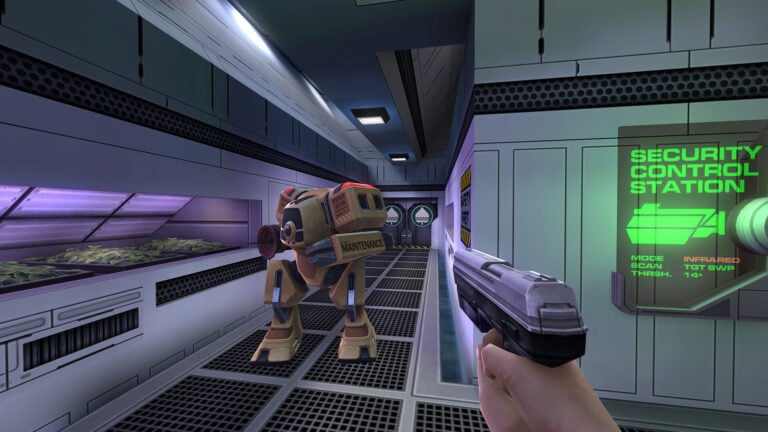
Levine’s career, much like his later work, is fundamentally tied to the immersive sim movement. He cut his teeth at the legendary Looking Glass Studios, where he was part of the teams behind genre-defining titles like Thief: The Dark Project and System Shock 2.
This early exposure cemented the core of Levine’s design DNA: systemic interactivity, environmental storytelling, and philosophical depth. But even in these early, smaller projects, there was a sense of creative friction. While Warren Spector championed pure emergent simulation (which we see in Deus Ex), Levine began to favor a more controlled, narrative-heavy simulation, using those systemic tools to serve a specific, overarching story.
This focus would define his biggest hits.
The BioShock Era: Vision and Collapse
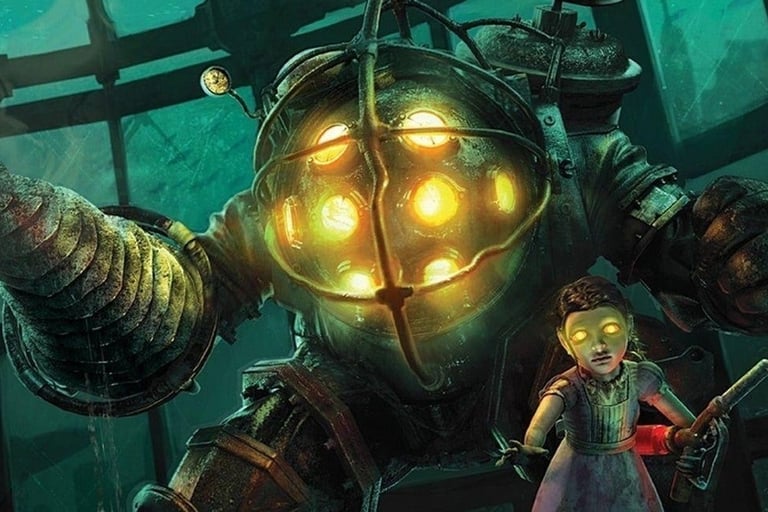
After the closure of Looking Glass, Levine co-founded Irrational Games. Following a few smaller projects, the studio launched BioShock in 2007, an immediate masterpiece that fused the gritty systems of System Shock 2 with the stunning art deco dystopia of Rapture. It established Levine as a visionary.
However, the pressure of following up a masterpiece led to the infamous production of BioShock Infinite.
Development Hell: The Cost of the Vision
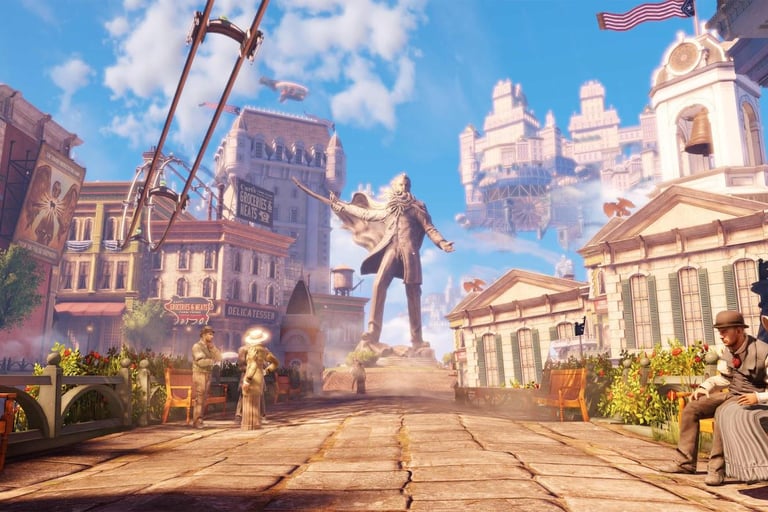
The production of Infinite became a textbook case of development hell. The game’s original vision, set in a dynamic, procedural Columbia with sprawling team combat and complex citizen relationships, spiraled out of control. As the game ballooned in scope, large portions were scrapped or completely overhauled multiple times.
This process is what we mean by "rebuilding the plane mid-flight." Levine, the creative director, was known to continually push for new, ambitious changes, effectively moving the goalposts even as the deadline approached. The result was massive team burnout, high turnover, and reports of the studio losing its creative footing. The game was ultimately successful, but only after a massive intervention by publisher Take-Two to stabilize the project and force a definitive, stripped-down version to completion.
Just months after the game’s release, Levine took the drastic step of laying off nearly the entire team at Irrational Games, keeping only a skeleton crew to form a new, small studio: Ghost Story Games. He stated he wanted to escape the burden of running a huge team and focus on his true passion: creating a complex, infinitely replayable narrative.
The Judas Question: A Decade in the Making
This brings us to his current project, Judas. Announced with the aesthetic trappings of a BioShock spiritual successor—a flying city, powers in your hands, and retro-futurism—its development has followed the familiar, protracted timeline.
Levine's core concept for Judas is the "narrative LEGOs" system. Instead of the story being a fixed script, he is building a "virtual dungeon master" within the engine. The game is teaching itself to take pre-designed story blocks and characters and assemble them in unique ways based on the player’s actions.
The goal is to solve the problem of narrative games: once you know the story, the replay value drops.
The problem is that developing an engine that can procedurally generate a bespoke, cohesive story of AAA quality is exponentially harder than writing a fixed one. This monumental ambition is why, more than a decade since BioShock Infinite, Judas has no concrete release date. A 2022 report confirmed the project had already been through multiple reboots and personnel changes, suggesting the pattern of creative instability has persisted at the smaller, more intimate Ghost Story Games.
Levine is attempting to create the one thing every designer wants: a systemic, unpredictable, yet deeply meaningful story engine. However, the gray in his beard is a visible marker of the time and struggle involved in trying to achieve this goal, making us wonder whether the singular, uncompromising vision can ever truly be delivered within the lifespan of a single console generation—or even a single developer.
The success of Judas will not just be measured in review scores, but in its ability to finally break the cycle and prove that a visionary can, in fact, finish rebuilding the plane before it runs out of fuel.