Pragmata Review
Capcom's Most Confident Swing in Years
REVIEWS
MattGhostie
4/28/20264 min read
Pragmata has been on the radar for a while now. Announced back in 2020, delayed twice to get the polish right, and then Capcom dropped a demo in 2026 that genuinely impressed people, myself included. And for good reason, this is a game that swings for something genuinely different in a space where everything has started to feel the same.
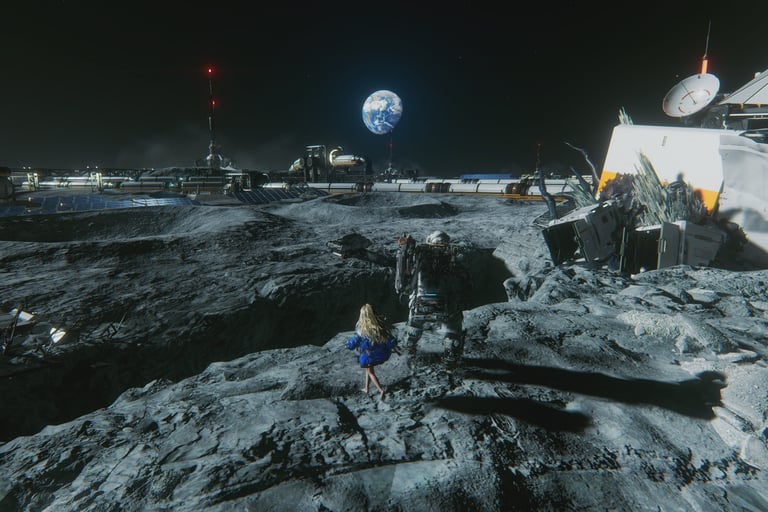
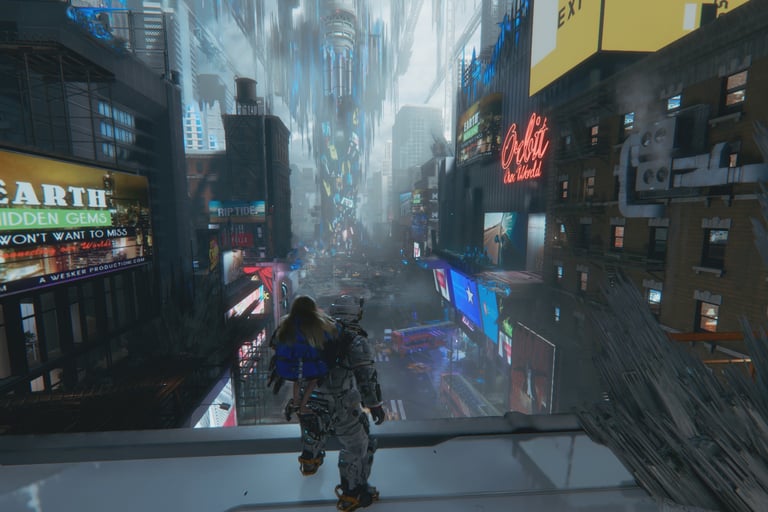
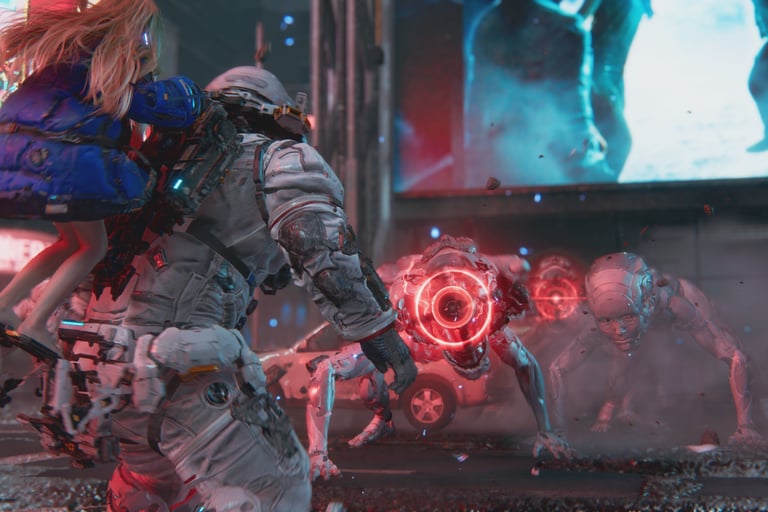
The premise is straightforward enough. You play as Hugh, a space repairman and first responder, alongside Diana, an android girl you meet early on. Together, you're trying to fix the station you're stranded on so you can get back to Earth. But there's a virus loose in the system that's driven the other robots mad, and they're coming for you.
And this is where things get interesting.
A Control Scheme That Could Only Come From Capcom
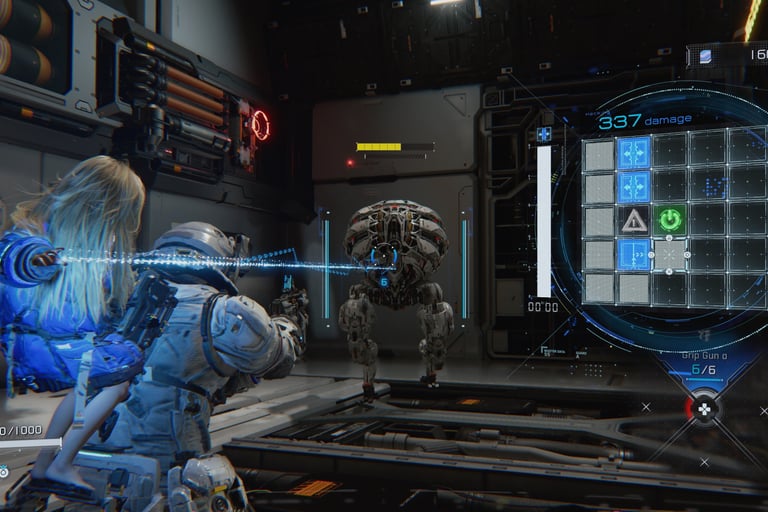
Hugh controls like any third person shooter protagonist. Dodge, jump, hover, shoot. Standard stuff. But Diana changes everything. She can hack the robots by using you controller's face buttons as you aim down sight all while still be able to control and fight with Hugh. It sounds complicated on paper but it absolutely isn't.
The face buttons become your cardinal directions. Square moves you left, circle moves you right, that sort of thing. And what's genius is that it frees up your triggers and bumpers entirely for Hugh's shooting. The separation feels natural almost immediately, and it's the kind of control scheme that makes you wonder why nobody else has thought to do this before.
The Real Game Is Managing Everything
What makes Pragmata sing is how everything feeds into a single loop. The enemies move slowly, sway back and forth, giving you time to reposition and focus on hacking. Once they're exposed, you pull out your traditional shooter mechanics. Simple enough.
But then you get consumable nodes that modify your hacks. A multihack lets you chain together three robots at once instead of one. Another electrifies them, locking them in place. You've got mines that auto hack anything that walks into their radius. You've got specialized weapons like rail guns and shotguns. And suddenly you're asking yourself a single question over and over: how do I set up this encounter so I'm spending the least time shooting and the most time hacking?
Late game, this reaches this beautiful crescendo where you're dodging with Hugh while Diana unleashes a barrage of hacks, then you pull out your best weapons, then you rehack. It all blends together seamlessly, especially in the boss fights where you have to manage both characters simultaneously. It's confident game design.
The VR Sims Are a Masterclass
Back at your hub, there's a VR simulation area that deserves its own mention. These optional challenges serve double duty. They give you bonus upgrade materials if you complete them, but more importantly, they show you what's actually possible with the sandbox Capcom has given you.
As an example, I didn't understand how mines worked until I hit a VR mission that forced me to kill a ton of high health robots in a short window without them throwing up their defenses. That's when I realized you could chain Diana's hacks with the mines to stun lock enemies indefinitely. From that moment on, mines became my go-to tactical choice. These missions aren't just optional busywork. They're teaching tools dressed up as challenges, and they're excellent.
The Small Stuff
Two things hold it back slightly, though nothing major.
First, the checkpoint system forces you to return to home base every time you use it, which means every time you want to refill your healing items, you're loading back to the hub, running through menus, fast traveling back to where you were. I just wanted a quick rest option that refilled my health and let me keep going. The enemy respawn is fine, but the loading screens and forced fast travel around it felt unnecessary.
Second, Hugh and Diana connect instantly. They meet, she saves him, and suddenly they're best friends with no friction. There's zero build up to them becoming incredibly close. By the end of the game their relationship feels genuinely complete and wholesome but it is hard to ignore just how it felt a bit rushed at the start. I expected some distrust from Hugh, especially since he mentions early on that he doesn't like robots. A little more buildup would have made their bond hit harder and ultimately rounded out this self contained story very nicely in my opinion.
The Verdict
For $60 USD, there's a healthy amount of content here. You're looking at around fifteen hours for a standard playthrough, thirty if you're chasing the platinum. There's new game plus at launch and an insanity difficulty after you finish normal. The bosses are great, the story's worth experiencing, and the level design rewards exploration with hidden upgrades and power ups.
This is an incredibly strong entry from Capcom. Not a masterpiece, not something I'd say is a must play for everyone. But it's a brand new IP with a genuinely novel control scheme and an idea that could have easily fallen apart in lesser hands. Instead, Capcom nailed it.
If you're a fan of Dead Space, Resident Evil, or just third person action shooters looking for something that shakes up the formula, this is for you. The music is great, the level design is polished, the characters land, and the gameplay is just the icing on top of an already solid cake.