Escape from Ever After Review
A Witty, Heartfelt Storybook RPG That Ends Just as It Feels Ready to Do Even More
REVIEWS
TasticSilver
4/14/20267 min read
Indie RPGs often wear their inspirations proudly, but the best ones know how to turn familiar ideas into something with their own personality. Escape from Ever After clearly takes cues from paper-styled turn-based classics, yet it never feels trapped by imitation. Instead, it uses that foundation to build a colorful, character-driven adventure packed with humor, charm, and just enough bite to keep its fairy-tale world from feeling too soft around the edges.
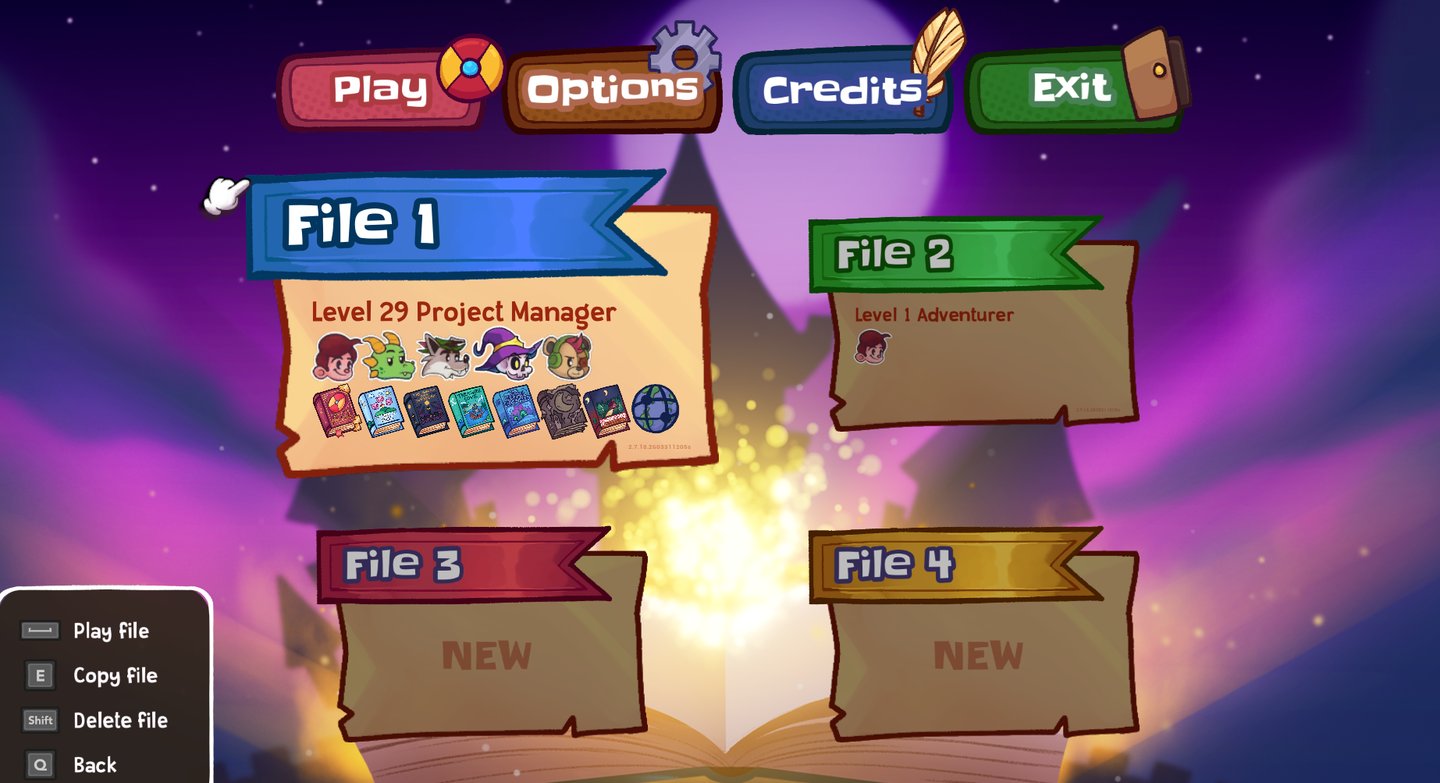
After 36 hours with the game and 24 out of 28 Steam achievements completed, what stands out most about Escape from Ever After is how easy it is to get attached to its world. The combat is fun, the storybook structure keeps the adventure moving, and the collectible-driven exploration gives players extra reasons to look around. But more than anything else, it is the cast that carries the game from a good indie RPG to one that feels genuinely special.
A Storybook World with Real Personality
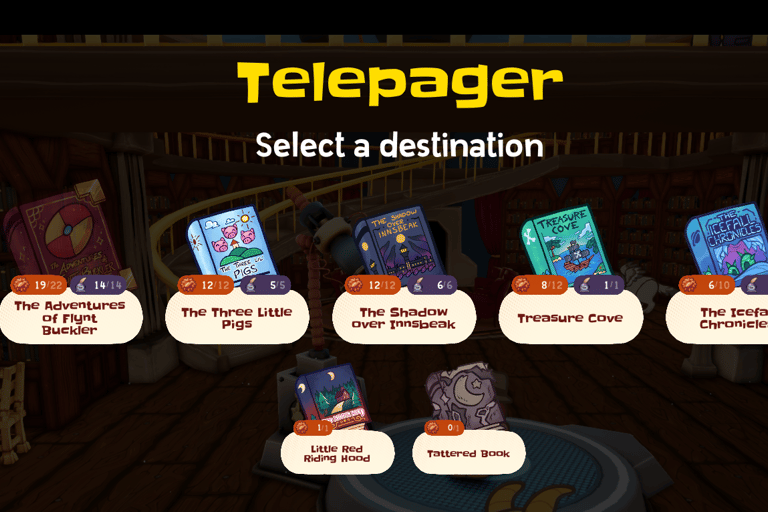
The premise is one of the game’s strongest ideas. Rather than unfolding in one continuous fantasy setting, Escape from Ever After sends players through different storybooks using a teleporter, with each one acting as its own contained adventure. Your goal is to save these books from the grip of Ever After Inc., a corrupt force exploiting these worlds for its own gain, before ultimately making your way to the real world to stop the company’s treachery for good.
It’s a clever setup because it gives the game flexibility. Every book can bring a different mood, set of problems, and cast of characters, while the larger mission keeps everything connected. That structure helps the game avoid feeling repetitive, and it also suits the game’s fairy-tale satire well. There is room for comedy, room for weirdness, and room for some surprisingly effective stakes once the player becomes invested in undoing Ever After Inc.’s damage.
The writing helps a lot here. Escape from Ever After is consistently witty without trying too hard to prove how clever it is. It knows when to crack jokes, when to let characters bounce off one another, and when to let its central conflict breathe. That balance matters. Too many games with whimsical worlds lean so heavily on humor that the plot loses weight. Escape from Ever After avoids that problem by making its world feel playful, but not disposable.
A Cast Worth Following
If the story gives the game its momentum, the party gives it its heart. This is one of those RPGs where the main characters do much of the heavy lifting, and thankfully, they are more than capable of carrying it.
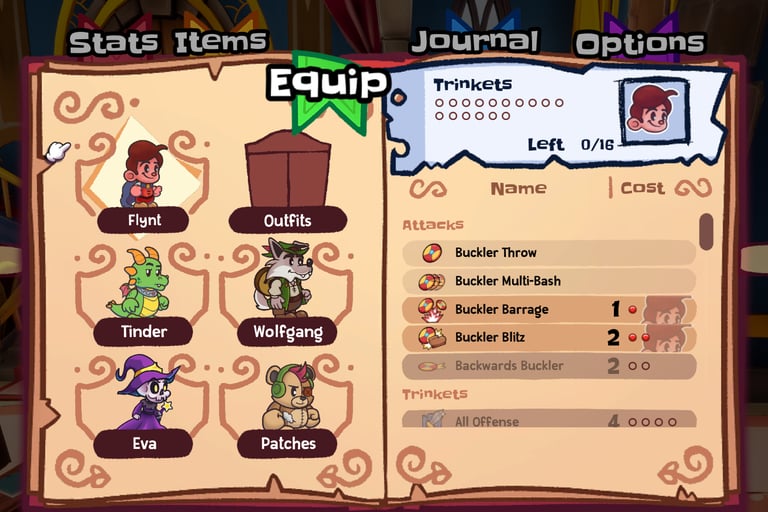
Flynn, the main human protagonist, is a great anchor for the adventure. He’s witty without becoming smug, expressive without taking over every scene, and grounded enough to hold the rest of the party together. His buckler-based fighting style also gives him a memorable gameplay identity, which helps him feel like more than just the default lead.
Tinder is the first companion players meet, and she makes an immediate impression. A dragon stripped of her size and her castle by Ever After Inc., she enters the story furious, sassy, and absolutely unwilling to let that injustice slide. That edge gives her some of the game’s funniest dialogue, but it also gives her purpose. She is not just a comedic sidekick. She has every reason to be angry, and that attitude makes her both entertaining and compelling. In battle, her flame-based attacks and leaping moves fit her temperament perfectly.
Wolfgang brings a very different energy to the group, and that contrast is part of why the party dynamic works so well. He’s upbeat, fun, and consistently enjoyable to have around, using music to either buff allies or help chew through enemy defenses. In another game, that kind of relentlessly cheerful character might become grating, but here he is a welcome source of warmth. He helps keep the tone balanced.
Eva may be the most scene-stealing character in the bunch. As an undead bone witch and former HR representative for Ever After Inc., she already has one of the strongest hooks in the party, but it’s her attitude that seals it. She’s cutting, stylish, and full of the kind of sass that gives the game some of its best dialogue. On top of that, her magic toolkit makes her consistently useful in combat. She is the kind of party member who feels great both in cutscenes and in battle, which is not always easy to pull off.
Then there is Patches, the former Ever After Inc. mascot, who could have easily been reduced to a one-note joke. Instead, the game gives him a confident, forceful presence that makes him stand out. He hits hard, specializes in shield-breaking damage, and carries himself with enough swagger to feel like a real part of the team rather than comic decoration.
Together, Flynn, Tinder, Wolfgang, Eva, and Patches make for a genuinely lovable main cast. Their personalities are distinct, their interactions are enjoyable, and the game does a strong job of making them feel like companions rather than just party slots. Even outside the main group, the game peppers in memorable bosses and side characters, including prominent figures like Mr. Moon, helping each chapter feel like it has its own flavor.
Combat That Keeps Things Moving
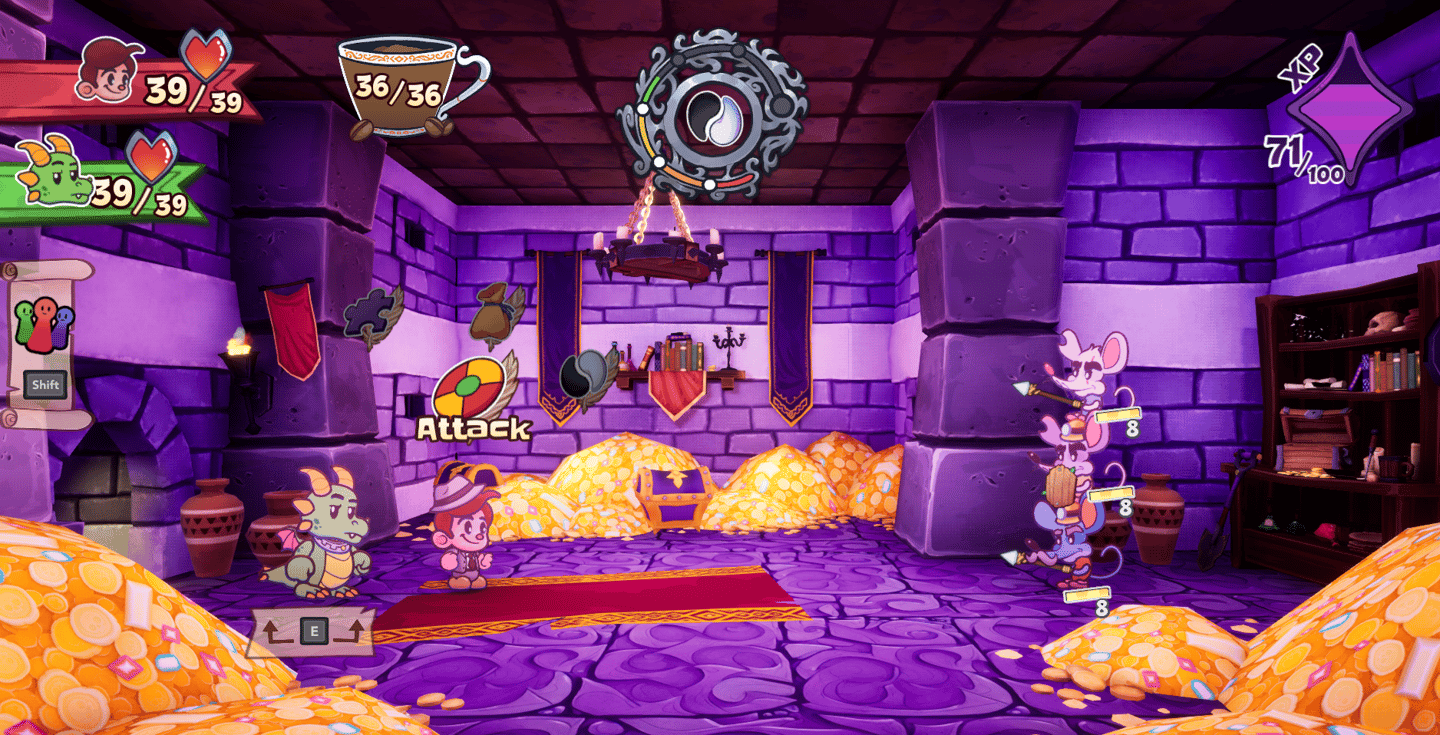
The combat is another major reason Escape from Ever After works as well as it does. Its turn-based system is approachable, but it still gives each character enough personality and utility to keep fights engaging. Flynn’s buckler attacks, Tinder’s aggressive offense, Wolfgang’s musical support, Eva’s magic, and Patches’ shield-breaking power all combine into a party that feels varied without becoming overly complicated.
That balance is important. The game clearly wants players to enjoy themselves rather than drowning in menus and systems, and for the most part, it succeeds. Battles move at a satisfying pace, character abilities are easy to read, and the overall structure remains entertaining throughout the adventure. There is enough tactical value in choosing who to bring and when to use certain abilities, but the combat never becomes so dense that it overwhelms the game’s lighter tone.
The Paper Mario influence is obvious, but that is far from criticism. The paper-inspired presentation and rhythmic turn-based structure provide a familiar baseline, while the game’s own character writing and worldbuilding help it stand apart. If anything, Escape from Ever After benefits from understanding exactly what makes this style of RPG so appealing: readable combat, expressive animation, and party members with mechanics that reflect their personalities.
That last point matters a lot. The best turn-based RPGs make you feel like your party members are fighting in ways only they would fight, and Escape from Ever After generally gets that right. Nobody feels interchangeable, which helps every new tool and ability feel meaningful.
Exploration, Collectibles, and Small Rewards
Outside of combat, the game gives players plenty of reasons to poke around. Collectibles are scattered throughout the adventure and can be used to purchase upgrades and cosmetics, which adds welcome incentive to explore beyond the main path. There is a simple but satisfying pleasure in finding things that not only reward curiosity but also feed back into character progression and customization.
Shops also play a useful role, giving players access to HP, mana, and trinket items without overcomplicating resource management. These systems are not especially revolutionary, but they do not need to be. They support the pace of the adventure well and help the world feel more complete.
There is a smart design philosophy underneath all of this. Escape from Ever After knows that when players enjoy a world, they want excuses to linger in it. Collectibles, cosmetics, and upgrade paths may be small on paper, but together they make the act of exploring feel worthwhile. They help turn the game from a straightforward narrative RPG into something a little more inviting.
Where It Falls Short
The biggest issue with Escape from Ever After is also the easiest one to understand: it feels short.
That is not to say the game lacks content entirely. There is a solid adventure here, and there is clearly care in how the story and systems are put together. But the ending arrives with a sense of abruptness that makes it feel like the game is wrapping up just as it is truly hitting its stride. By the time the cast feels fully settled, the world feels properly opened, and the player is ready for the story to push even further, the main campaign begins pulling things toward a close.
That can leave the experience feeling slightly unfinished, or at least more limited than its ideas deserve. The world is charming enough to support more books, the villains feel like they could use even more development, and the party is strong enough that extra time with them would only have made the game better. It is one of those cases where the complaint comes from affection: the game leaves you wanting more because what is already there works.
Thankfully, the game does offer additional challenges for players who want to keep going. Boss Rush is a welcome inclusion, letting players take on every boss in one run without leaving. There is also a 100-story tower that pushes players through an extended gauntlet in exchange for powerful rewards. There’s also a hard mode which increases the difficulty significantly if you want another save file. These modes add meaningful post-game value and give the combat room to shine beyond the main campaign.
They do not fully solve the feeling that the core story ends sooner than expected, but they absolutely help. For players who connect with the battle system and want more reasons to test their party setups, these extras are worth diving into.
Final Verdict
Escape from Ever After is a wonderfully charming indie RPG that succeeds in the places that matter most. Its cast is lovable, its writing is sharp, its turn-based combat is consistently enjoyable, and its storybook structure gives the adventure a strong sense of identity. It may borrow from familiar influences, but it uses them well, building an experience that feels warm, funny, and full of personality.
Its biggest weakness is that it ends before it feels like it should. There is a sense throughout the later portions of the game that this world, these characters, and this premise could have supported even more. But while that abruptness keeps it from feeling truly definitive, it does not stop the game from being easy to recommend.
For fans of paper-styled RPGs, character-driven indie adventures, and turn-based combat with a playful edge, Escape from Ever After is a journey worth taking. It may be brief, but it leaves a strong impression. More importantly, it leaves you wishing this fairy tale lasted just a little longer.