Dying Light: The Beast Review
The Beast is Unleashed
REVIEWS
JaeGamez
1/16/202613 min read
The Dying Light franchise has always stood out as a pioneer of the zombie genre in gaming, captivating us with its signature mix of undead-smashing, free-running, action RPG progression, and survival horror. With this iteration, the folks over at Techland may well have perfected the formula they conceived with Dead Island and revamped with its fleet-footed spiritual successor. This was the last 2025 release I played before the year’s end, and I’m so glad I took the plunge when I saw it on sale—I’d have gladly paid full price for this experience!
Dying Light: The Beast is an absolute blast! It successfully integrates all of the strengths of previous entries whilst cutting out the chaff! Excelling at all it sets out to achieve, the newest addition to the Dying Light franchise lives up to its name as a thrilling, gripping, and often terrifying experience. Despite it originally being planned as an expansion for Dying Light 2: Stay Human, The Beast stands tall as a solid standalone game—and a sequel in its own right. Kyle Crane is back. And better than ever.
Gameplay
Techland demonstrates their prowess with this refined version of their unique gameplay loop. Dying Light’s signature blend of action RPG, first-person parkour, brutal biter-beating, and more than a dash of survival horror has been sharpened to a lethal point in this iteration.
The controls are tight and responsive, enhancing the feeling of agility and fluidity in Kyle’s movements. The animations—as you dive through narrow spaces mid-sprint, slash and bludgeon hordes of lurkers, unload clips at bandits, or even just brush past a wall or infected as you dash by—look great and promote realism and immersion. The world design is not only visually diverse and captivating but enthralling, and it aids the flow of traversal. The environments are diverse, including fields of flat, overgrown plains with stiffs hiding in the undergrowth, abandoned roads and highways, isolated rural farm villages, and of course the parkour playground of Old Town’s rooftops. These beautifully realised areas are supported by some brilliant weather effects—particularly rain—to create deeply enrapturing encounters, for better or worse. The more open nature of Castor Woods also encourages the use of vehicles to quickly cover large patches of flat terrain. These automobiles, in the form of different coloured Jeeps, are common but fuel is scarce and full tanks scarcer still. It’s a fun diversion, cruising the desolate streets bursting biters on your bumper, but don’t expect any long rides.
The varied landscapes encourage experimentation with traversal mechanics, and once unlocked, the pared-down version of the grapple hook adds a fun, if a little lacklustre, edge. It falls short when compared to its predecessors—nowhere near as versatile, fun, or broken as in the first game, and less useful than the second. But as always, the raw parkour is the heart of traversal: bounding across rooftops, climbing ledges, and sliding through gaps looks and feels awesome, ensuring that dodging zombies feels just as thrilling as fighting them.
Combat feels visceral and weighty; gore effects only enhance that feeling of raw brutality. Enemy variety is as prevalent as in previous entries, with no shortage of returning and new adversaries to encounter. The brand-new Chimera-type Volatiles are story bosses that are fun encounters but often repetitive and forgettable. They weren’t bad; they just didn’t leave as much of an impression as I’m guessing they were expected to, and by the end of game each new boss felt like more of the same.
Much like previous entries, Kyle has a variety of weapons and weapon mods at his disposal that are all great fun to use! He also has a plethora of craft-able gadgets, like grenades, throwing knives, Molotov cocktails, and more! Guns are back in this game, and despite ammo not being plentiful, you can get by comfortably using it sparingly. The shooting feels great too—sharp, snappy, and effective—but the melee combat is where it’s at! Slicing off limbs, caving in skulls, and drop-kicking foes looks, sounds, and feels savage! Blending in the parkour manoeuvres makes Kyle feel supernaturally acrobatic and strong, but the stamina bar helps maintain that ever-present feeling of tension. It acts as a constant reminder not to get carried away, lest you get overrun or overpowered.
All of this makes Beast Mode even more valuable and satisfying to use. For a short time, you can really cut loose and throw caution to the wind as you tear through your enemies! Kyle’s Beast abilities may feel familiar to anyone who’s played Dying Light 2, but the zombie powers have been expanded upon heavily. Less of a gimmick, or pure narrative device, than in Stay Human. They’re far more integral to the overall experience. Not to mention, they’re fun as hell—despite feeling more than a little floaty at times. Like a twisted mix of The Hulk and Wolverine, ripping and tearing through zombies has never been more satisfying! That’s where the real power fantasy lies, and much like the base combat and parkour, it only improves as you level up and gain new skills. Fighting isn’t always the answer though—stealth and scavenging are just as important a feature in this game…
Dying Light: The Beast is exceedingly resource-heavy—you can expect to be collecting and crafting a lot! But thankfully, as a crucial part of the gameplay loop, this never gets tiresome. It’s exceedingly satisfying scouring the gorgeous, detailed, and often harrowing environments of Castor Woods. Creeping through derelict stores infested with infected whilst you scrounge for loot, or grabbing scraps as you dash through deserted apartments, is consistently engaging and rewarding. Crafting, modding, and enhancing weapons makes it even more rewarding as you devise newer, whackier, and more effective ways of dismembering rotters. It doesn’t quite reach the insane heights of the recent Dead Island 2, but the additional movement options and acrobatics make up for it. You won’t be able to help but scan every location for every bit of plunder, or risk a venture into the unknown dark for a chance at an enticing reward…
I’ve already mentioned the survival-horror elements and tension in this game, and despite being core and essential parts of the Dying Light DNA, this devious duo often play second fiddle when discussing the franchise. The zombie slaying and free-running have always taken centre stage—this makes sense, especially when you consider how stripped back the survival-horror elements and sense of desperation were in Dying Light 2. Well, as I said, the devs took note of fan feedback. I mean, they really listened. More akin to the OG title, this game is scary as hell!
There’s a constant feeling of tension as you’re always aware of the limited daylight and that zombies are much greater threats in large numbers and/or in cramped environments. This creates a beautiful balance: despite feeling more nimble and powerful than your foes in the daylight, you’re aware that you have to plot and strategise to maintain your advantage at all times. Things can go from zero to one hundred in a heartbeat, and the night is always lurking.
Fighting zombies outright, despite being extremely enjoyable, can be a huge drain on your resources. In the early game, your stamina and health are relatively low, weapon durability is at its worst, and your resources are most limited. So sneaking is encouraged, especially when looting or exploring abandoned buildings packed with biters, or bandit territories. The stealth system is pretty basic, but enemy AI is reactive enough that stealth-killing ghouls by snapping their necks from behind and silently sniping oblivious bandits with your bow is consistently gratifying. But the real nightmare begins when the sun sets.
Nighttime is not your friend: all walkers are tougher, your range of sight is severely impeded due to the implementation of “true dark,” and the super-powered Volatiles come out to play. Unlike Dying Light 2, at night you can barely see without your flashlight—which can be detected by Volatiles. So the pitch-black nights, coupled with prowling Volatiles, make stealth essential whilst you complete your business or seek shelter. The Volatiles are no joke, especially early game. They appear to be everywhere at night, and they’re very sensitive, very fast, and very difficult to kill. Not to mention that attracting the attention of one, and the ensuing chase or confrontation, will almost certainly attract more. The Volatile’s brute strength, durability, speed, and agility make them your match in both combat and on foot. This means you’re no safer on the rooftops, and you better be well-equipped if you want to chance an all-out brawl. Navigating in the dark with stronger shamblers and other Volatiles to contend with makes it equally terrifying attempting an escape. Driving at night is also perilous, as the sound of your car engine will attract all the zeds in the vicinity, and Virals and Volatiles will jump onto your bonnet and try to smash your windscreen unless you can shake them off. And don’t forget—you probably don’t have much fuel. Thankfully, despite always being a threat (and an option), nighttime play isn’t often forced on you, and you can largely avoid it outside of select main and side quests. This is very well implemented, as you can engage with it as much or as little as you like, ensuring the crushing tension doesn’t overstay its welcome or put off the less brave among us. This excellent facet of game design—along with ongoing support, difficulty options, New Game+, and optional activities—effectively caters to both its hardcore and more casual audiences. Allowing players to progress at their own pace.
Progression in Dying Light: The Beast is all about collecting! You’ll need to engage with main quests and various side quests and activities, slaying zeds and gaining XP whilst scavenging resources as you complete said quests and activities—which reward you with more XP, more resources, and loot. It’s simple but effective and addictive; the excellent core gameplay and variation in activities ensure the gameplay loop never gets stale, and progression is consistent and noticeable. You can really feel the difference when you start pulverising flesh-eaters with high-level weapons.
The side content is meaningful and worthwhile, and can add a good chunk of time to your play-through if you aim to engage with it all. Side quests and activities are just as enjoyable and rewarding as the mainline content. There’s a variety to dive into, like salvaging gear and supplies from overrun military convoys, securing safe-houses and power stations, exploring reeker-infested stores for resources, infiltrating Volatile nests, and more. All of them are fun, provide XP, and offer rewards to help you equip better gear and enhance your arsenal. Some side quests lean heavily into the survival-horror themes, resulting in deeply chilling and tense scenarios. They’re also narratively fulfilling, offering compelling writing, characters, and stories of their own.
Story
Probably the best story in the Dying Light franchise to date. Narratives have never been the main focus for fans, but the devs have always put in the effort—and it really feels like those efforts are bearing fruit with The Beast. Bridging the 13-year gap between when we last saw Kyle in The Following DLC to now. The story takes place after the events of Dying Light 2 and puts you back in the shoes of series veteran Kyle Crane, who was captured and experimented on, pitting him on a gripping revenge mission. This is all covered in the opening, with further details revealed as you progress through the main and side content. Despite the time skip, it feels like a direct continuation from The Following and largely overlooks the events of the second instalment—which makes sense, as this continues Kyle’s story in a completely separate location.
The writing is solid, making you sympathetic towards Kyle and the other survivors. The main villain, “The Baron,” is suitably insufferable, fuelling Kyle’s revenge arc, while the supporting cast have enough personality and development to enhance it. The plot builds on the foundations of Kyle’s character, exploring the effects of his treatment at the hands of his captors, with a consistent flow of twists and turns to keep you invested. It does a great job explaining how Kyle developed his superhuman Beast powers, whilst delving into themes of trauma and regret. They’ve also brought back narrative choices, from Dying Light 2, but they’re far less common and meaningful, the most impactful of which took place in a side quest. The story is linear, much like the original game. This story won’t win any awards, but it keeps you engaged, motivated, and delivers more than a few truly memorable moments.
The writing and storytelling strengths aren’t limited to the main quests—all the side quests are equally compelling, introducing or expanding on interesting NPCs with tragic backstories and personal struggles of their own. I was genuinely surprised by how often they sparked real emotional reactions or got me invested in the decision-making, truly role-playing as Kyle and choosing what best suited his character and arc. The side quests excellently flesh out the intimate human aspect referenced throughout the main plot.
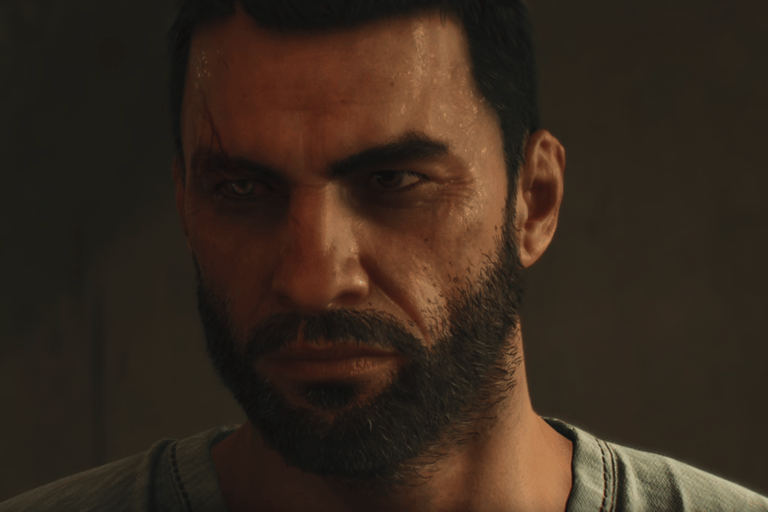
These narrative strengths are amplified tenfold by the stunning visuals, where every scarred NPC face, bloodied survivor camp, and overgrown ruin doesn't just look real—it feels like a lived-in testament to the trauma and resilience at the story's heart. Kyle's haunted expressions during regretful cutscenes hit harder amid Castor Woods' oppressive beauty, and the Beast powers' primal viciousness visually echo his inner rage, making the revenge arc not just told, but brutally shown.
Visuals
The most visually appealing Dying Light game yet. The series has never shirked in the graphical department, always providing a visual feast for fans—whether through stunning, photo-realistic environments or grotesque gore and mutant deformities, this game likes to leave you gazing in awe.
Castor Woods is brought to life with beautiful, detailed landscapes. The game always manages to be striking—whether you're overlooking well-lit rural vistas with sunlight glinting off blades of grass and roof tiles, or skulking through the dark caverns of the Volatiles, illuminated by the pale-red, bioluminescent glows of twitching larva.
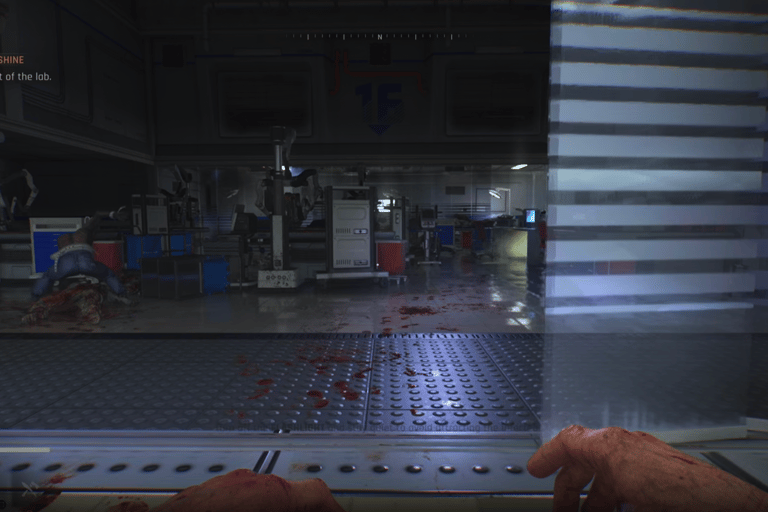
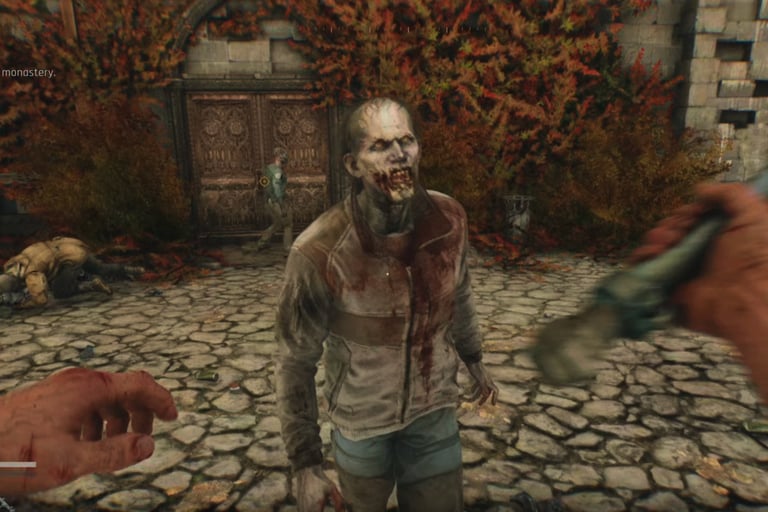
The high graphical fidelity elevates NPC and enemy designs. Character faces are crisp and clean with clear signs of aging, injuries or mutation. Facial expressions and body language look real and convincing. The boil-ridden, rotting corpses of the walkers and the bulging, warped physiques of Volatiles are as horrifying as ever, with gore that's just as impressive—models deforming on each strike as jaws shatter and limbs sever in showers of blood and viscera. The finisher animations are the icing on the cake, depicting Kyle going full Kratos on his opponents—tearing off limbs and squashing skulls like it's nothing!
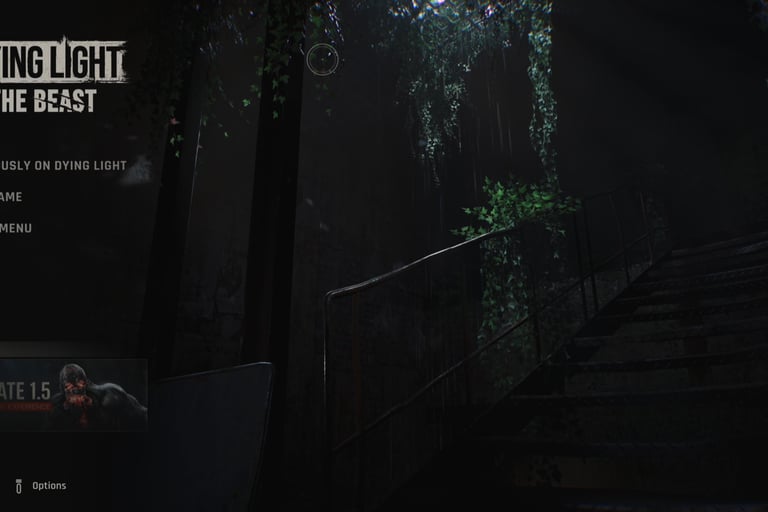
But nothing prepares you for the sheer oppressive visual presence of night—or rather, the lack thereof. When the sun sets over Castor Woods, the world plunges into an inky blackness that swallows almost everything. Your flashlight cuts a narrow cone of light, revealing only fragments: a twitching silhouette in the distance, the glint of eyes in the undergrowth, or the faint rosy pulse of a nearby Volatile hive. Rooftops that felt safe by day become treacherous voids, and open fields turn into endless seas of darkness where anything could be lurking just out of sight. This crushing absence of visibility makes every venture after dark feel intimately terrifying, forcing you to strain against the void… and making you far more reliant on your sense of hearing to survive.
Sound
The sound design is absolutely impeccable—working seamlessly to pull you deeper into Castor Woods' nightmare and build unrelenting tension from the moment you drop in. Every distant groan, footstep echo, or raindrop becomes a vital clue to survival, turning quiet exploration into edge-of-your-seat suspense and chaotic fights into symphony of carnage.
You can easily detect and differentiate the drowsy breaths of shambling biters, the deranged mutterings and grunts of Virals, and the deeply unsettling wheezing of the Howlers—thanks to the distinct audio for each zombie type. The excellent aural direction helps you locate lurking foes, and makes every chase feel viscerally real.
The sound effects take this to another level, delivering visceral weight to every action. The wet, meaty thuds of hammers smacking into undead flesh, the crunch of boots on gravel or grass under Kyle's sprinting feet, and his heavy, ragged breathing as he fights to quell the Beast within all feel incredibly grounded and tense. Weather amps the atmosphere too—rain pattering on rooftops, howling winds whipping through open fields at, or distant thunder rumbling as Volatiles stir. Guns crack with sharp, echoing reports that reverberate through Castor Woods, drawing biters from afar, while Beast Mode brings guttural growls, pounding heartbeats, and savage rips that make rampages intoxicating.
The soundtrack dynamically shifts with the action, ramping up tension to match every scenario—from moody ambient tunes during tense car rides, to fast-paced percussion and orchestral swells during brutal fights, eerie drones prowling in the night, or triumphant anthems amid Beast Mode rampages.
Voice acting is good—I can’t say any performances were particularly notable, even Crane’s—but it didn’t lose the game any points. Each character felt distinct and real, with cutscenes carrying a gritty Hollywood vibe.
I found the variety of accents both endearing and confusing given the setting and backstories. They were refreshing, helping distinguish personalities, but had me wondering how so many folks from different backgrounds ended up together in this apocalypse.
Performance
On my base PS5, Dying Light: The Beast runs smooth as butter—keeping the parkour fluid, combat responsive, and those intense night chases immersive without any noticeable frame drops or visual hiccups. It holds up brilliantly even in dense zombie hordes or rain-soaked environments, with quick loading times that keep you right in the action. Looks and runs great overall.
That said, I did encounter a couple glitches. A few times, the game didn’t register defeated enemies in missions requiring area clears, leaving me temporarily stuck (it locks you into mission zones, and leaving early kills/respawns you inside). Annoying, but always fixed by restarting the game—more frustrating than game-breaking.
I also had one bizarre moment restoring power at a rail yard: a random human NPC spawned T-posing with eyes closed. I kicked him, and he crumpled onto his back. No clue what caused it, but it looked weird as hell!
Summary/Conclusion
Dying Light: The Beast is pure joy from start to finish. The addictive loot and XP grind, the captivating parkour, the satisfyingly savage combat, the immaculate visuals, enthralling sound design, and those harrowing survival-horror elements all coalesce into a deeply gratifying and enrapturing experience.
It’s pure, plain video game fun—wrapped in the pristine sheen of excellent production quality we’ve come to expect from modern AAA titles. Techland listened to the fans, refined their already brilliant formula, brought Kyle Crane back better than ever, and delivered what feels like the most complete Dying Light package yet.
Whether you’re a series veteran craving that original’s night-time terror or a newcomer drawn to fluid movement and zombie-slaying chaos, The Beast welcomes you with open (undead) arms. Solo or (once I finally try it) co-op, this is a game that keeps pulling you back in—another quest, another night run, another Beast Mode rampage.
If you love zombies, parkour, or just great action games, do yourself a favour and play Dying Light: The Beast—this one’s an easy recommendation.
Verdict: 9/10 – The Beast is unleashed, and it’s glorious.