Darwin's Paradox Review
As Great As It is Short
REVIEWS
Woody Wood
4/6/20266 min read
I try not to sleep on a good creature-sim game. It’s one of those niches where developers have to work harder to make the concept work, and when it does, the result is usually something special.
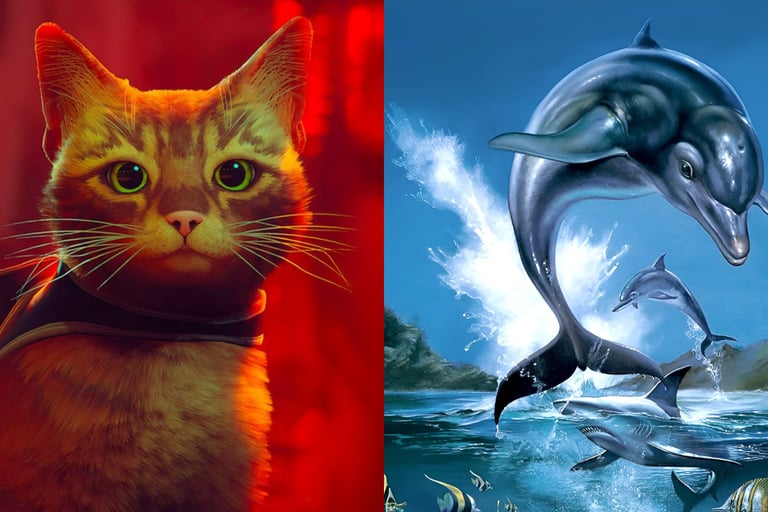
I still remember playing Ecco the Dolphin on my Sega Genesis when I was young and thinking it was the peak of video gaming at the time. More recently, I was captivated by Stray, a game where you play as a cat navigating a post-apocalyptic world to get back to its family.
Darwin’s Paradox is another worthy entry in this less trodden genre. It drops you into the role of an octopus caught in a bizarre world domination plot involving aliens dressed as humans and octopus soup. This setup gave ZDT Studios a lot of room to get creative with their world…and it worked!
A World Built for Infiltration
Darwin’s Paradox really sets the right tone.
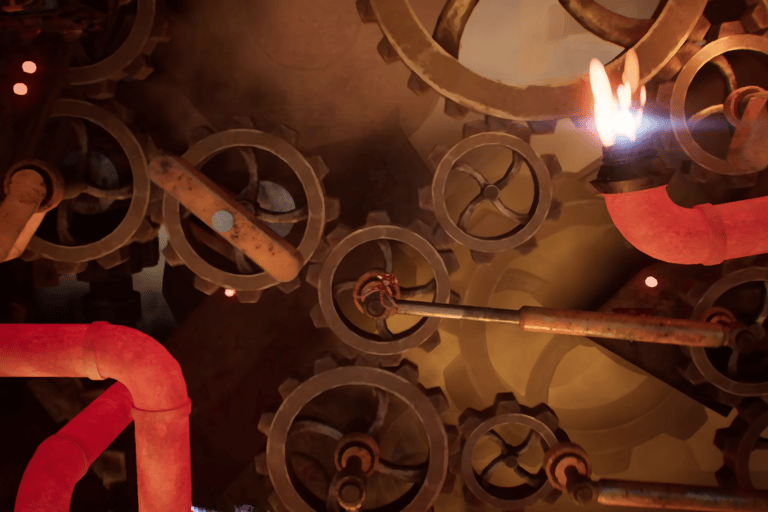
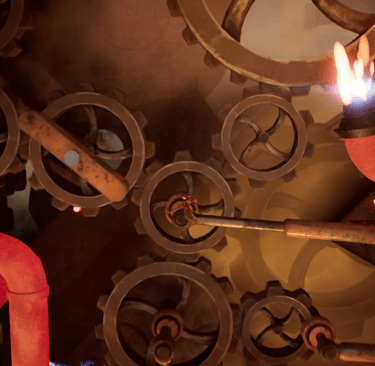
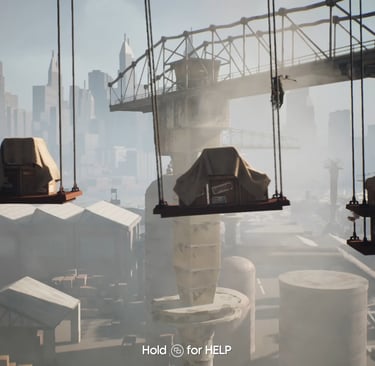
Visually, it’s a treat. The maps are packed with beautifully rendered details that make each level feel distinct from the last. I loved the way ZDT used 3D rendering techniques to give each area a sense of depth and scale, even though the game is a very linear 2D side-scroller.
The animation and VFX work are on point, which is especially important given that the gameplay depends entirely on moving parts and environmental effects. I faced swooping seagulls, whirling blades, conveyor belts, speeding vehicles, moving platforms, raging fires, and a hundred other hazards that all felt naturally blended into the surroundings.
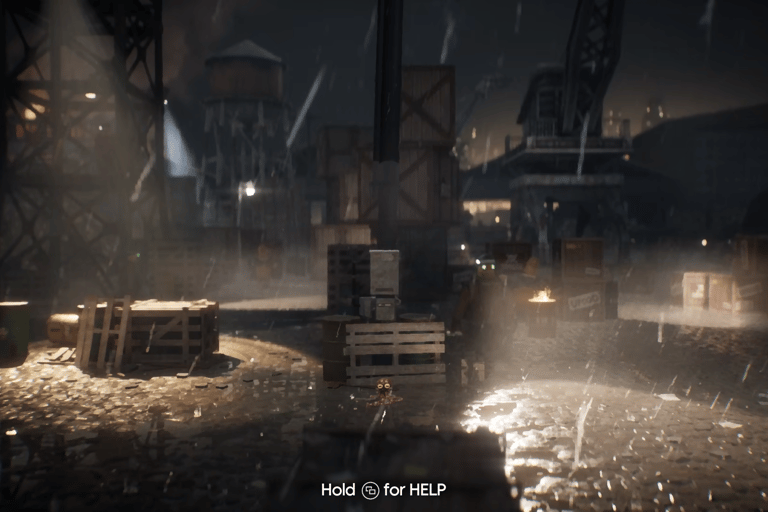
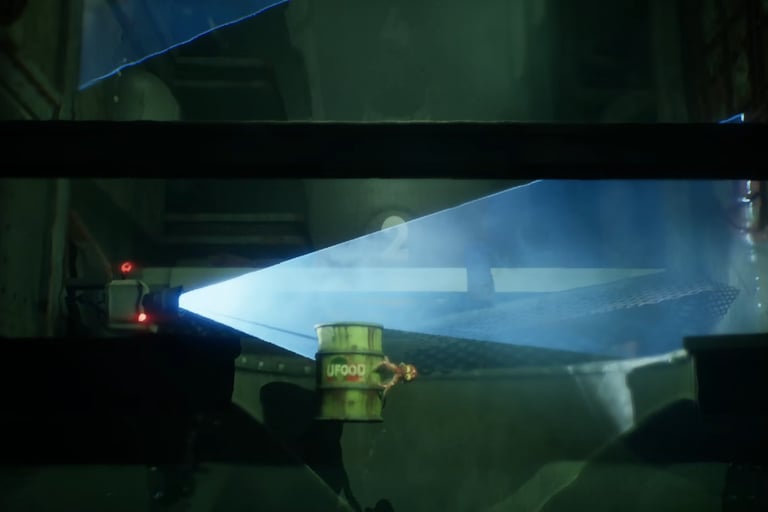
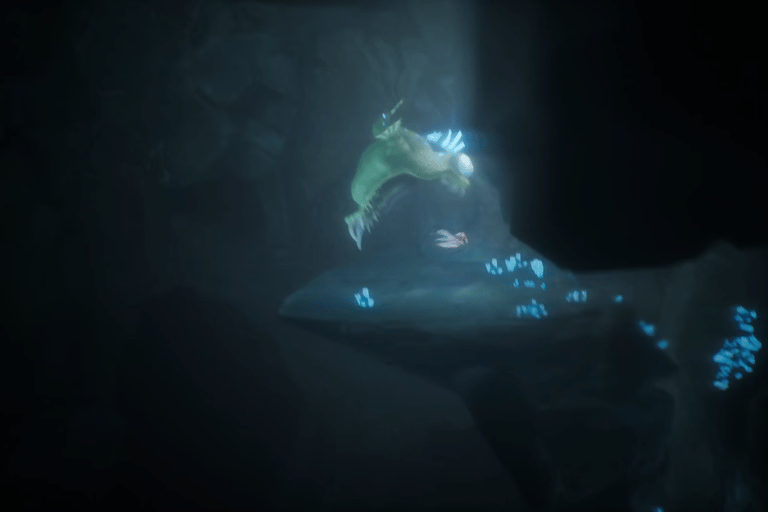
It cleverly uses lighting effects to make you feel like you're sneaking around an enemy base. In certain parts, you’ll have to avoid searchlights to get past alien guards or contraptions. In others, the lighting is dimmed as you lurk through a dark sewer or underground waterway.
The slow, ominous soundtrack also pushes home the infiltration vibe, and that theremin effect we commonly associate with UFO-themed music gives the sense that something is off, even though you’re crawling through an office, a kitchen, or a loading dock.
Everything is pieced together carefully to craft the illusion that you’re moving through a food plant being used as a cover for something more sinister.
Platform and Puzzles Are The Star
That’s important because, like Stray, Darwin’s Paradox doesn’t have real combat. The goal is to lean on Darwin’s unique abilities to get past one threat after another undetected and unscathed.
Like a real octopus, he can camouflage himself to stay out of sight, spray ink at objects, and stick to almost any surface – including the ceiling. He’s also an excellent swimmer and can latch on to objects under water. That creates a sharp contrast with puzzle solving when you’re on land.
You would think a limited move set like this might make the game feel shallow, but ZDT Studios understood exactly how to build around it. Navigating all of the challenges the game throws at you requires careful timing, quick reflexes and out-of-the-box thinking. You have to look at each situation from a cephalopod’s perspective.
I was also surprised at how challenging many of the obstacles were. Missing a queue usually involved instant death, and I found myself dying over and over again at certain points. Luckily, I was spared from excessive backtracking, unlike in some other games. I’m looking at you Silksong!
But even though the gameplay was great, I struggled with the controls at times, and that led to a lot of unnecessary deaths. Darwin’s stickiness made precise movement through tight spaces or around corners harder than it needed to be. I also found some inputs weren’t as responsive as I wanted, and mastering high jumps took a lot of trial and error.
Even so, Darwin’s Paradox has an addictive platforming formula that always pushed me to solve the next problem.
Odd In The Best Way
Darwin’s Paradox is for people who like weird games. It reminded me a bit of older titles like Earthworm Jim or ToeJam & Earl, or even the more recent Life Is Strange. These games weren’t afraid of taking big risks on whacky, out-there concepts.
Darwin’s Paradox takes a creature you would never expect to see in the hero role and drops him at the center of a phenomenally cheesy plot to save octopus-kind (and incidentally, man-kind) from aliens. The entire narrative is delivered without a single line of dialogue. You piece it together as you move through the facilities, uncover propaganda, and find the aliens’ not-so-secret plans written on chalkboards and signs.
The premise is ridiculous, but the game commits to it so hard that it becomes part of its charm.
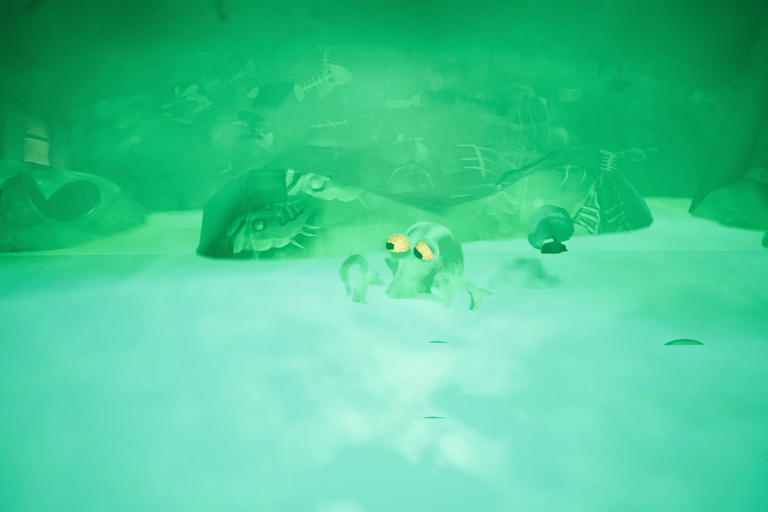
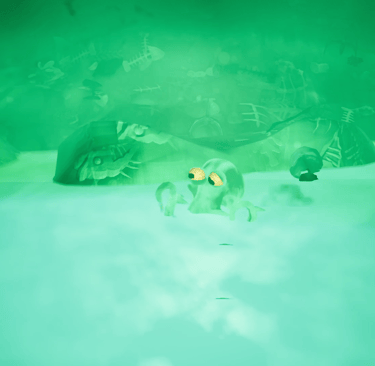
The weirdness also shows up in the gameplay. At different points, I had to drench myself in radioactive waste to drive away rats, hijack an alien suit to blend in, and knock over cans with Darwin’s ink jet to trick enemies into opening doors.
In a sea of hyper-realistic AAA action-RPG games, Darwin’s Paradox delivers a refreshing experience that’s unlike anything currently on offer.
Not Enough Content
For all its strengths, however, Darwin’s Paradox has one glaring issue – it’s incredibly light on content. I finished it in under six hours, including deaths and retries, and I felt like I had barely scratched the surface by the time the credits were rolling.
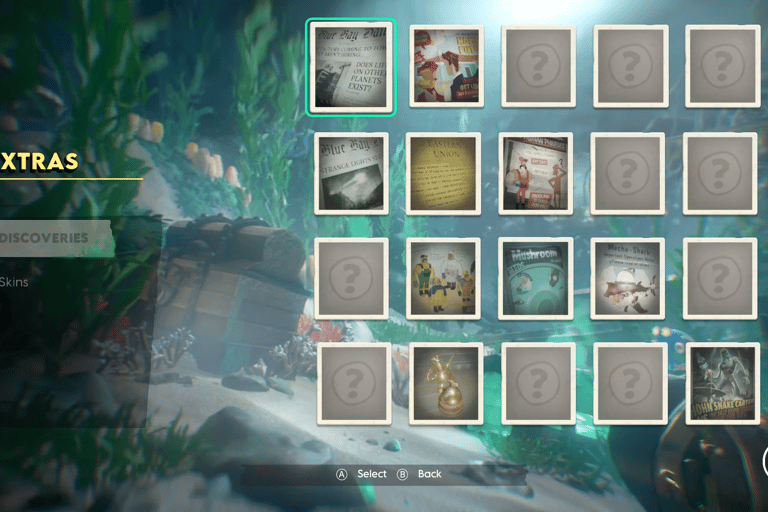
The incredibly short runtime would be easier to forgive if there were more reasons to stick around afterwards, but there really aren’t. Finishing the game unlocks the option to replay chapters to hunt down the game’s 20 collectibles. Finding them unlocks a few skins, but that’s about it. There are no alternative endings, New Game + modes, or endgame content.
It’s also noticeably short on boss encounters. I (generously) counted three of them, and they all just involved escaping. On top of that, the game ends really abruptly, and without any satisfying resolution.
These are all missed opportunities to build value for players. It would’ve been easy to include time trials or an obstacle course mode in Darwin’s Paradox. A lot of platformers without combat mechanics include bosses players can defeat using the environment.
Regardless, I was disappointed that I didn’t get more for my $25 when so many other twenty-something games include way more content.
Verdict
Darwin’s Paradox is a one-of-a-kind experience.
It looks great, it has addictive platforming and puzzle solving, and its big creative risks really pay off. You’ll absolutely feel like an octopus trying to take down an evil alien force posing as a seafood company by infiltrating their operation step-by-step. For the extremely short time you’ll play, that is…
The short runtime, lack of meaningful post-game content, limited boss encounters, and abrupt ending are a real issue if you’re looking to stretch your dollar. Maybe ZDT will patch in additional modes. Maybe we’ll get some free DLC with more missions. Until then, my final rating for Darwin’s Paradox is an 8/10.