3 Reasons to Revisit Morrowind
…And 3 Problems with Current Elder Scrolls
EDITIORIALS
Wesley Eaton
3/10/20265 min read
Let's face it, The Elder Scrolls VI probably isn't coming out while any of us are still fresh in the face, and with the things we've heard recently from notable former employees and interviews from the great Todd himself, the situation becomes increasingly bleak. Instead of looking forward as we have been for so many years, maybe it's time to peer into the past and revisit the game that effectively created The Elder Scrolls franchise as we know it today.
Here are my three favorite reasons to revisit The Elder Scrolls III: Morrowind, or play it for the first time, in 2026…
An Organic Sense of Scale—The Problem with Fast Travel
Ever since Skyrim spearheaded the open world boom back in 2011, the idea of being able to go to any place you can see on the horizon has both amazed and annoyed gamers. It has become the case that such a promise as “See that mountain? You can climb it.” is loaded with many undesirable caveats. The open world can be too empty, too bloated, rely on mundane checklists, or be plagued by the infamous Ubisoft towers. Then there's also the normalization of fast travel which, as far as I'm concerned, is mostly the admission that an open world is not interesting enough to explore the entire game and must eventually be phased out of the experience. The world is either too bland or too big.
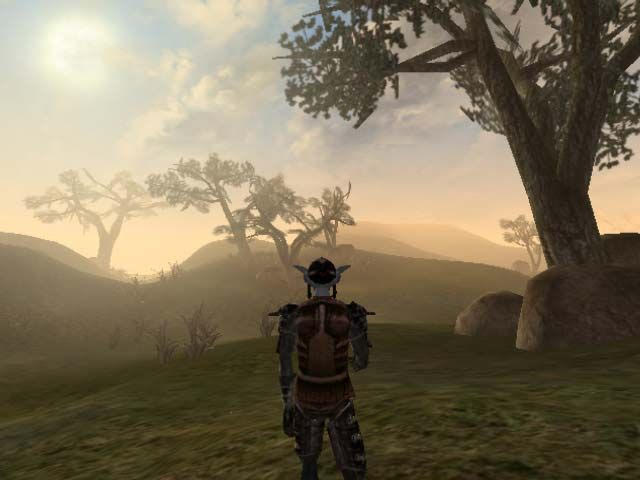
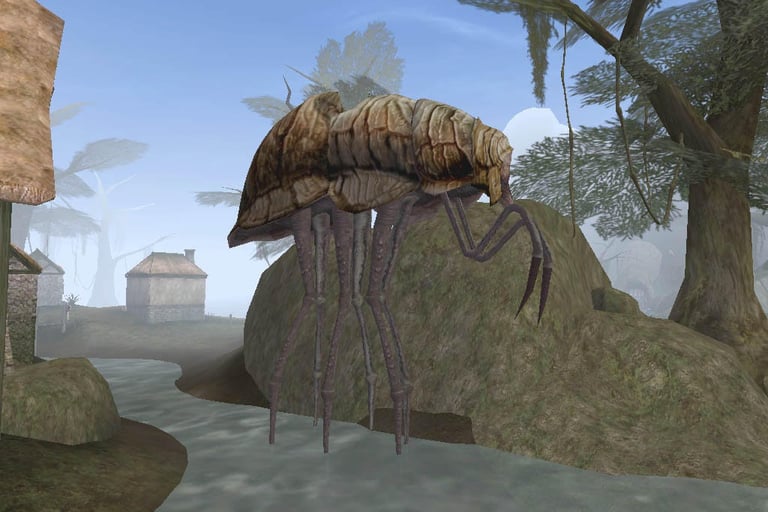
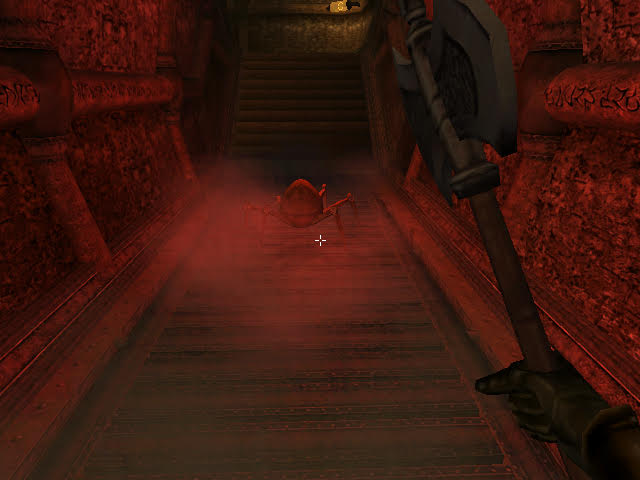
Morrowind, on the other hand, is roughly only half the size of Skyrim, yet it cheats a sense of scale much larger than that through the fog of its shorter draw distance and the lack of easily accessible fast travel. In order to fast travel, you'll actually have to walk to a town and jump on a giant flea; find a mage to teleport you; or learn a few specific spells that have very limited applications. Fast travel is grounded in the logic of the world, and the limited nature of its use discourages you from using it as your primary way of getting around.
Actually needing to traverse the map on foot to get to most places increases immersion by bringing you to the content instead of bringing the content to you. No couriers or other NPCs that are scripted to find you so you don't miss out on something. In Morrowind, your interactions with the world are natural. You have to ask NPCs for directions, consult your journal for important quest information, and pay attention to landmarks. You are engaging with the world, not just running by it. It's beautiful.
Handplaced items—The Problem with Randomly Generated Loot
Have you ever cleared a perilous dungeon or defeated a difficult boss expecting to receive a great reward, but instead what you find is a weapon barely better than the one you already have or sometimes even worse? Or in the case of The Elder Scrolls IV: Oblivion, maybe you were able to get your hands on one of the legendary artifacts like the Blackwater Blade very early in your playthrough, but because you did, the game spawned a low level version of it which will become useless to you only a few hours later. This doesn't really happen in Morrowind.
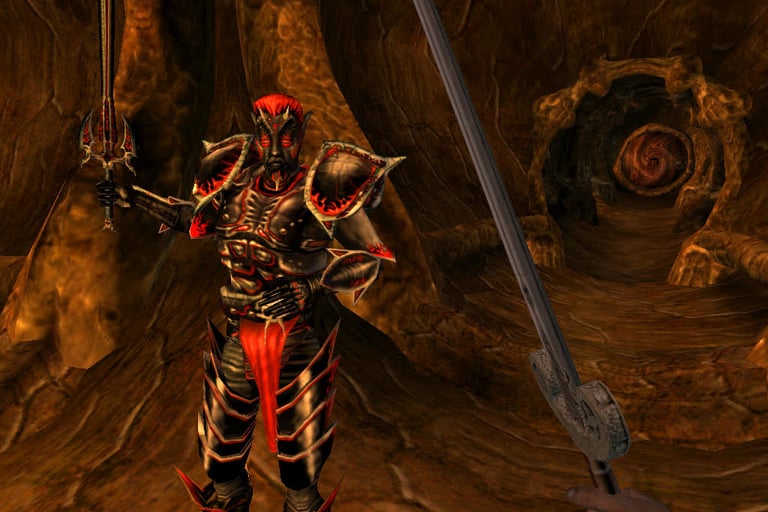
In The Elder Scrolls III, dungeons still use leveled lists for some loot, but only for items in containers, and even then not all containers. If you want the best armor in the game or any of the super powerful artifacts, you can go and get them as soon as you're done creating your character. You'll have to defeat or avoid (definitely avoid) many enemies to actually snag those items that early, but the possibility is still there. Those items are always available, they don't change based on your level, and they don't require a quest to find.
I'm sure there are many newer games that have rediscovered this kind of natural loot acquisition, Elden Ring being one of them, but for some reason The Elder Scrolls has opted for increased levels of hand-holding when it comes to character and loot progression: a great departure from the series roots that I would very much like to see the end of.
Unique Lore—The Problem with Shallow and Risk-averse Storytelling
Each Elder Scrolls game contains a vast library of in-game lore books. You almost never need to read them, but they’re filled with great worldbuilding and wild stories that represent a sort of second hidden layer to the franchise. You can be staring at the luminescent night sky of Skyrim, scanning the darkness for every star, but unless you read an in-game book you may never know that stars don't really exist in The Elder Scrolls. Each light in the sky is actually a hole punched in the veil separating two planes of existence. Is it literal, or is it clever primitive mythmaking? It's entirely up for you to decide.
When it comes to Morrowind, this kind of unique and crazy lore is not confined to the pages of virtual literature, it's paraded out in front of you as you play the game. The setting and story of Morrowind is directly built on some of the strangest and most interesting pieces of lore in the series—and you're directly involved. You'll meet an androgynous demigod holding an asteroid mid-flight above a city bearing his name, and a wizard who clones female versions of himself to be his daughters. You'll fight faceless plague priests who want to assimilate your flesh into their god, and you'll have to destroy a giant mech powered by the beating heart of a primordial being. Oh, and you also may or may not be the reincarnation of an ancient war hero who was brutally murdered by his best friends in exchange for godly powers. All hail the unreliable narrator.
I love the later Elder Scrolls games, but as the series moves forward it has lost the stomach to throw these kinds of weird and unique things in front of you, instead saving them only for those willing to dig deep enough to find them and is instead choosing to emulate more classic examples of fantasy like Lord of the Rings and Beowulf. These are great inspirations, but The Elder Scrolls could do a lot more to differentiate itself from the rest of the fantasy properties that surround it, and all the tools to do so lay just under the surface of its own history.
Reasons that Restore Faith
The truth is, the vast majority of players have lost faith in Bethesda. The Elder Scrolls V: Skyrim released almost 15 years ago and since then it's been countless missteps and loads of lost time for the famed developers. You have every reason to leave The Elder Scrolls behind like a relic of a bygone era.
As for me, it might be naive, but I don't think I could ever give up on my favorite franchise. Each of my reasons to return to Morrowind, and each of my complaints with the current state of things, represents a hope of what The Elder Scrolls could be in the future. All Bethesda has to do is look at what made people fans of these games in the first place and treat those things as concepts to iterate on, not ideas to be simplified. It's not impossible for The Elder Scrolls VI to be the same industry shaking title that the two previous games were. You know, as long as it actually comes out.